Key Takeaways
-
In the U.S., ceramic braces typically cost about $4,000 to $8,000 for full treatment before insurance, though complex cases can run $8,500 or more.
-
Ceramic braces usually cost $800 to $2,000 more than metal braces for a similar case, because the brackets are more specialized and tooth-colored.
-
Compare written quotes by checking what's included, such as records, scans, adjustment visits, emergency visits, retainers, and follow-up care, not just the headline price.
-
Call your insurance provider to ask about your orthodontic benefit, since many plans have lifetime maximums around $1,000 to $3,000 and may not cover ceramic as a cosmetic upgrade.
-
Ask about in-house payment plans, third-party financing, and HSA or FSA funds to spread out costs; one example is about $250 per month over 24 months before fees.
-
Confirm the expected treatment length and ask whether extra charges apply if treatment runs longer than planned, since this can change your final cost.
If you’ve been eyeing a straighter smile but don’t love the look of metal brackets, ceramic braces probably caught your attention. They blend in with your teeth, work like traditional braces, and let you smile with more confidence. But then the big question pops up: how much do ceramic braces cost? It’s a fair thing to wonder, and you deserve a clear, honest answer.
Here’s the short version. In the U.S., ceramic braces typically run about $4,000 to $8,000 for full treatment before insurance. Your final price depends on your bite, your treatment length, and where you live. Don’t worry if that range feels wide. We’ll break down what drives the cost, how ceramic stacks up against other options, and how to make payments feel manageable.
Whether you’re a parent planning for a teen, a professional who wants a discreet option, or an adult getting ready for a big life event, this guide is for you. Let’s walk through it together.
How Much Do Ceramic Braces Cost? The Quick Answer
Most patients can expect to pay between $4,000 and $8,000 for comprehensive ceramic braces treatment. Some pricing guides stretch that range to $8,500 or more for complex cases. These are estimates, not a fixed national fee, so your own quote may land higher or lower.
Different sources report slightly different numbers. Here’s a snapshot of what’s out there in 2026:
| Source Type | Reported Ceramic Braces Cost |
|---|---|
| Forbes Health consumer guide | $4,000 to $8,000 total |
| 2026 orthodontic practice guide | $4,500 to $6,500 |
| 2026 consumer pricing guide (CareCredit/Synchrony data) | $5,834 average, $4,480 to $11,312 range |
| ADA survey (all comprehensive orthodontics, not ceramic-specific) | $5,000 to $6,000 average |
Notice how the numbers overlap but don’t match perfectly. That’s normal. Each source measures a different group of patients and practices. The most reliable number is the one in your own written treatment plan.
What Are Ceramic Braces, Exactly?
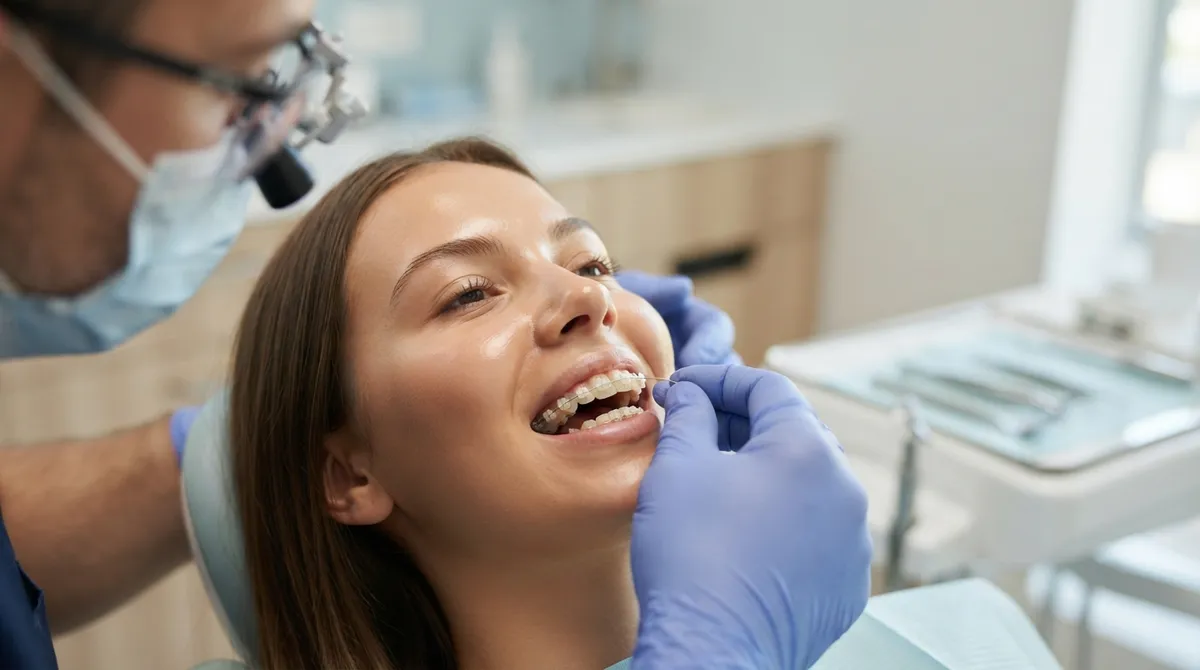
Ceramic braces use clear or tooth-colored brackets instead of shiny metal ones. They work the same way as traditional braces. Brackets attach to your teeth, a wire connects them, and gentle pressure moves your teeth into place over time.
The big difference is looks. Ceramic brackets blend in with your natural tooth color, so they’re far less noticeable in photos, meetings, and everyday conversations. If you want to explore how they fit among your choices, our guide to types of braces is a great place to start.
Your orthodontist’s exam decides if ceramic braces suit your bite. Some cases are a great match, while others may do better with a different approach. That’s why a personal evaluation matters before you commit to any price.
Ceramic Braces vs. Metal Braces: The Price Difference
Ceramic braces usually cost more than metal braces. The materials are more specialized, and the brackets are made to look natural. Some pricing sources estimate a premium of roughly $800 to $2,000 compared to metal braces for a similar case. One 2026 practice guide puts the gap at about $1,000 to $2,000.
Here’s a simple side-by-side comparison:
| Feature | Ceramic Braces | Metal Braces |
|---|---|---|
| Typical cost range | $4,000 to $8,000 | Often lower by about $800 to $2,000 |
| Appearance | Clear or tooth-colored | Silver and more visible |
| How they work | Fixed brackets and wires | Fixed brackets and wires |
| Best for | Patients who want a discreet look | Patients focused on value and durability |
Metal braces remain a strong, reliable choice. If you’re curious about their benefits, check out 7 reasons traditional metal braces are still a top choice. And if you’re weighing both options head to head, metal braces vs ceramic breaks it down further.
What Affects the Cost of Ceramic Braces?
No two smiles are the same, so no two price tags are the same either. Several factors shape your final cost:
- Case complexity: Mild crowding costs less to fix than a significant bite problem or jaw issue.
- Treatment length: Longer treatment means more visits and more adjustments.
- Location: Practice costs and local market rates vary from city to city.
- Orthodontist and practice fees: Experience, technology, and office overhead all play a part.
- Extra appliances or procedures: Expanders, elastics, or other add-ons can change your total.
Understanding these factors helps you ask better questions. If you want a deeper dive into how pricing works overall, 7 facts about orthodontics price that will surprise you is worth a read.
What Should Be Included in Your Quote?
Here’s a tip that can save you from surprises. Don’t just compare headline prices. Compare what each quote actually includes. A lower number might leave out things that another practice bundles in.
Before you say yes, ask whether your quote covers:
- Initial records, x-rays, and digital scans
- All routine adjustment visits
- Emergency visits if a bracket breaks
- Retainers after your braces come off
- Follow-up care after treatment ends
Also ask what happens if treatment runs longer than planned. Some offices charge extra, while others don’t. Getting this in writing helps you budget with confidence. And speaking of retainers, learning about orthodontic retainers early helps you plan for the full journey.
Does Insurance Cover Ceramic Braces?
Many dental plans include an orthodontic benefit, but every policy is different. Some plans limit coverage by age or medical need. Others add deductibles, waiting periods, or a separate lifetime orthodontic maximum.
Some insurance-focused pricing guides describe lifetime orthodontic maximums commonly around $1,000 to $3,000. Your plan could be lower, higher, or not offer orthodontic benefits at all. One more thing to know: if you pick ceramic brackets for looks alone, your plan may not cover the extra cost as an upgrade.
The best move is to call your insurance provider and ask direct questions. You can also learn more in our guide on how to use orthodontics insurance to save on your smile. Our team is happy to help you understand your estimate too.
Ways to Pay: Financing, Payment Plans, HSA and FSA
Good news: you don’t have to pay the full amount in one shot. Most orthodontic offices offer flexible options to spread out the cost.
- In-house payment plans: Many practices let you split your balance into monthly installments.
- Third-party financing: Some patients use outside financing, though you should check for interest or fees.
- HSA and FSA funds: Eligible health savings and flexible spending accounts may help cover orthodontic costs.
To give you a feel for how this works, Forbes Health cites an example of about $250 per month over 24 months before insurance or financing fees. That turns a big number into something that fits a monthly budget much better.
Always confirm plan rules and any financing charges before you sign. For more ideas, explore our page on orthodontic financing or read how orthodontics payment plans actually work.
Are Ceramic Braces Worth the Extra Cost?
That depends on what matters most to you. Let’s look at who tends to love ceramic braces:
- Teens and parents who want a less noticeable option for school and sports photos.
- Working professionals who want treatment that doesn’t draw attention in meetings.
- Adults planning a wedding, graduation, or big event who want a discreet path to a better smile.
- Adults returning for treatment after relapse who want a subtle, effective option.
If the look of metal bothers you, the extra cost may feel completely worth it. If budget is your top priority, metal braces could be the smarter fit. There’s no wrong answer. The right choice is the one that works for your smile, your lifestyle, and your wallet.
Some patients also compare ceramic braces with clear aligners. If that’s you, our article on braces vs. clear aligners can help you decide. You may also like learning about clear aligners to see how they compare.
How to Compare Quotes the Smart Way
When you’re shopping around, a little preparation goes a long way. Here’s a simple step-by-step approach:
- Get written treatment plans. Verbal estimates are easy to forget or misunderstand.
- Ask for the total fee. Make sure it covers the entire treatment, not just the start.
- Confirm the expected treatment length. Longer plans can affect your final cost.
- Review the payment schedule. Know your down payment and monthly amount.
- Get an insurance estimate. Ask the office to help you understand your benefits.
- Ask about extra charges. Find out what happens if treatment or retainers run past the plan.
Choosing the right provider matters just as much as the price. Our guide on how to find the right orthodontist in Lakewood Ranch offers helpful tips. It also helps to prepare for your first visit, so check out what to expect at your first orthodontic visit.
Why Experience and Technology Matter
A lower price isn’t always the better deal. The skill of your orthodontist and the technology in the office can shape your comfort, your results, and even your treatment time. A board-certified orthodontist has completed advanced training and met high standards in the field. You can verify credentials through the American Board of Orthodontics.
At Segovia Orthodontics at Lakewood Ranch, Dr. Flor Segovia is a board-certified orthodontist who uses advanced orthodontic technology to plan and deliver care. She offers bilingual service in English and Spanish and keeps the atmosphere warm, comfortable, and family-friendly. You can learn more about her on the Orthodontist Flor Segovia page, and see what our patients say by visiting our Segovia Orthodontics location on Google.
Want to see more of our smiles and community? Follow along on our Facebook page and our Instagram page.
Other Options to Consider at Different Price Points
Ceramic braces aren’t your only route to a beautiful smile. Depending on your goals and budget, you might also explore:
- Metal braces: A classic, dependable option that’s often the most budget-friendly.
- LightForce braces: A digital, 3D-printed system with custom-fitted brackets that can offer faster treatment. Learn more about LightForce Orthodontics.
- WildSmiles braces: Fun bracket shapes that help kids and teens feel excited about treatment. See WildSmiles Braces.
- Angel Aligners: Clear, removable trays that offer a discreet, comfortable path to straighter teeth.
Each option has its own strengths. The best way to know which one fits is to sit down with an orthodontist who can look at your teeth and talk through your goals.
Ready to Find Out Your Real Price?
Now you know that the answer to how much do ceramic braces cost isn’t one single number. Most patients pay between $4,000 and $8,000, and your personal quote depends on your smile, your treatment plan, and what your quote includes. The good news is that financing, insurance, and HSA or FSA funds can make that number much easier to handle.
The best next step is a personal consultation. You’ll get a clear plan, a written quote, and honest answers about your options. If you’re ready to take that step, request an appointment with our team today, or call us at 941-557-1333. We can’t wait to help you start your smile journey!
FAQs
Q: How much do ceramic braces cost in the United States?
A: Most patients pay about $4,000 to $8,000 for full ceramic braces treatment before insurance. Some pricing guides go a bit higher for complex cases. Your own quote depends on your bite, treatment length, and location, so a consultation gives you the most accurate number.
Q: Are ceramic braces more expensive than metal braces?
A: Yes, they usually cost more. Some sources estimate a premium of roughly $800 to $2,000 compared to metal braces for a similar case. You’re paying for the clear, tooth-colored brackets that blend in with your smile.
Q: Does dental insurance cover ceramic braces?
A: It might, but it depends on your policy. Many plans offer a lifetime orthodontic maximum, often around $1,000 to $3,000, and may have age limits, deductibles, or waiting periods. Choosing ceramic for looks alone may not be covered as an upgrade, so check with your insurer.
Q: Can I pay for ceramic braces monthly or use an HSA or FSA?
A: Yes, in most cases! Many orthodontic offices offer monthly payment plans, and eligible HSA or FSA funds can often be used too. Just confirm your plan rules and ask about any financing charges before you sign.
Q: What should be included in a ceramic braces quote?
A: A good quote spells out the total fee, records and scans, adjustment visits, emergency visits, retainers, and follow-up care. Ask for it in writing, along with the expected treatment length and payment schedule. That way you can compare offers fairly instead of just chasing the lowest number.
Our Service Area