Key Takeaways
-
Fixed retainers work around the clock with no daily effort but need floss threaders and regular checkups, while removable clear or Hawley retainers only work if you wear them consistently.
-
No single retainer type wins every category, and a 2023 Cochrane review found the research too weak to name one best method, so a plan tailored to your teeth and habits matters most.
-
Many orthodontists recommend a combination, such as a fixed wire on the lower front teeth plus a removable clear tray for the upper arch, to protect the areas that shift most.
-
Teeth can drift with age even years after treatment, so many orthodontists suggest long-term or indefinite nighttime retainer wear rather than a short-term schedule.
-
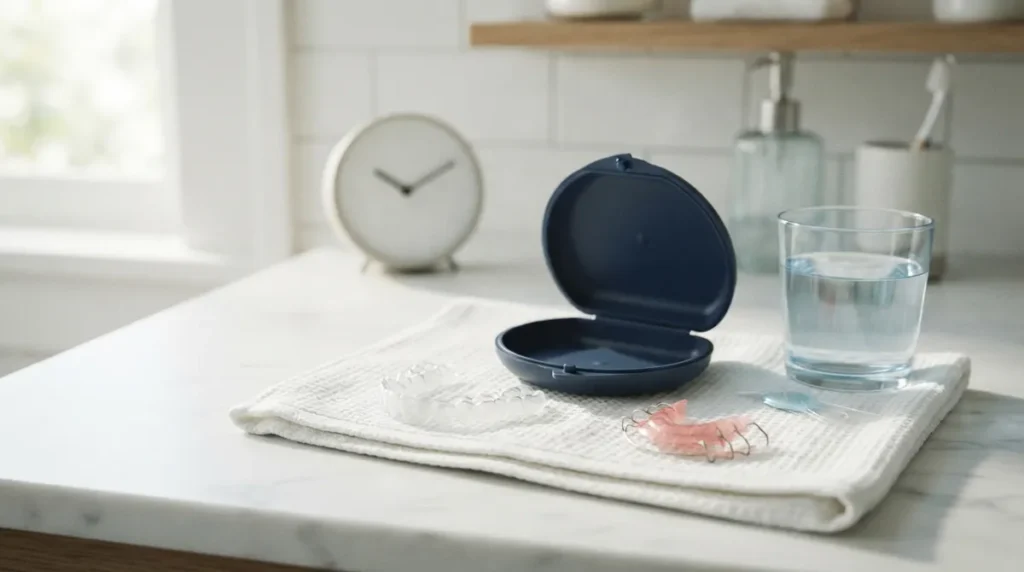
Never wrap a removable retainer in a napkin, rinse it in cool water rather than hot, and keep it in its case, since lost or warped retainers are common causes of tooth movement.
-
If a retainer cracks, gets lost, or stops fitting, contact your orthodontist right away instead of forcing it on, because teeth can start moving within days.
You did it. Those last aligner trays are finally in the recycling bin, and your smile looks amazing. But here’s the part many people don’t see coming: your treatment isn’t quite finished. Now comes the retainer, and the choice can feel confusing. Clear, Hawley, fixed, or a mix? If you’ve been searching for help choosing retainer type after clear aligners, you’re in good company.
The good news is that this decision doesn’t have to be stressful. Each retainer type has real strengths and a few trade-offs. The best pick depends on your teeth, your habits, and your daily life. A busy professional, a parent juggling school drop-offs, and a college grad planning a wedding may each land on a different answer.
In this guide, we’ll walk through the main options in plain language, compare them side by side, and share the questions that help you decide. Think of it as a friendly chat before you sit down with your orthodontist.

Why Do You Need a Retainer After Clear Aligners?
Teeth love to drift. After active treatment, the tissues and bone around your teeth are still adapting to their new spots. Without support, teeth can slowly move back toward where they started. A retainer helps hold your results in place while everything settles.
It’s worth being honest about one thing. A retainer helps maintain your new smile, but it doesn’t offer a lifetime guarantee. Teeth can also shift with age, even years after treatment. That’s why many orthodontists suggest long-term nighttime wear. You can read more about this in our guide to orthodontic retainers.
If you’ve already had treatment before and noticed shifting, you’re not alone. Many adults come back to us for exactly this reason, and retention planning is a big part of keeping the fix lasting.
The Three Main Retainer Types
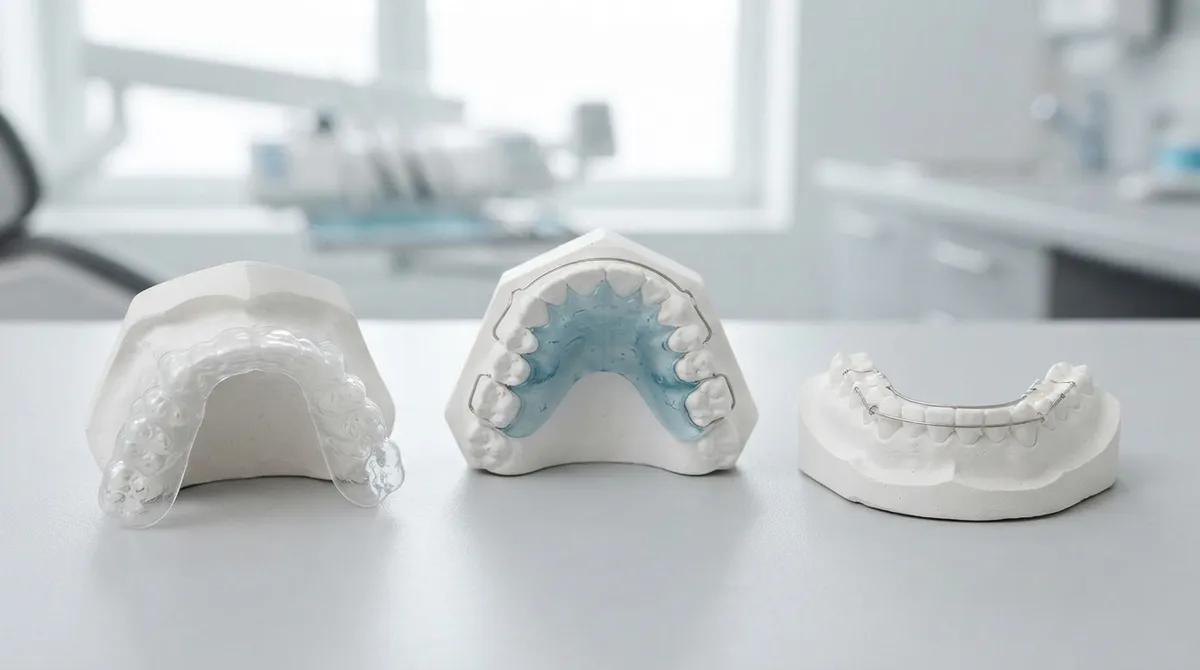
Most patients choose from three styles. Some orthodontists also recommend a combination. Here’s a quick look at each one.
Clear Removable Retainers
These look a lot like your old aligners. They’re thin, transparent plastic trays that snap over your teeth. Because they’re nearly invisible, they’re a popular pick for people who just finished a discreet treatment and don’t want anything noticeable.
You take them out to eat, brush, and floss. That’s a big plus for hygiene. The downside? They only work if you actually wear them. They can also crack, warp in hot water, or get lost (often wrapped in a napkin at lunch). Want to dig deeper? See what a clear retainer is and why you need one.
Hawley Retainers
A Hawley retainer is the classic style. It has an acrylic piece that sits against your palate and a thin metal wire across the front teeth. It’s removable and can be adjusted by your orthodontist if needed.
The wire is more visible than a clear tray, and some people notice a little lisp for the first few days. Still, Hawley retainers are sturdy and have a long track record. Learn more in our post on Hawley retainer facts every patient should know.
Fixed (Bonded) Retainers
A fixed retainer is a thin wire bonded to the back of selected teeth, usually the lower front ones. You can’t take it out, and no one can see it. That also means you don’t have to remember to wear it. It works around the clock.
The trade-off is cleaning. Plaque can build up around the wire, so you’ll need to floss with a threader or special tool. The bonding can also loosen or break, so regular checkups matter. Our article on fixed retainer facts covers this well.
Retainer Types at a Glance
Here’s a simple side-by-side look to help you compare the options.
| Feature | Clear Removable | Hawley | Fixed (Bonded) |
|---|---|---|---|
| Visibility | Nearly invisible | Wire is visible | Hidden behind teeth |
| Removable? | Yes | Yes | No |
| Depends on daily wear? | Yes | Yes | No |
| Cleaning | Easy to brush | Easy to brush | Needs floss threader |
| Common risks | Cracks, warps, gets lost | Speech change at first | Wire can loosen or break |
| Adjustable? | Usually replaced | Yes, by your orthodontist | Repaired if needed |
No single option wins every category. That’s exactly why a personal recommendation matters.
What Does the Research Say?
Many people ask, “Which one is scientifically best?” Here’s the honest answer: nobody knows for sure. A 2023 Cochrane review looked at the research on orthodontic retention. It found the evidence was low to very low certainty, so firm conclusions about a single best method just aren’t possible yet.
Some studies did compare small differences. In one trial, part-time clear retainers were linked to about 0.92 mm more lower-front tooth irregularity than a multistrand fixed retainer. In another, full-time clear retainers showed about 0.60 mm more. The review described these differences as unlikely to be clinically significant.
What does that mean for you? Any of these retainers can work well when matched to the right patient. The research also points out that most studies are small and short. It’s not specific proof about retainers after clear aligners either. So the smartest move is a plan tailored to you.
How to Choose: 6 Questions to Ask Yourself
Use this simple checklist to narrow things down before your visit.
- How reliable am I with daily habits? If you know you’ll forget a removable retainer, a fixed one may suit you better.
- How much does appearance matter? If you want nothing visible, clear or fixed retainers are the stronger picks.
- Which teeth need the most protection? Teeth that were very crowded or rotated may have a higher risk of shifting back.
- How are my gums and hygiene? If flossing around a wire feels hard, a removable option might be easier to keep clean.
- Do I grind my teeth? Heavy grinders can crack clear trays, so ask about durability.
- Will I attend follow-up visits? Fixed retainers need periodic checks. Removable ones need fit checks too.
Answer these honestly, and you’ll walk into your appointment with real clarity.
Can You Combine Retainer Types?
Yes, and it’s quite common. A popular pairing is a fixed retainer on the lower front teeth plus a clear removable retainer for the top arch. The bonded wire protects the area that tends to shift the most, while the removable tray supports the rest.
This approach gives you steady protection with flexibility. It can be a great fit for people who want extra peace of mind. Your orthodontist can tell you if a combination makes sense for your bite and your goals.
How Often Should You Wear a Removable Retainer?
Wear schedules vary, and your orthodontist should set yours. Many removable retainers are prescribed for more hours each day at first, then reduced to nighttime wear. Many professional sources advise long-term or even indefinite nighttime wear to help limit age-related and other tooth movement.
A few friendly tips to make it stick:
- Keep your retainer case in the same spot every night, like next to your toothbrush.
- Never wrap it in a napkin or tissue. That’s how most retainers end up in the trash.
- Rinse it in cool water, never hot, to avoid warping.
- Bring it to checkups so your orthodontist can confirm it still fits.
If you want more on habits that protect your results, take a look at these orthodontic retainer mistakes to avoid.
Which Option Fits Your Lifestyle?
Different people have different needs. Here are a few common scenarios.
The Busy Professional
Long days, travel, and back-to-back meetings can make nightly routines slip. A fixed retainer on the lower teeth, with a clear tray at night for the upper teeth, can reduce the pressure to remember everything.
The Parent of a Teen
Teens lose things. A lot. If your teen is likely to misplace a removable retainer, ask about a fixed option for the lower teeth. For help with younger patients, our page on teen orthodontic treatment explains how we support growing smiles.
The Life Event Planner
Got a wedding or graduation coming up? You’ll want your smile to stay put through photos and celebrations. A clear retainer is discreet, and a fixed one needs no daily thought. Either can work, depending on your teeth.
The Returning Adult
If you had braces years ago and your teeth drifted, a strong retention plan is key this time around. Many adults pair clear aligners with a long-term retainer to keep the fix lasting. Explore adult orthodontics to see how we help.
Caring for Your Retainer
A little daily care goes a long way. Here’s a simple routine.
- Brush it gently with a soft toothbrush and mild soap each day.
- Rinse in cool water every time you take it out.
- Store it in its case whenever it’s not in your mouth.
- Keep it away from heat, including hot cars, dishwashers, and boiling water.
- Floss carefully around a fixed retainer using a threader or interdental tool.
Good hygiene protects your gums and keeps your retainer lasting longer. If you ever lose or crack one, don’t wait. Call your orthodontist right away so your teeth don’t have time to move.
What If Your Retainer Breaks, Cracks, or Stops Fitting?
It happens to nearly everyone at some point. If a clear retainer cracks or feels tight, skip the DIY fixes. Don’t force it onto your teeth, because that can cause discomfort or movement. Contact your orthodontist for a check and a replacement if needed.
For a loose or broken wire on a fixed retainer, avoid picking at it. Sharp ends can irritate your tongue and cheeks. Get in touch quickly. If you’re ever unsure whether something counts as urgent, our guide on orthodontic emergencies can help.
Getting Personal Guidance at Segovia Orthodontics
Because the research doesn’t crown one winner, the right choice really comes down to a conversation. At Segovia Orthodontics, Dr. Flor Segovia looks at your bite, your gum health, your habits, and your goals before recommending a retention plan. As a board certified orthodontist, she can explain the pros and cons in a way that makes sense, in English or Spanish.
You can also learn about the credentials behind board certification through the American Board of Orthodontics. And if you’d like to see how our patients feel about their experience, visit Segovia Orthodontics on Google and read their reviews. You can also follow along with real smile moments on our Instagram page.
Practices that want to share helpful guides like this one with more patients often lean on tools such as SEO Rocket to get their educational content found online.
Conclusion: Protect the Smile You Worked For
Choosing a retainer after clear aligners is really about matching a tool to your life. Clear retainers are discreet and easy to clean. Hawley retainers are sturdy and adjustable. Fixed retainers work quietly around the clock. Some people use a mix. All of them can help protect your results when worn and cared for the right way.
You put in the time, the effort, and the patience. Let’s make sure your smile stays right where you want it. If you’d like personalized help picking the best fit, request an appointment with our team, or call us at 941-557-1333. We’d love to help you keep smiling with confidence.
FAQs
Q: Which retainer is best after clear aligners: clear, Hawley, or fixed?
A: There’s no single winner for everyone, and research hasn’t proven one type is always better. Clear retainers are discreet, Hawley retainers are sturdy and adjustable, and fixed retainers work all day without effort. Your orthodontist can match the right one to your teeth and habits.
Q: Do I really need a retainer after Invisalign or other clear aligners?
A: Yes, in most cases. Teeth can shift after active treatment, and a retainer helps hold your new smile in place while your gums and bone settle. It doesn’t offer a lifetime guarantee, but it greatly supports your results.
Q: How long do I need to wear a retainer, and should I wear it for life?
A: Your orthodontist sets the exact schedule, which often starts with more hours a day and later drops to nighttime wear. Many professionals suggest long-term or even indefinite nighttime wear to limit shifting that comes with age.
Q: Can I use a fixed retainer and a clear retainer together?
A: Absolutely! A common combo is a fixed wire on the lower front teeth with a removable clear retainer for the upper arch. It gives steady support where teeth shift most while keeping things flexible.
Q: What should I do if my retainer is lost, cracked, or no longer fits?
A: Don’t force it on or wait it out. Call your orthodontist right away so they can check your teeth and arrange a replacement, since teeth can start moving in just days.
Our Service Area