Key Takeaways
-
Traditional braces offer superior control for complex cases like severe crowding and major rotations, allowing orthodontists to fine-tune tooth roots and angles more precisely than aligners.
-
Clear aligners require 20-22 hours daily wear to work effectively; skipping wear time stretches treatment timelines, making them dependent on patient discipline unlike fixed braces.
-
Recent studies show aligners may finish 6.3 months faster on average, with 85% patient satisfaction versus 65% for braces, though results vary significantly by case complexity.
-
Children and teens typically succeed better with traditional braces since they don't require remembering to reinsert trays after meals, eliminating compliance challenges.
-
Advanced bracket technology like LightForce Orthodontics can reduce treatment time by up to 45% compared to standard brackets, offering a significant advantage for busy families.
-
Retainer wear after treatment is essential for both options—about 12% of aligner cases and 10% of brace cases experience relapse, making lifelong retention the key to lasting results.
Staring at two orthodontic brochures and feeling stuck? You’re not alone. Every week, parents, professionals, and busy adults sit down with Dr. Flor Segovia trying to decide between clear aligners and metal braces. It’s a big decision, but here’s the good news: both options work incredibly well when matched to the right smile. This guide breaks down 15 real, research-backed facts about invisalign vs traditional braces so you can walk into your consultation feeling confident, not confused.
Whether you’re a mom juggling soccer practice and orthodontic appointments, a young professional who wants a discreet fix before a big presentation, or an adult whose teeth shifted after your teenage braces came off, this article is for you. Let’s get into it.
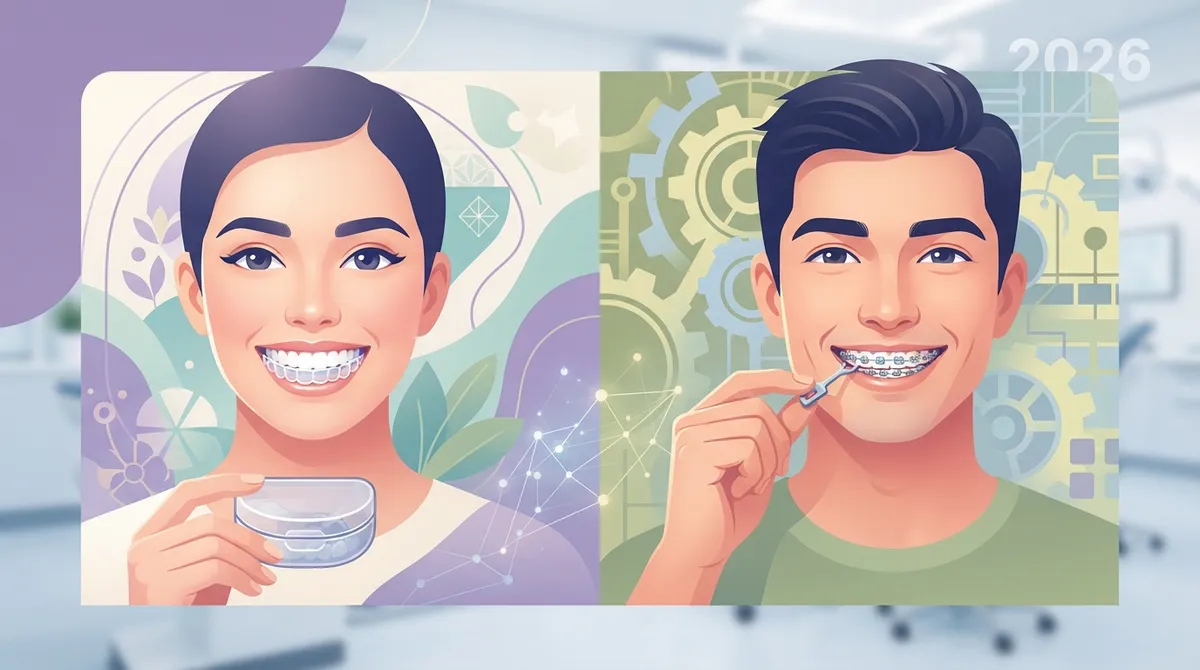
Why This Comparison Matters More Than Ever in 2026
More adults and teens are seeking orthodontic care than ever before, and treatment options have never been more advanced. At Segovia Orthodontics, patients in Lakewood Ranch get access to both traditional and clear aligner systems, including WildSmiles Braces and LightForce Orthodontics. Knowing the facts helps you make a choice that fits your life, your smile goals, and your budget.
1. Both Treatments Move Teeth Differently
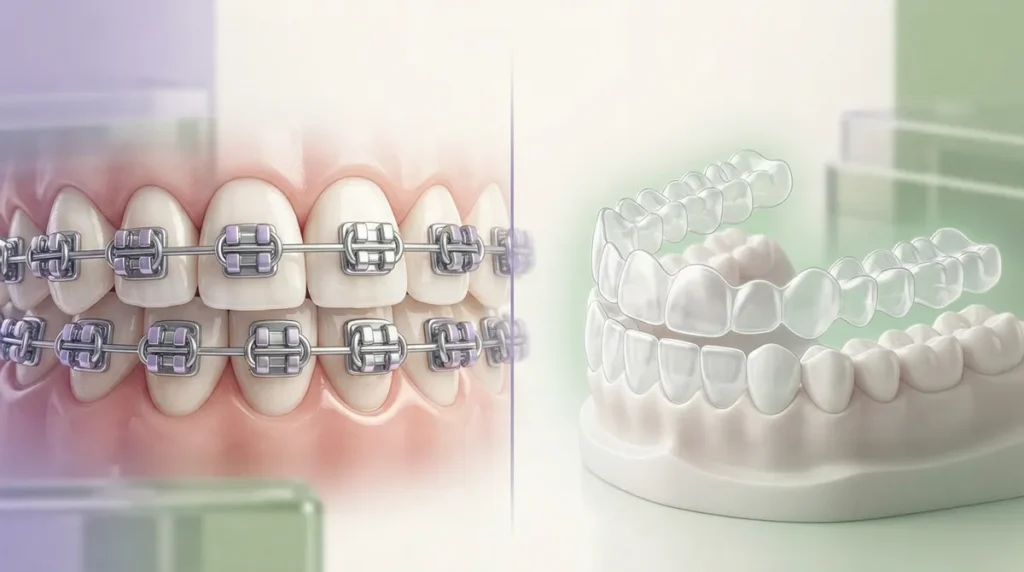
Invisalign uses a series of removable, custom-made clear trays that gently shift your teeth over time. Traditional braces use brackets bonded to your teeth, connected by a wire that applies constant, gentle pressure. Both methods work, but they get the job done in different ways.
2. Both Can Fix Many Common Problems
Good news: aligners and braces can both correct crowding, spacing, and many bite issues. The right choice depends on your specific case, your jaw growth, and how disciplined you are about wearing your aligners as instructed.
3. Braces Win for Complex Cases
If you have severe crowding, need major rotations, or require extraction space closure, traditional braces usually offer more control. Orthodontists can fine-tune tooth roots and angles more precisely with fixed brackets and wires. This is one reason types of braces still matter so much in complicated treatment plans.
4. Aligners Depend Heavily on You
Clear aligners only work if you wear them. Most patients need to wear them 20 to 22 hours a day. Skip too many hours, and your treatment timeline stretches out. Braces don’t have this issue since they’re fixed to your teeth 24/7.
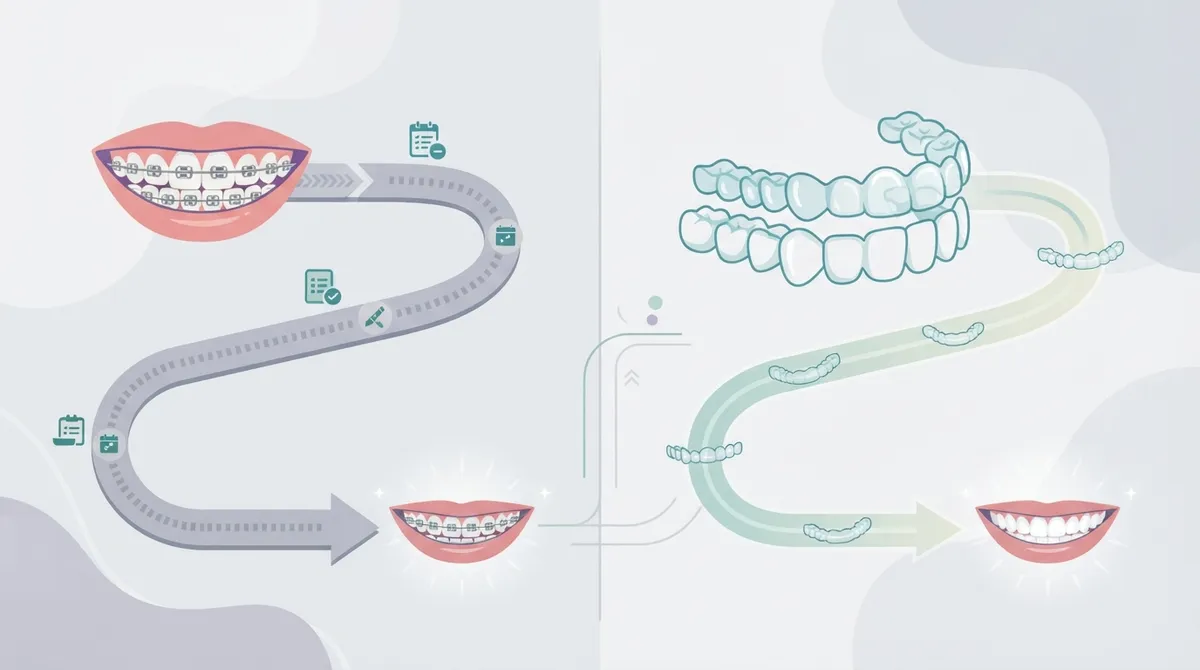
How Treatment Time and Results Compare
Let’s talk numbers, because everyone wants to know how long this journey will take.
5. Aligners May Finish a Bit Faster
A 2019 meta-analysis of eight studies found clear aligners finished treatment about 6.3 months faster than braces on average. That said, this depends heavily on case complexity and patient compliance.
6. A 2024 Study Found Similar Results
One 2024 comparative study reported average treatment times of 14.5 months for aligners versus 16.2 months for braces. The same study found 85% patient satisfaction with aligners compared to 65% with braces. Keep in mind these numbers come from a single study and won’t apply to every case.
7. Braces Still Edge Out Aligners on Some Metrics
A 2024 systematic review found braces performed better in areas like occlusal contacts, torque control, and transverse expansion. Both treatments were effective overall, but braces showed an advantage in certain complex tooth movements.
Here’s a quick side-by-side look at how the two options typically compare:
| Factor | Invisalign / Clear Aligners | Traditional Braces |
|---|---|---|
| Visibility | Nearly invisible | Visible metal or ceramic |
| Removability | Removable for eating and brushing | Fixed, cannot remove |
| Average Cost (US) | $3,500–$8,000 | $3,000–$7,000 |
| Average Treatment Time | ~14.5 months | ~16.2 months |
| Best For | Mild-moderate cases, motivated patients | Complex cases, all age groups |
| Compliance Needed | High (20-22 hrs/day wear) | Low (fixed appliance) |
What Concerned Moms Need to Know
If you’re a mom scheduling appointments between school pickups and after-school activities, you probably want an option that’s easy to maintain and doesn’t need constant office visits.
8. Kids and Teens Often Do Great With Braces
Traditional braces don’t rely on a child remembering to put trays back in after lunch. For younger patients, this can make braces the more reliable choice. Fun options like WildSmiles Braces even let kids choose fun bracket shapes, like stars, hearts, or Mickey Mouse designs, making the experience something they actually look forward to.
9. Digital Technology Speeds Things Up
With LightForce Orthodontics, custom 3D-printed brackets are designed to fit each tooth precisely. This can reduce treatment time by up to 45% compared to one-size-fits-all brackets, which is a huge win for busy families.
10. Retainers Are Non-Negotiable Either Way
No matter which treatment you choose, orthodontic retainers are essential afterward. Teeth naturally want to shift back over time, so wearing your retainer as directed protects your investment for years to come.
What Young Professionals and Career-Focused Adults Should Consider
If you’re heading into client meetings or job interviews, appearance matters. Here’s what this group typically cares about most.
11. Aligners Offer Discretion During the Workday
Clear aligners are nearly invisible, which many professionals love. You can remove them for important meetings, presentations, or client dinners, then pop them back in right after.
12. Comfort Levels Are Similar
Both treatments can cause some tenderness at first. Aligners might cause mild pressure when you switch to a new tray. Braces can occasionally irritate your cheeks or lips near brackets and wires. Neither option is pain-free, but most discomfort fades within a few days.
Here’s a simple list of what to expect during the adjustment period with each option:
- Mild soreness for 2-4 days after starting or switching aligners
- Temporary speech changes with both aligners and braces
- Possible cheek or lip irritation with brackets and wires
- Some tenderness when braces are tightened at adjustment visits
- Increased saliva production common in first days of aligner wear
- Discomfort typically fades within one to two weeks as you adjust
13. Angel Aligners Offer a Budget-Friendly Alternative
For patients who want the discretion of clear aligners without the premium price tag, Angel Aligners use AI-driven treatment planning and a unique 7+3 wear schedule (seven days with a flexible tray, followed by three days with a firmer one). This approach can speed up tooth movement and reduce the number of office visits needed, all while typically costing less than premium aligner brands.
What Life Event Planners and Adult Relapse Patients Should Know
Planning a wedding, graduation, or big career milestone? Or maybe your teenage braces results have slowly relapsed over the years? Either way, timing and commitment matter here.
14. Start Early If You Have a Deadline
If you’re preparing for a milestone event, book your consultation as early as possible. Orthodontic treatment takes months, and rushing the process can compromise your results. A clinical exam will tell you realistically how much time you need.
15. Relapse Patients Are Often the Most Reliable
Adults returning for a second round of treatment tend to follow instructions carefully because they already know what’s at stake. A 2024 long-term analysis found effective-correction rates of about 88% for aligners and 90% for braces, with relapse occurring in roughly 12% of aligner cases versus 10% of brace cases. The takeaway? Wearing your retainer faithfully after treatment is the real key to lasting results.
Steps to Choosing the Right Option for You
Ready to move forward? Here’s a simple process to help you decide:
- Schedule a consultation for a full orthodontic evaluation
- Discuss your daily lifestyle and how much visibility bothers you
- Ask about your specific bite issues and whether they need complex correction
- Review cost estimates and available financing options
- Talk about your commitment level for wearing aligners consistently
- Choose the option that best matches your goals, budget, and timeline
- Plan for a retainer routine once your active treatment ends
Common Mistakes to Avoid
Before you commit to a treatment plan, watch out for these common pitfalls:
- Choosing aligners without being honest about your wear-time commitment
- Skipping your orthodontic evaluation and self-diagnosing your case
- Ignoring gum health or cavities before starting treatment
- Forgetting to budget for retainers after treatment ends
- Assuming price alone should decide your treatment choice
- Not asking about your orthodontist’s board certification
Dr. Flor Segovia is a board-certified orthodontist credentialed through the American Board of Orthodontics, so you can trust her recommendations are based on real clinical expertise, not guesswork.
Why a Personalized Evaluation Beats Guesswork
No blog post, including this one, can tell you exactly which treatment is right for your mouth. Every smile is different. Jaw growth, gum health, cavities, and the complexity of your bite all play a role in what will work best. That’s why an in-person evaluation matters so much.
At Segovia Orthodontics, we use advanced orthodontic technology to map out your treatment plan with precision. We’ll walk you through your options, including clear aligners and traditional braces, so you feel fully informed before making a decision.
Curious what other patients think of their experience? You can visit us on Google — Segovia Orthodontics to read real reviews from families right here in Lakewood Ranch. You can also follow along with smile transformations on our Facebook page or check out before-and-after photos on our Instagram page.
Final Thoughts on Making Your Decision
Choosing between Invisalign and traditional braces doesn’t have to feel overwhelming. Both options can give you a smile you’re proud of. The real question is which one fits your lifestyle, your budget, and your specific smile goals. Whether you’re a busy mom, a career-driven professional, or someone correcting relapse from years ago, there’s a treatment path built for you.
Ready to find out which option is right for your smile? Request an appointment today, or feel free to call us at 941-557-1333 to speak with our friendly team. We can’t wait to help you start your journey toward a smile you’ll love showing off.
FAQs
Q: Is Invisalign as effective as traditional braces?
A: For many mild to moderate cases, yes! Both can produce beautiful results. But for complex bite issues or severe crowding, traditional braces often give your orthodontist more precise control. The best way to know for sure is a personal evaluation with Dr. Segovia.
Q: Which is better for severe crowding or complex bite problems: Invisalign or braces?
A: Traditional braces usually handle severe crowding and complex bites better. They allow for more precise tooth movement, including rotations and root adjustments. That said, some moderate cases can still be treated successfully with aligners, so a proper diagnosis is key.
Q: How long does Invisalign take compared with traditional braces?
A: On average, aligners may finish slightly faster, sometimes several months quicker in some studies. But treatment time really depends on your specific case and how consistently you wear your aligners. Braces stay put the whole time, so their timeline is a bit more predictable.
Q: Is Invisalign more expensive than metal braces?
A: It can be, but not always! Typical U.S. pricing runs about $3,000 to $7,000 for metal braces and $3,500 to $8,000 for Invisalign. Costs vary based on your case complexity, so we recommend getting a personalized quote during your consultation.
Q: Do teeth stay straight after Invisalign or braces, and will I need retainers?
A: Retainers are a must after either treatment, no exceptions! Teeth naturally want to drift back over time. Wearing your retainer as instructed is truly the secret to keeping that beautiful new smile for years to come.
Our Service Area