Key Takeaways
-
The American Association of Orthodontists recommends an orthodontic check-up by age 7, but this is a screening, not a rule that every child needs early treatment.
-
Watch for home signs like difficulty chewing, teeth that do not meet normally, a jaw that shifts sideways when biting, or thumb sucking past toddler years.
-
Early treatment is usually reserved for specific problems such as certain crossbites, underbites, jaw shifts, or harmful habits; many mild cases are simply monitored.
-
Bring a list of questions to the first visit, such as whether treatment is needed now, the risks of waiting, and whether a second phase of treatment will be needed later.
If your child just turned seven, you may have heard the words “orthodontic check-up” from a friend, a teacher, or your dentist. Maybe you looked at your little one’s smile and wondered, is that crowding normal? Or you spotted a baby tooth that hung on way too long. Feeling unsure is completely normal, and you are not alone.
Here is the good news. A check-up at this age does not mean your child needs braces. It simply means a specialist gets an early look at how the teeth and jaws are growing. If you want help deciding if my 7 year old needs early orthodontics, this guide walks you through six simple steps. You will learn what the experts recommend, which signs matter, and what to expect at a first visit.
Think of it like a growth check-up for your child’s smile. Sometimes the answer is “let’s treat this now.” Often it is “let’s keep an eye on things.” Either way, you walk away with a plan and peace of mind.
1. Start With the Age 7 Check-Up Guideline
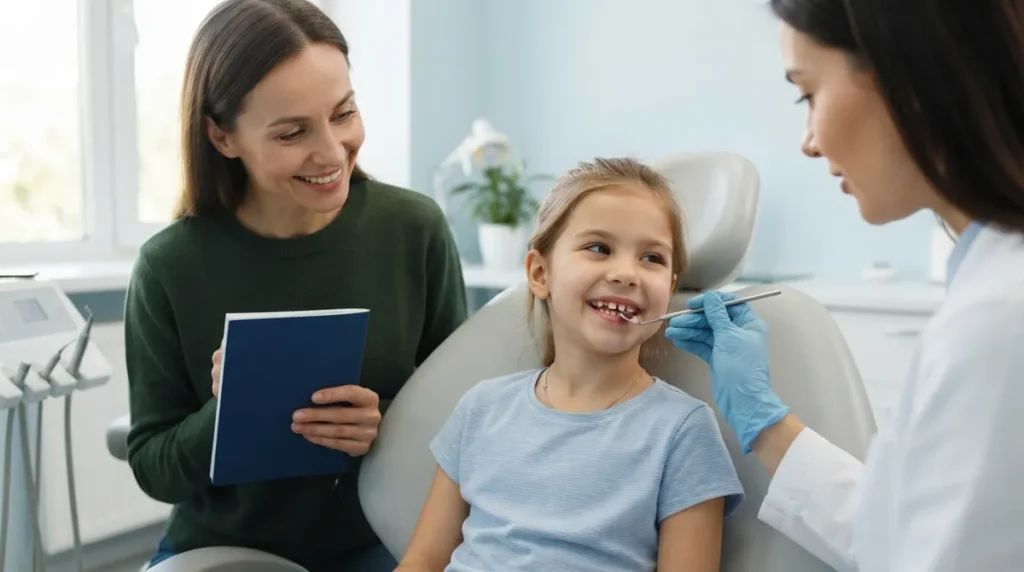
The American Association of Orthodontists (AAO) recommends an orthodontic check-up by age 7, or sooner if you or your dentist notice a concern. This is a screening recommendation. It is not a rule that every 7-year-old should start treatment.
Why age 7? Around this time, many kids have a mix of baby teeth and new permanent teeth. Experts call this the mixed dentition stage. The American Academy of Pediatric Dentistry (AAPD) describes it as roughly ages 6 to 13, though every child grows on their own schedule.
This mix gives an orthodontist a helpful window. They can see how the bite is forming, how the jaws are growing, and how new teeth are coming in. Spotting a small issue early gives you more choices later.
What the check-up does and does not mean
- It does mean: a trained specialist reviews your child’s bite, jaws, and tooth growth.
- It does not mean: your child will get braces right away.
- It often means: you get a clear picture of what to watch for as your child grows.
At Segovia Orthodontics, we love seeing kids at this stage. It is a low-pressure way to start the conversation and give families answers.
2. Look for Common Signs at Home
You do not need a dental degree to notice clues. A few minutes of watching your child eat, talk, and smile can tell you a lot. These signs do not prove treatment is needed, but they are good reasons to book an evaluation.
Here are signs many parents notice:
- Difficulty biting or chewing certain foods
- Upper and lower teeth that do not meet in a normal way
- Crowded, overlapping, or very prominent front teeth
- Large gaps or spacing between teeth
- Baby teeth that fall out very early or very late
- Thumb or finger sucking that continues past the toddler years
- A jaw that seems to shift to one side when your child bites down
If any of these sound familiar, take a photo or jot down a quick note. It helps during the visit. You can also read more about signs your child should see an orthodontist for a closer look at what to watch for.
A quick home check you can try
- Ask your child to bite down gently on their back teeth.
- Look at the front teeth. Do the top teeth sit slightly in front of the bottom ones?
- Watch for any sideways shift in the jaw as they close.
- Note any teeth that look twisted, stuck, or missing.
This is just a peek. Only an orthodontist can tell you what is really going on.
3. Know Which Problems May Need Early Attention
Early treatment, sometimes called interceptive or Phase 1 treatment, is meant for specific problems. Some issues are easier to guide while a child is still growing. Others are better handled later.
Problems an orthodontist may look at closely include:
- Certain underbites or crossbites
- A jaw shift when biting
- Significant crowding or spacing
- Abnormal tooth contact
- Missing or extra teeth
- Oral habits that affect how teeth or jaws develop
To learn more about specific bite issues, our guides on crossbite treatment and common orthodontic problems explain these in plain language.
Early treatment vs. waiting: a quick comparison
| Situation | Possible Approach | Why It Matters |
|---|---|---|
| Crossbite with a jaw shift | May be treated early | Guiding growth can be easier while the child is young |
| Underbite | Often evaluated early | Some cases respond best during growth |
| Thumb sucking that affects teeth | Habit support or appliance | Stopping the habit can protect tooth and jaw development |
| Mild crowding | Often monitored | Many cases are better treated after more permanent teeth arrive |
| Normal, healthy bite | Routine monitoring | No treatment may be needed at all |
Notice how many rows say “monitor.” That is very common. Early treatment is the exception, not the rule.
4. Understand What Early Treatment Can (and Cannot) Do
When early treatment makes sense, it usually has one clear goal. The orthodontist might guide jaw growth, address a harmful habit, make room for incoming permanent teeth, or improve how the bite works. The right method depends on a careful exam of your child.
Here is the part many parents want to know: early treatment does not always mean your child skips braces later. Some kids need a second phase once more permanent teeth come in. Others only need observation. Some need no orthodontic care at all.
The early orthodontic treatment approach is about timing and purpose, not rushing. You can also explore what two-phase treatment involves to see how the pieces fit together.
Possible outcomes after a first visit
- No treatment needed. Your child’s growth looks healthy and typical.
- Monitoring. The orthodontist checks in every several months as teeth come in.
- Early (interceptive) treatment. A specific problem gets guided now.
- Wait for later treatment. The best time for braces or aligners is still a few years away.
Any of these is a good result. Knowing which one applies to your child is the real win.
5. Know What Happens at the First Visit
Nervous about the appointment? Most kids find it surprisingly easy and even fun. The visit is gentle, and nothing hurts. Parents often feel relieved just from having a professional explain what they see.
During a typical first visit, the orthodontist may:
- Review your child’s health and dental history
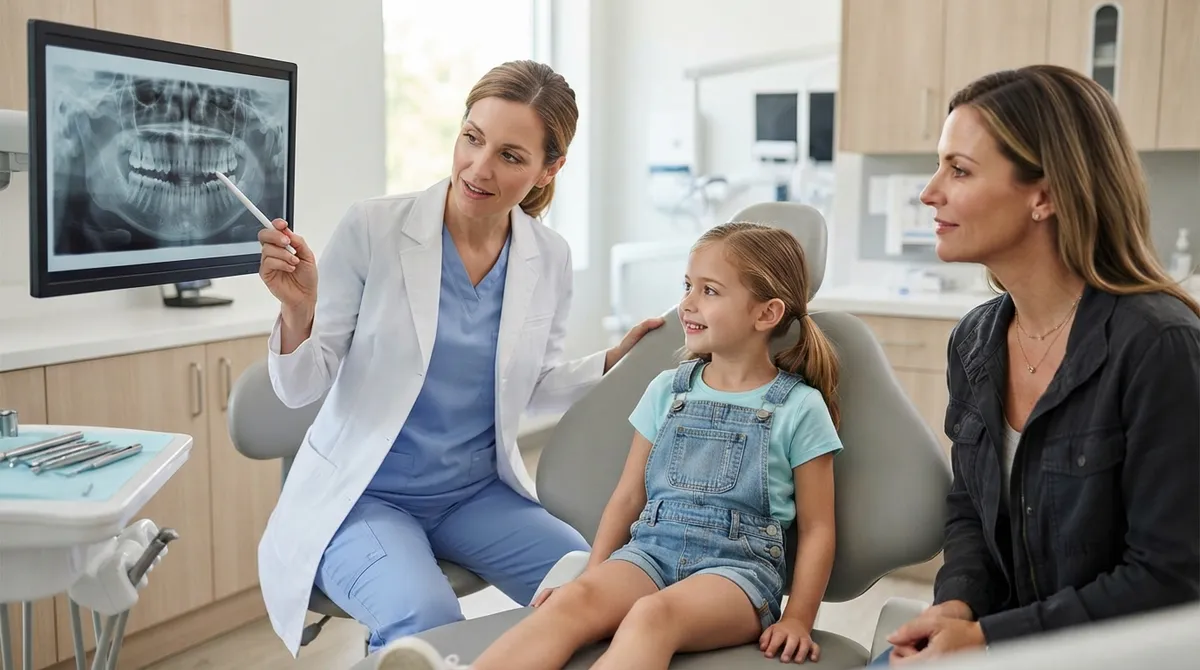
- Look at the bite and the way the jaws line up
- Check how permanent teeth are coming in
- Take photos or digital images if needed
- Talk with you about findings and next steps
You can read what to expect on our first orthodontic visit page and in our guide to what happens during an orthodontic evaluation.
Questions worth asking
- Does my child have a problem that should be treated now?
- If we wait, what are the risks and benefits?
- How often should we come back for check-ups?
- If treatment is needed, how long might it last?
- Will my child need a second phase later?
Bring your list. A good orthodontist welcomes your questions. For more ideas, see how to ask the right orthodontic questions.
6. Choose the Right Orthodontist and Make a Plan
The last step is picking a practice that feels right for your family. Training matters, and so does comfort. You want someone who explains things clearly and treats your child with kindness.
At Segovia Orthodontics, Dr. Flor Segovia is a board-certified orthodontist who offers bilingual care in English and Spanish. You can learn more about her background on the Dr. Flor Segovia page. You can also confirm board status through the American Board of Orthodontics.
Our office offers fun and friendly options for kids, such as WildSmiles braces, and precise digital options like LightForce orthodontics. Those come into play only if and when treatment is needed. A 7-year-old’s first visit is all about learning and planning.
Quick checklist for parents
- Schedule a first visit around age 7, or sooner if you spot a concern
- Share what you have noticed at home
- Ask about monitoring versus treating now
- Ask about costs and flexible options, such as orthodontic financing
- Follow up as your child’s smile changes
Want a peek at our community? Follow along on our Facebook page or our Instagram page, and see what local families say when you visit our Segovia Orthodontics location on Google.
Putting It All Together
Deciding on early orthodontics does not have to feel stressful. Start with the age 7 check-up. Watch for signs at home. Learn which problems may need early care. Remember that many kids only need monitoring. Then lean on a trusted specialist for clear advice.
Every child grows differently, and that is okay. The goal is not to rush into braces. The goal is to give your child the right care at the right time, so their smile grows strong and healthy.
Ready for answers? Take the first step today. You can request an appointment online, contact us with questions, or call us at 941-557-1333. We would love to meet your family and help your little one smile with confidence.
FAQs
Q: Does my 7-year-old need braces, or just an orthodontic check-up?
A: Most 7-year-olds just need a check-up. The AAO recommends an evaluation by age 7, but that is a screening, not a promise of treatment. After the visit, your orthodontist may suggest no treatment, monitoring, or early care for a specific problem.
Q: What bite or tooth problems may be treated early?
A: Orthodontists may look at early care for certain underbites or crossbites, a jaw shift when biting, significant crowding or spacing, missing or extra teeth, and habits like ongoing thumb sucking. Each child is different, so an exam is the only way to know what fits your little one.
Q: What is Phase 1 treatment, and will my child need braces again later?
A: Phase 1 is early treatment aimed at one clear goal, like guiding jaw growth or making room for new teeth. Some kids do need a second phase once more permanent teeth come in, while others only need observation. Your orthodontist will explain what to expect for your child.
Q: Should I see an orthodontist if my child still has baby teeth?
A: Yes, that is actually the perfect time for a first look. Seeing both baby and permanent teeth helps the orthodontist understand how the bite and jaws are developing. It is a simple way to catch small concerns early and make a plan.
Our Service Area