Key Takeaways
-
Brush teeth for two minutes after meals and before bed using fluoride toothpaste, angling bristles toward the gumline to clean around brackets and under wires, as plaque buildup can cause cavities and white spot marks on enamel.
-
Floss or use interdental brushes daily to clean between teeth and under wires, as brushing alone cannot reach these areas where plaque accumulates and can lead to gum inflammation and decay.
-
Avoid hard, sticky, crunchy, and chewy foods like candy, popcorn, and bagels that can break brackets or bend wires; cut firm foods into small pieces and chew with back teeth instead.
-
Attend professional dental cleanings every six months during treatment and keep all scheduled orthodontist appointments, as your orthodontist moves teeth while your dentist maintains gum and tooth health.
-
Use orthodontic wax as a temporary fix for poking wires by rolling it into a ball and pressing it over sharp spots, and contact your orthodontist promptly for loose brackets rather than waiting for your next visit.
-
Wear prescribed elastics exactly as directed and limit sugary and acidic drinks, as both behaviors directly impact treatment timeline and help prevent white spots and cavities that appear after braces are removed.
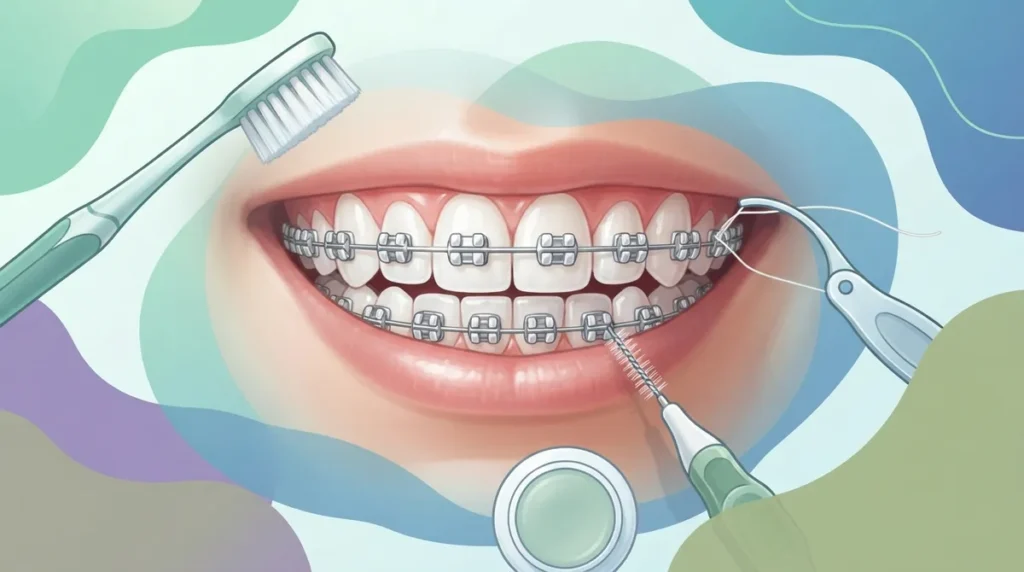
Getting braces is exciting. You are on your way to a straighter, healthier smile! But once the brackets and wires go on, your daily routine needs a little upgrade. Braces create extra nooks where plaque and food love to hide, and that means braces maintenance and care becomes a big part of your day.
The good news? It is not hard once you build a few simple habits. Whether you are a parent helping a child through treatment, a busy professional juggling work and appointments, or an adult returning to treatment after years away, this guide walks you through everything. We will cover brushing, flossing, food choices, dental visits, and what to do when something goes wrong. Think of this as a friendly checklist you can come back to any time.
At Segovia Orthodontics at Lakewood Ranch, we see every day how good habits lead to great results. Let us get you set up for success.
Why Does Braces Maintenance and Care Matter So Much?
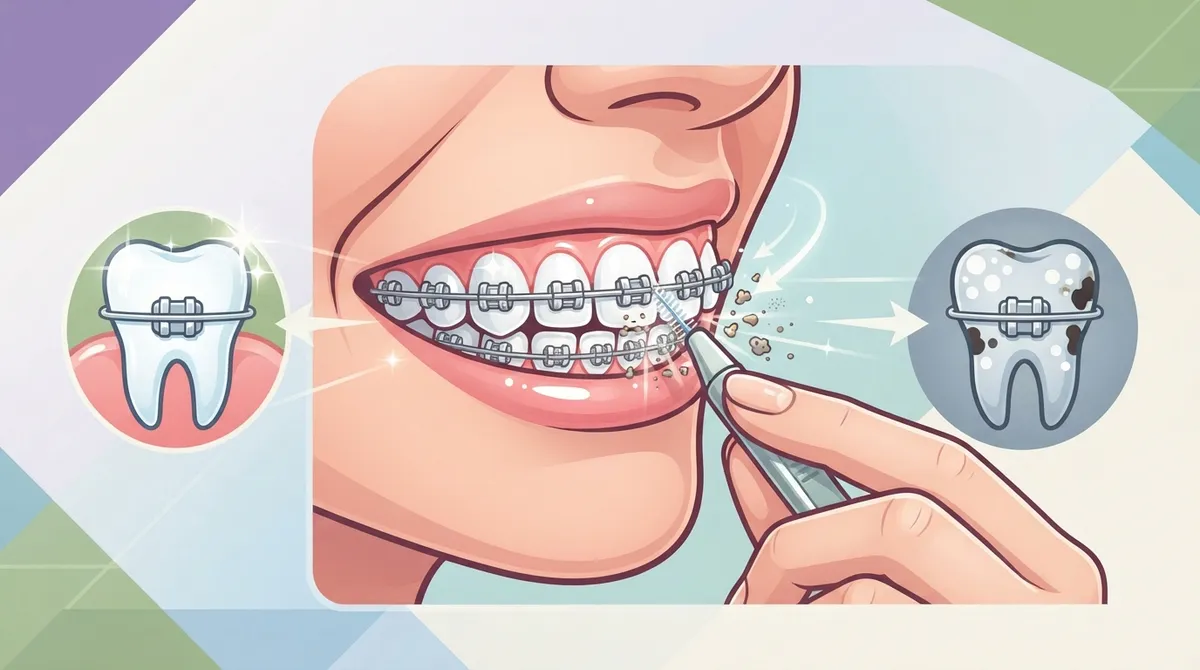
Braces do a wonderful job moving teeth. But the brackets, bands, and wires also give plaque more places to collect. If plaque stays on your teeth, it can lead to cavities, red or swollen gums, and even lasting white marks on your enamel. Those white spots can show up after braces come off, and nobody wants that surprise on the big day.
Good care also protects your treatment timeline. Broken brackets and bent wires can slow progress and add extra visits. When you take care of your braces, you help your teeth move the way they should, right on schedule.
Here is what great daily care helps you avoid:
- Cavities around brackets and under wires
- Gum inflammation, swelling, and bleeding
- White spot marks on your enamel
- Broken brackets and bent wires
- Longer treatment time and extra appointments
One quick note: always follow the exact instructions your orthodontist gives you. Advice can vary by appliance and by each person’s cavity risk, so your own plan comes first.
How Often Should You Brush With Braces?
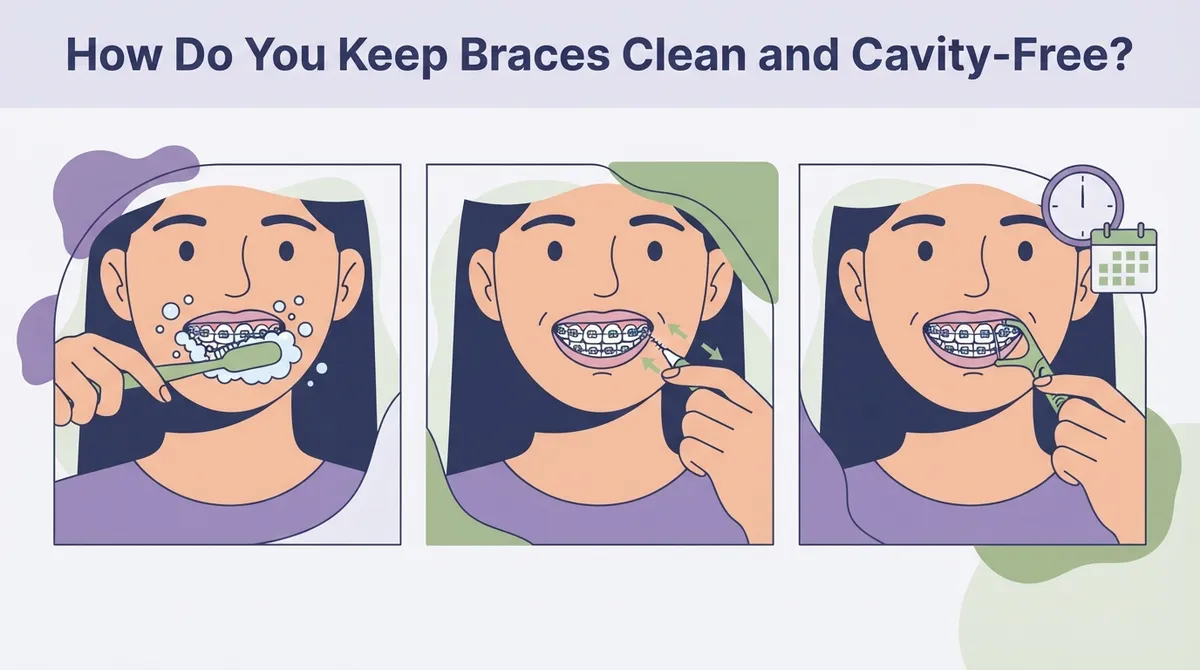
Great question, and one we hear a lot! The American Association of Orthodontists (AAO) suggests brushing for about two minutes after meals or snacks when possible, and again before bed. NHS guidance is similar: brush in the morning, at night, and after meals using fluoride toothpaste.
Carrying a travel toothbrush in your backpack, purse, or desk drawer makes this much easier. If you cannot brush right away, rinse well with water until you can.
Step-by-Step: How to Brush Braces the Right Way
- Rinse first. Swish water around your mouth to loosen food bits.
- Use fluoride toothpaste. A soft-bristled toothbrush is gentle on your gums and brackets.
- Angle toward the gumline. Tilt the bristles up to clean the top of each bracket, then down to clean the bottom.
- Clean around every bracket. Take your time, since plaque loves the edges.
- Do not skip the wire. Brush gently above and below the archwire.
- Brush the chewing surfaces and the backs of your teeth.
- Check the mirror. Clean brackets should look shiny and clear of food.
Spend a full two minutes each time. If that feels long, try a song or a timer. An electric toothbrush can also be a great helper for many braces wearers, as long as you use gentle pressure and follow your orthodontist’s advice.
How Do You Floss With Braces?
Flossing with braces takes a little patience, but it is worth it. Brushing alone cannot reach between your teeth or under the wire. Daily cleaning between teeth is a must. The AAO recommends flossing at least once a day, and the NHS recommends using an interdental brush daily.
Your Tools for Cleaning Between Teeth
- Floss threaders: A small, stiff loop that helps you pass regular floss under the wire.
- Orthodontic floss: Has a stiff end that works like a built-in threader.
- Interdental brushes: Tiny brushes that slide between brackets and clean around them.
- Water flossers: A nice extra for hard-to-reach spots, but they work best as a partner to brushing and interdental cleaning, not a replacement.
Simple Flossing Steps
- Pull about 18 inches of floss and thread it under the wire between two teeth.
- Hold the floss tight and slide it gently up and down the sides of each tooth.
- Curve the floss into a “C” shape around the tooth and move below the gumline.
- Remove the floss and repeat for each gap.
Be gentle and never snap the floss, because that can irritate gums or catch on a bracket. Want more tips? Our guide on how to floss with braces without the frustration goes deeper.
What Foods Should You Avoid With Braces?
This is the part most patients ask about on day one. Some foods can loosen brackets or bend wires, and others feed the bacteria that cause cavities. You do not have to give up everything you love. You just need smart swaps.
| Food Type | Examples | Why It Is a Problem | Smarter Choice |
|---|---|---|---|
| Hard foods | Hard candy, ice, nuts | Can break brackets or bend wires | Soft fruits, yogurt, cheese |
| Sticky foods | Caramel, taffy, gummies | Pull at brackets and trap sugar | Chocolate that melts, pudding |
| Crunchy foods | Popcorn, hard chips, raw carrots | Can damage the appliance | Steamed veggies, soft crackers |
| Chewy foods | Bagels, tough bread, jerky | Stress brackets and wires | Soft rolls, tender meats |
| Sugary and acidic drinks | Soda, sports drinks, juice | Raise cavity and enamel risk | Water, milk |
Firm foods like apples and carrots do not have to be off the menu. Cut them into small pieces and chew with your back teeth. It is a simple trick that keeps your braces safe.
Need a longer list? Check out our post on 13 foods to avoid with braces and why it matters.
How Can You Prevent White Spots and Cavities?
White spots show up when plaque sits on enamel for too long and weakens it. They are one of the most common worries for braces wearers, and the best defense is steady daily care. Here are the habits that make the biggest difference:
- Brush after meals and snacks, plus before bed.
- Use fluoride toothpaste every time.
- Clean between teeth daily with floss or an interdental brush.
- Limit sugary snacks and acidic drinks, especially sipping all day.
- Drink plenty of water, which helps rinse your mouth.
- Keep up with your dentist and orthodontist visits.
Some patients also benefit from extra protection. Ask your care team whether fluoride rinses or other protective steps make sense for you. You can also learn how dental sealants can protect your smile during orthodontic treatment.
Do You Still Need Regular Dental Cleanings?
Yes, absolutely! Your orthodontist focuses on moving your teeth, while your general dentist focuses on keeping them healthy. Both matter. The AAO recommends professional cleanings at least every six months during treatment, or more often if your dentist advises it.
Professional cleanings reach spots that even careful brushing can miss around brackets. They also let your dentist catch small problems early. Learn more in our post on why teeth cleaning services matter during orthodontic treatment.
Why Do Elastics and Appointments Matter?
Your braces are a team effort between you and your orthodontist. If you were given elastics (rubber bands) or another appliance, wear them exactly as directed. Skipping them can slow your progress and stretch your treatment time.
Keep your scheduled visits, too. Each adjustment guides your teeth into the next stage. Wondering what happens at those appointments? Take a peek at what really happens at each braces tightening visit.
A Quick Tip for Busy Families and Professionals
We know schedules get tight. Whether you are a parent juggling school pickups or a professional with a packed calendar, plan your next visit before you leave the office. It keeps treatment moving smoothly and helps you reach your finish line sooner.
Is Soreness After Adjustments Normal?
Yes. Mild soreness after your braces are placed or adjusted is common. Teeth are moving, and they need a few days to settle in. Many people feel tender for two to four days, then it fades.
Here are some gentle ways to feel better:
- Eat soft foods like soup, mashed potatoes, yogurt, and pasta.
- Rinse with warm salt water to soothe your gums.
- Use a cold pack on your cheek for comfort.
- Ask your care team if an over-the-counter pain reliever is right for you.
If pain is sharp, lasts longer than expected, or keeps getting worse, let your orthodontist know. For more comfort ideas, read how to stop braces from hurting.
What Should You Do If a Wire Pokes or a Bracket Comes Loose?
It happens to almost everyone at some point, so do not panic. A poking wire or loose bracket can usually be handled with a few simple steps until you can be seen.
For a Poking Wire or Rubbing Bracket
- Roll a small piece of orthodontic wax into a ball.
- Dry the area with a clean tissue.
- Press the wax gently over the sharp spot.
Wax is a temporary fix. It protects your cheeks and lips but does not repair the problem.
For a Loose Bracket or Displaced Wire
Contact your orthodontist promptly rather than waiting for your next regular visit. A loose part can interfere with treatment and may need a quick repair. Do not try to cut or bend the wire yourself. Our team has a helpful page on handling an orthodontic emergency, and our guide on what to do when your braces wire breaks walks through the details.
Seek urgent dental or medical care if you have a severe injury to your mouth or face, significant swelling, or signs of infection such as fever or spreading redness.
Quick Reference: Your Daily Braces Care Routine
| When | What to Do |
|---|---|
| Morning | Brush with fluoride toothpaste for two minutes; check your brackets in the mirror |
| After meals and snacks | Brush when possible, or rinse well with water |
| Once a day | Floss or use an interdental brush around brackets and under the wire |
| Before bed | Brush thoroughly, floss, and put in elastics if prescribed |
| Every six months or as advised | Visit your dentist for a professional cleaning |
| As scheduled | Keep every orthodontic adjustment appointment |
Does Care Look Different for Clear Aligners and Retainers?
It does a bit. Clear aligners come out for eating and cleaning, so your routine is different from fixed braces. If you are curious about that path, explore our clear aligners page. After treatment ends, protecting your results is just as important, and orthodontic retainers keep your new smile in place.
Adults who had braces years ago and are returning to fix shifting teeth will find the same daily habits apply. Good care is good care at any age. You can learn more about options on our adult orthodontics page.
Make Braces Care Easy With the Right Team
The right orthodontic team makes all of this feel lighter. Dr. Flor Segovia is a board-certified orthodontist who offers bilingual care in English and Spanish and builds a warm, supportive environment for patients of all ages. From fun WildSmiles brackets for kids to advanced LightForce braces, our team helps you pick the option that fits your life and teaches you how to care for it.
We love sharing smile stories and care tips, so follow along on our Instagram page and our Facebook page. You can also visit our Segovia Orthodontics location on Google to see what our Lakewood Ranch patients are saying.
Ready to Protect Your Smile?
Great braces care comes down to a handful of simple habits: brush often, clean between your teeth, choose your foods wisely, keep your dental visits, and call your orthodontist when something feels off. You are doing something wonderful for your smile, and a little daily effort goes a long way.
Have questions about your braces or thinking about starting treatment? Request an appointment with Segovia Orthodontics today, or call us at 941-557-1333. We would love to help you smile with confidence!
FAQs
Q: How often should I brush my teeth with braces?
A: Aim to brush with fluoride toothpaste in the morning, before bed, and after meals or snacks whenever you can. Each session should last about two minutes. If you cannot brush right away, a good water rinse helps until you can.
Q: Can I use an electric toothbrush or water flosser with braces?
A: Yes, many patients do! An electric toothbrush can make cleaning around brackets easier, and a water flosser can reach tricky spots. Just remember a water flosser works best alongside brushing and interdental cleaning, not instead of them.
Q: What should I do if a bracket comes loose or a wire is poking me?
A: For a poking wire, press a small ball of orthodontic wax over the sharp spot for temporary relief. For a loose bracket or shifted wire, call your orthodontist promptly rather than waiting for your next visit, and never try to cut or bend the wire yourself.
Q: How often should I see my dentist during orthodontic treatment?
A: The AAO recommends professional cleanings at least every six months, or more often if your dentist suggests it. Your orthodontist handles tooth movement, while your dentist keeps your teeth and gums healthy, so you need both.
Q: Is it normal for teeth to hurt after braces are fitted or adjusted?
A: Yes, mild soreness is very common and usually fades within a few days. Soft foods, warm salt water rinses, and a cold pack can help. If the pain is sharp or does not improve, give your orthodontist a call.
Our Service Area