Key Takeaways
-
Metal braces are the sturdier option, while ceramic braces are tooth-colored and less noticeable, but ceramic is more brittle and may chip or debond in some cases.
-
Ceramic brackets are generally stain-resistant, but the clear or tooth-colored elastic ties can discolor from coffee, tea, and curry, so ask your orthodontist about swapping them.
-
Ceramic brackets may create more friction against the archwire, but treatment time depends on your specific case and plan, not bracket color alone.
-
Appearance alone should not decide your choice; get a personalized evaluation from a board-certified orthodontist to weigh your bite, oral health, and goals.
Choosing braces can feel like a big decision, and honestly, that’s okay! Maybe you’re a parent weighing options for your teen. Maybe you’re a busy professional who wants a straighter smile without turning heads in meetings. Or maybe you wore braces years ago and now want to fix some shifting. Whatever brings you here, you’re in the right place.
When it comes to braces metal and ceramic options, both are fixed appliances that work in a similar way. Small brackets are bonded to your teeth and joined by an archwire that gently guides teeth into place. The big differences are how they look, how they feel, and how they hold up day to day. In this guide, we’ll walk you through each step of choosing, so you can feel confident talking with your orthodontist. Think of it as a friendly chat over coffee, minus the coffee stains on your teeth!
Step 1: Understand How Metal and Ceramic Braces Work
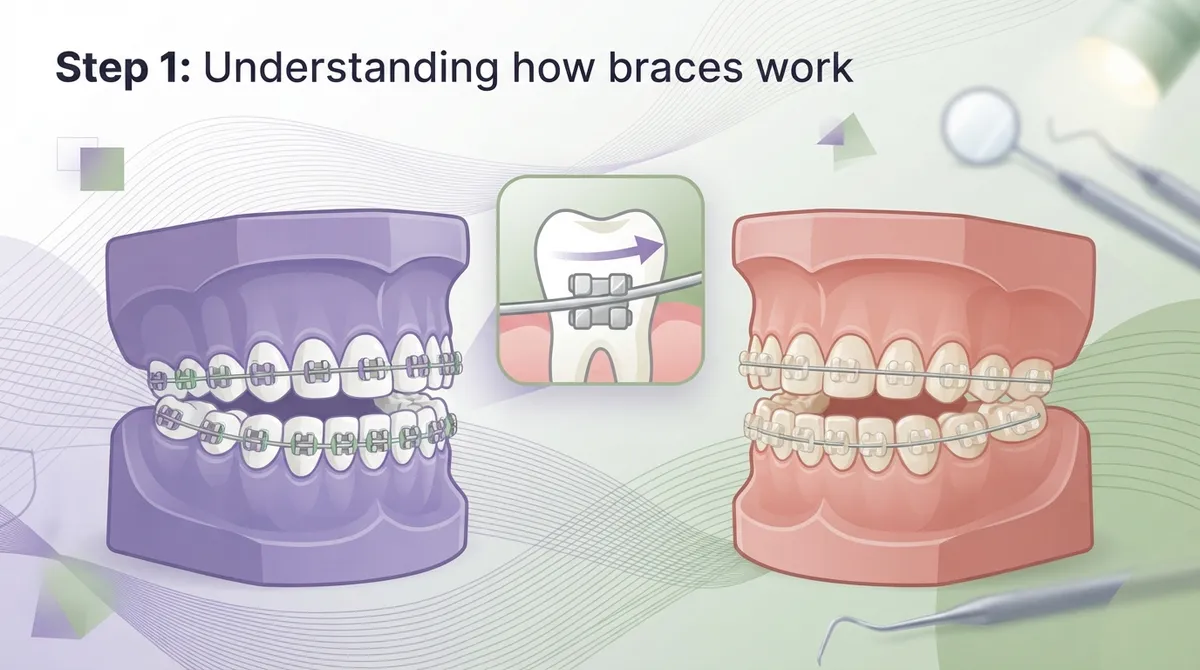
Before you compare, it helps to know what both types have in common. Metal and ceramic braces are fixed appliances. That means they stay on your teeth for the whole treatment. A bracket sits on each tooth, and an archwire connects them. The wire applies gentle, controlled force that moves teeth over time.
The main difference is the bracket itself:
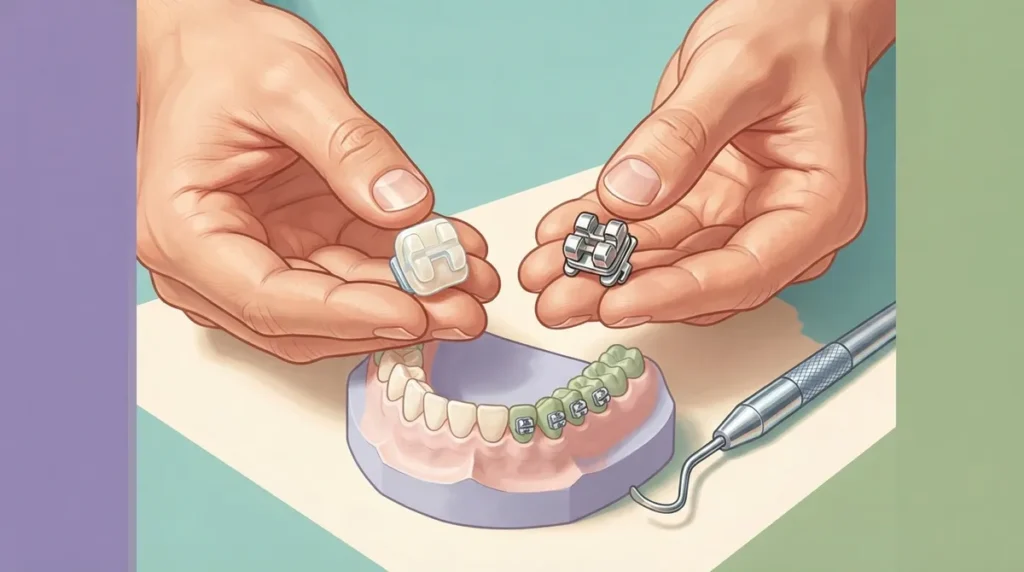
- Metal brackets are made from stainless steel. They are visible but known for being strong.
- Ceramic brackets are tooth-colored or clear. They blend in with your teeth, so they are generally less noticeable.
Both can treat many orthodontic problems, from crowding to bite issues. If you’d like a broader look at your choices, our guide to types of braces is a great place to start.
Step 2: Compare Looks, Comfort, and Everyday Life
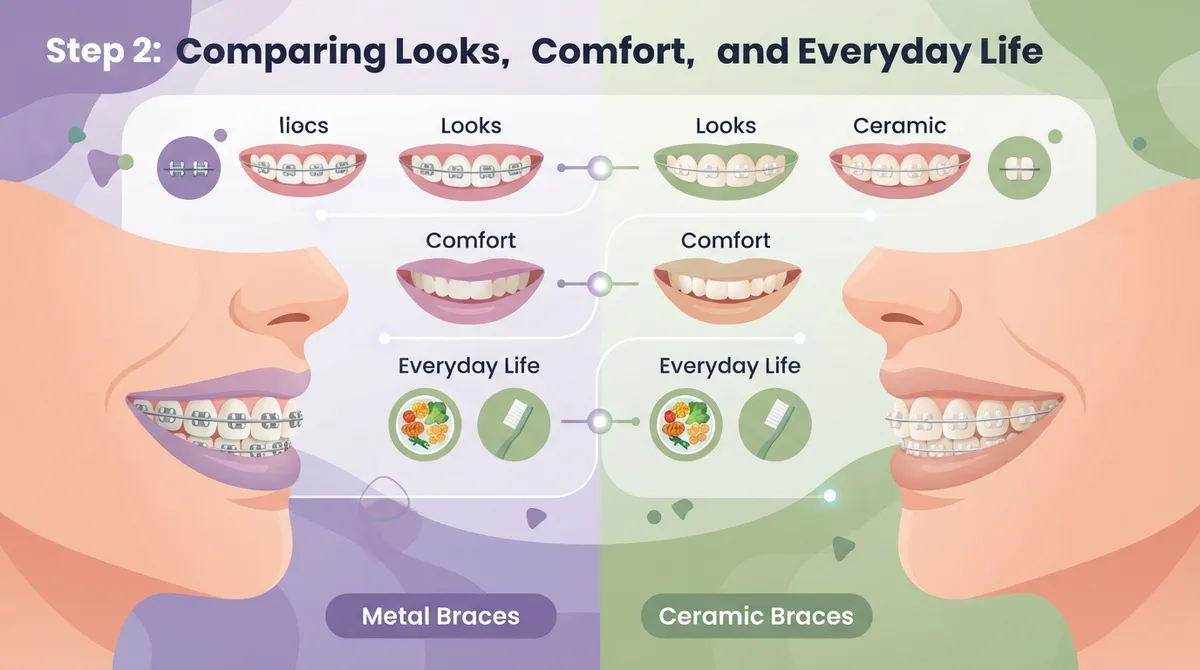
Let’s be real: looks matter to a lot of people. And that’s perfectly fine! Here’s how the two types stack up side by side.
| Feature | Metal Braces | Ceramic Braces |
|---|---|---|
| Appearance | Silver brackets, easy to see | Tooth-colored or clear, less noticeable |
| Durability | Generally very durable | More brittle; may chip or debond in some cases |
| Friction with wire | Typically lower | Can be higher in some designs |
| Staining | Brackets do not stain | Bracket is stain-resistant, but ligatures can discolor |
| Best for | Patients who want a proven, sturdy option | Patients who want a more discreet look |
Notice that last row. Neither one is “better” for everyone. The right fit depends on your goals, your teeth, and your lifestyle.
A Quick Note on Visibility
Ceramic brackets match your teeth, but they are not invisible. The archwire and the small elastic ties can still show. Clear or tooth-colored ties may also pick up color from foods and drinks, like coffee, tea, and curry. The bracket itself is generally stain-resistant, though. So when someone says “ceramic braces stain,” they usually mean the little ties, not the bracket.
Step 3: Think About Durability and Treatment Needs
Here’s where a little honesty helps. Ceramic is a hard material, but it is also more brittle than metal. That means ceramic brackets may be more likely to fracture or come loose in some situations.
What does research say? Results vary. A 2024 clinical study that followed patients for 12 months reported higher failure rates for ceramic brackets overall, especially on the lower arch and back teeth. But a 2020 study found the opposite pattern in its sample: 14 metal brackets (7.2%) failed compared with 2 ceramic brackets (1.1%). Different bracket designs, bonding methods, and patient groups can lead to different results. So the takeaway is simple: don’t treat any single number as a universal rule.
Ceramic brackets may also create more friction against the archwire than metal ones. That can affect how teeth slide during some stages of treatment. It does not mean ceramic braces are always slower. Treatment time depends on your case and your plan, not just on bracket color.
For some patients, metal is still a smart pick because of its strength. If you’re curious about why, take a look at 7 reasons traditional metal braces are still a top choice.
Step 4: Match the Braces to Your Life Stage
Different people have different priorities. Let’s look at a few common situations.
For Kids and Teens
Younger patients can be tough on braces. Sports, snacks, and busy school days all add wear and tear. Metal braces often make sense here because of their strength. Plus, many kids love customizing their look. At our office, WildSmiles braces bring fun bracket shapes like stars and hearts to the mix. Parents can also read our tips on how to choose the right braces for teens.
For Working Adults
If you spend your days in meetings, ceramic brackets may feel more comfortable because they blend in. You can smile in photos and presentations without feeling self-conscious. Our adult orthodontics page explains what treatment can look like for busy professionals.
For Big Life Events
Got a wedding, graduation, or big career moment coming up? Talk timing with your orthodontist early. They can map out what is realistic and help you plan around your date.
For Past Braces Wearers
Did your teeth shift after treatment years ago? It’s more common than you’d think, and it’s fixable. A fresh evaluation will show whether metal, ceramic, or another option fits best now.
Step 5: Know What Care Looks Like
Whichever type you choose, good habits keep your treatment on track. Both options need careful cleaning around the brackets and wires. Here’s a simple routine to follow:
- Brush after meals and before bed, angling your brush to reach above and below each bracket.
- Floss daily using floss threaders or a water flosser to get under the wire.
- Skip hard and sticky foods like hard candy, caramel, and ice, which can break brackets or bend wires.
- Keep every appointment. Visits are commonly scheduled about every six to ten weeks, though your schedule depends on your plan.
- Call us about problems. If a bracket comes loose or a wire pokes you, don’t try to fix it yourself.
For a deeper dive, check out our post on 13 foods to avoid with braces. And if something does go wrong, here’s what to do during an orthodontic emergency.
A Word About Removal
When treatment ends, your orthodontist removes the brackets and cleans off the leftover bonding material. Ceramic is hard, so removal and cleanup can take extra care compared with metal. Your orthodontist uses proven techniques to protect your enamel, so please don’t try this at home!
Step 6: Talk About Cost and Coverage
Many families ask whether ceramic braces cost more than metal. Often they do, but pricing depends on your treatment plan, your provider, and your insurance. The best way to get a real answer is to ask for a personalized estimate. Flexible plans can make care easier to manage, and our page on orthodontic financing explains your options.
Step 7: Consider Other Options Too
Metal and ceramic aren’t the only paths to a straighter smile. Some patients prefer advanced digital systems. LightForce orthodontics uses 3D-printed, custom-fitted brackets designed around your teeth. Others like the removable feel of clear aligners. If you’re torn, our comparison of braces vs. clear aligners can help you sort it out.
Step 8: Get an Expert Evaluation
Here’s the most important step. Appearance alone should not decide your choice. Your bite, the tooth movements you need, your oral health, and your goals all matter. Only a trained orthodontist can look at the full picture.
Dr. Flor Segovia is a board-certified orthodontist, and you can learn more about the American Board of Orthodontics to see what that credential means. During your visit, you’ll get honest guidance, not a sales pitch. Not sure what to expect? Read about your first orthodontic visit so you can walk in feeling prepared.
Want to see how we work? Follow along on our Instagram page and our Facebook page for smile stories and office fun. You can also visit us on Google — Segovia Orthodontics to read what Lakewood Ranch patients say about their experience.
Quick Decision Checklist
Still on the fence? Ask yourself these questions:
- How important is a discreet look to me or my child?
- Are we active, with sports or busy habits that could stress brackets?
- Are we okay with extra care for clear ties and ceramic brackets?
- What does my budget and insurance allow?
- What does my orthodontist recommend for my specific bite?
Your answers, plus your orthodontist’s advice, will point you to the right fit.
Ready to Take the Next Step?
Metal and ceramic braces can both give you a healthy, beautiful smile. The best choice is the one that fits your teeth, your lifestyle, and your goals. You don’t have to figure it out alone. Request an appointment with our friendly team at Segovia Orthodontics in Lakewood Ranch, or call us at 941-557-1333 to chat about your options. We can’t wait to meet you and help you smile with confidence in 2026 and beyond!
FAQs
Q: What is the difference between metal and ceramic braces?
A: Both use brackets and an archwire to move your teeth, but metal brackets are silver and very sturdy, while ceramic brackets are tooth-colored and less noticeable. Your orthodontist can help you pick the one that suits your bite and your goals.
Q: Are ceramic braces as effective as metal braces?
A: Yes, both can treat many orthodontic problems when planned by a skilled orthodontist. The best choice depends on the tooth movements you need, your oral health, and your personal priorities.
Q: Do ceramic braces take longer than metal braces?
A: Not necessarily! Ceramic brackets can create more friction with the wire in some cases, but treatment time really depends on your specific case and plan, not on bracket color alone.
Q: Are ceramic braces more likely to break?
A: Ceramic is more brittle than metal, so brackets may chip or come loose more easily in some situations. Studies show mixed results, so the best step is to ask your orthodontist what to expect for your teeth.
Q: Do ceramic braces stain or turn yellow?
A: The ceramic bracket itself is generally stain-resistant. The small clear or tooth-colored elastic ties, however, can pick up color from coffee, tea, and other foods, and your orthodontist can swap them at your visits.
Our Service Area