Key Takeaways
-
An orthodontist completes a dental degree plus an accredited orthodontics residency of typically two to three years, which is the key credential to verify when choosing an office.
-
The AAO recommends an initial orthodontic check-up by age 7, even though most children do not need treatment at that age; it simply lets a specialist spot concerns early.
-
Ask whether the clinician completed an accredited orthodontic residency, check AAO membership, and note that ABO board certification is a voluntary extra step beyond specialty training.
-
Orthodontic costs have no single national price; fees depend on treatment type, case complexity, and duration, so request an individualized written estimate rather than relying on online averages.
-
Dental insurance often covers only part of orthodontic fees and may have age limits, in-network rules, or lifetime maximums, so verify your benefits directly with your plan.
-
Retainers are essential after treatment because relapse is real; they are the best protection for keeping teeth in their corrected positions.
Picture this: you type “braces near me” into your phone, and suddenly you see dozens of options. Some are dental offices that also offer braces. Others are called an orthodontic specialty office. So what is the real difference, and why does it matter for your smile?
Whether you are a busy mom planning care for your 10-year-old, a professional who wants discreet aligners, or an adult hoping to fix a smile that shifted after old braces, choosing the right office is the first big step. A great start can make your whole treatment feel smoother, more comfortable, and more predictable.
In this friendly guide, we will walk through what an orthodontic specialty office is, how it differs from a general dental office, what treatments you can expect, and what to ask before you commit. By the end, you will feel confident about your next move.

What Is an Orthodontic Specialty Office?
An orthodontic specialty office is a practice focused on diagnosing, preventing, and treating misaligned teeth and jaws. That includes bite problems and parts of dentofacial development. In plain words, the whole office is built around helping teeth and jaws work well together.
The clinician leading the care is an orthodontist. An orthodontist first earns a dental degree. Then they complete an accredited orthodontics and dentofacial orthopedics residency. The American Association of Orthodontists (AAO) describes this extra training as typically two to three years.
Here is a fun fact: the AAO reports that only about 6% of dental school graduates go on to become orthodontists. It is a small, focused group, and that focus shows up in the care you receive.
What You Will Usually Find Inside
- A full exam and diagnostic records, such as photos, digital scans, and x-rays
- An individualized treatment plan built around your goals
- Several appliance options, from braces to clear aligners to retainers
- Care for children, teens, and adults under one roof
- Team members trained to support braces and aligner patients every step of the way
Orthodontist vs. General Dentist: What Is the Difference?
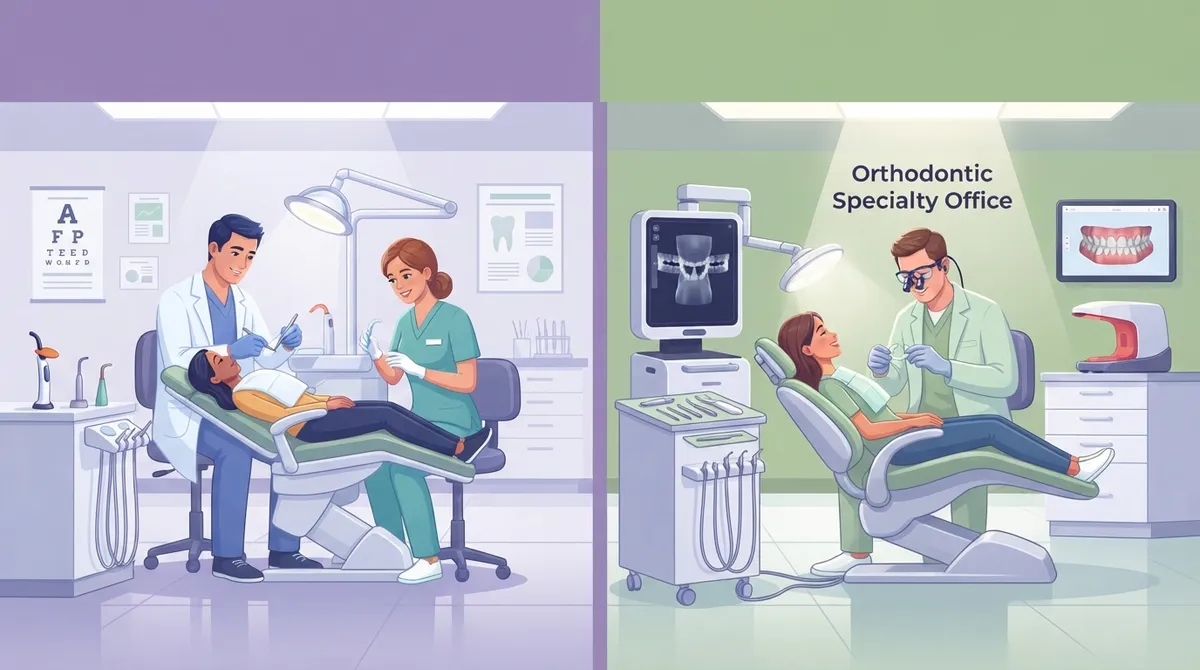
This is one of the most common questions families ask. A general dentist may provide some orthodontic services, and many do a wonderful job with routine dental care. But offering orthodontic treatment does not automatically make a dentist an orthodontist.
An orthodontist has completed that additional specialty residency, where the daily work is tooth movement, bite correction, and jaw growth. If you would like a deeper look, you can read our guide on general dentist vs. orthodontist to compare the two roles side by side.
| Question | Orthodontic Specialty Office | General Dental Office |
|---|---|---|
| Main focus | Teeth and jaw alignment, bite correction | Overall dental health, cleanings, fillings |
| Extra training | Accredited orthodontic residency (typically 2 to 3 years per the AAO) | Dental degree; orthodontic training varies |
| Treatment options | Braces, clear aligners, retainers, early treatment | May offer limited options |
| Best for | Planned, case-specific alignment care | Everyday oral health needs |
The best care often comes from teamwork. Your family dentist keeps your teeth and gums healthy, while your orthodontist guides your smile into place.
How Can You Verify a Qualified Orthodontist?
It is smart to double-check credentials. A good office will be happy to answer. Here are simple ways to confirm you are in the right hands:
- Ask about residency training. Ask whether the clinician completed an accredited orthodontic residency after dental school.
- Check AAO membership. The association admits orthodontists, so membership is another helpful way to identify a specialist.
- Ask about board certification. Certification from the American Board of Orthodontics is voluntary. It is different from specialty training and involves additional examinations and ongoing learning.
- Look at the full picture. Reviews, before-and-after results, and how the team explains your plan all tell you a lot.
At Segovia Orthodontics, Dr. Flor Segovia is a board-certified orthodontist. You can learn more about her background on the Dr. Flor Segovia page.
What Treatments Does an Orthodontic Specialty Office Offer?
Treatment options depend on your needs and the clinician’s assessment. Most specialty offices offer a mix of the following.
Traditional and Modern Braces
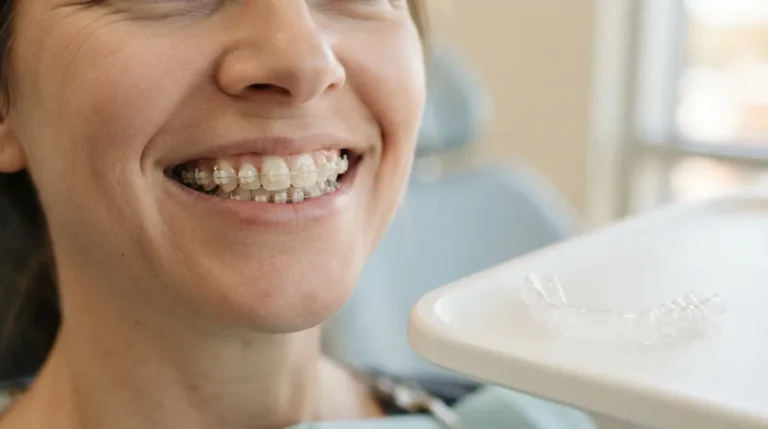
Metal and ceramic braces remain a trusted choice for many cases, especially complex ones. Newer systems add comfort and precision. For example, LightForce braces use 3D-printed, custom-fitted brackets designed from your digital treatment plan. They are available in clear or white options, so they blend in more naturally.
Kids and teens often love personality, too. WildSmiles braces come in fun shapes like stars, flowers, and hearts, which can make treatment feel exciting instead of scary.
Clear Aligners
Clear aligners use a series of custom, removable trays to move teeth gently. They are popular with working professionals and young adults who want a discreet look. To explore this path, see our page on clear aligners. Our office also offers Angel Aligners, which use AI-driven planning and a frosted, low-shine finish for comfort and a subtle look.
Retainers
Once your teeth are in place, retainers help keep them there. Relapse is real, and retainers are the best protection. Learn more about orthodontic retainers and how to care for them.
Early or Interceptive Treatment
For some children, starting early can guide jaw growth and make space for incoming teeth. Not every child needs it, and timing depends on development. You can read more about early orthodontic treatment to see if it might fit your family.
When Should Children, Teens, and Adults Visit?
Orthodontic care is available at every age. Here is a quick look at what each group should know.
Children
The AAO recommends an initial orthodontic check-up by age 7. This does not mean every child needs treatment then. It simply gives a specialist a chance to spot concerns early and tell you if watching and waiting is the best plan. Moms, this is a great time to ask all your questions. Our first orthodontic visit page explains what to expect.
Teens
The teen years are a popular time for braces because many permanent teeth have arrived. A good specialty office works around school, sports, and busy schedules. Learn more about teen orthodontic treatment.
Adults
It is never too late for a straighter smile. Many adults come in for the first time, while others return after their teeth shifted following earlier braces. If you are in a demanding career, or planning for a wedding or big event, a specialist can help map out a realistic timeline. See our overview of adult orthodontics for options that fit your lifestyle.
What Happens at Your First Consultation?
Walking into a new office can feel a little nerve-wracking. Good news: a consultation is a friendly conversation, not a test. Here is the usual flow.
- Welcome and health history. The team learns about your goals, concerns, and dental history.
- Exam and records. The orthodontist checks your teeth, bite, and jaw. Photos, scans, or x-rays may be taken.
- Diagnosis and options. You will hear what is going on and which treatments might suit you.
- Timeline and cost estimate. You should receive a clear idea of how long treatment may take and what it may cost.
- Your questions. This is your time to ask anything at all.
For a closer look, read what happens during an orthodontic evaluation.
How Much Does Orthodontic Treatment Cost?
Here is the honest answer: there is no single national price. The AAO’s 2025 cost guidance explains that fees depend on treatment type, complexity, and duration. It recommends getting an individualized estimate rather than relying on averages you find online.
What Affects the Price
- The type of treatment, such as braces or clear aligners
- How complex your case is
- How long treatment is expected to take
- Your location and the specific practice
Insurance and Payment Options
Dental insurance may pay only part of the fee. Plans can also have age limits, in-network rules, or a lifetime maximum. The best move is to verify your benefits directly with your plan, then ask the office for a written estimate and payment options. If budgeting is on your mind, our page on orthodontic financing explains flexible ways to spread out costs.
What Should You Ask Before You Choose an Office?
Bring a short list to your visit. These questions help you compare offices fairly:
- Did the clinician complete an accredited orthodontic residency?
- Which treatment options fit my case, and why?
- How long will treatment likely take?
- What is the total cost, and what does it include?
- How often are appointments, and do you offer flexible times?
- What happens if I have an emergency, like a broken wire?
Want more ideas? Check out how to ask the right orthodontic questions at your visit. And if something unexpected happens mid-treatment, our orthodontic emergency page can guide you.
Why Families Choose Segovia Orthodontics
Segovia Orthodontics at Lakewood Ranch offers personalized care for all ages in a comfortable, supportive setting. Dr. Segovia provides bilingual care in English and Spanish, uses advanced orthodontic technology, and offers braces and clear aligners for children, teens, and adults. Curious about what sets the practice apart? Take a look at why choose us.
You can also see what our community says by visiting Segovia Orthodontics on Google, and follow along with smile stories on our Instagram page and our Facebook page.
Ready to Take the Next Step?
Choosing an orthodontic specialty office is really about finding a team you trust, with the training to match your goals. Look for specialty training, clear communication, honest pricing, and a plan built just for you. When those pieces come together, the whole experience feels easier and a lot more fun.
If you are ready to start the conversation, we would love to meet you. Request an appointment today, or call us at 941-557-1333. Your best smile is closer than you think.
FAQs
Q: What is an orthodontic specialty office?
A: It is a dental practice focused on diagnosing, preventing, and treating misaligned teeth and jaws, including bite problems. The care is led by an orthodontist who completed an accredited orthodontic residency after dental school.
Q: At what age should a child visit an orthodontist?
A: The AAO recommends an initial check-up by age 7. That does not mean your child needs braces right away. It just helps a specialist spot concerns early and suggest the best timing.
Q: How can I tell if a dentist is a true orthodontist?
A: Ask whether they completed an accredited orthodontic residency, and look into AAO membership. Board certification from the American Board of Orthodontics is a voluntary extra step that shows further assessment and continued learning.
Q: Does dental insurance cover braces or clear aligners?
A: Sometimes, but often only part of the cost. Plans may have age limits, in-network rules, or a lifetime maximum, so check your benefits with your plan and ask the office for a written estimate and payment options.
Q: What should I ask during an orthodontic consultation?
A: Ask about the clinician’s training, which treatments fit your case, how long it will take, the total cost, and how emergencies are handled. A friendly, clear answer to each one is a great sign you are in the right place.
Our Service Area