Key Takeaways
-
Board certification is voluntary and not required to legally practice orthodontics; both certified and non-certified orthodontists complete the same dental school and residency training, making certification an added credential demonstrating extra commitment.
-
Verify your orthodontist's board certification directly through the American Board of Orthodontics public directory by name or location, as most certifications require renewal every 10 years and may have expired since initial achievement.
-
Board certified orthodontists pass rigorous written and clinical exams testing real-world decision-making across four equally weighted areas: diagnosis, treatment planning, treatment execution, and outcomes assessment.
-
Consider board certification as one factor alongside experience, technology used, treatment options available, communication style, cost, and office atmosphere when selecting an orthodontist for your family.
-
Non-certified orthodontists are still qualified professionals; board certification shows extra clinical skills and ongoing commitment to standards, but doesn't guarantee perfect results or eliminate treatment risks.
-
Board certified orthodontists with modern technology may provide faster, more efficient treatment planning, which is especially valuable for complex cases involving jaw alignment, severe crowding, or time-sensitive situations like weddings.
Picking someone to guide your smile for the next year or two is a big deal. Maybe you’re a mom juggling soccer practice and school pickups, trying to find time for your kid’s braces. Maybe you’re a busy professional who wants straighter teeth without anyone at work noticing. Whoever you are, you deserve to know your orthodontist is truly qualified. That’s where the term “board certified orthodontist” comes in, and honestly, it trips people up more than it should. Let’s clear things up together, in plain language, so you can walk into your next consultation feeling confident and informed.
This guide breaks down exactly what board certification means, how it’s earned, and how you can check it yourself in just a few minutes. We’ll also cover what really matters when picking an orthodontist for your family, whether you need braces for your teenager or clear aligners before a big wedding. By the end, you’ll know exactly what questions to ask and what to look for. Grab a coffee, and let’s get into it.
What Does Board Certified Orthodontist Actually Mean?
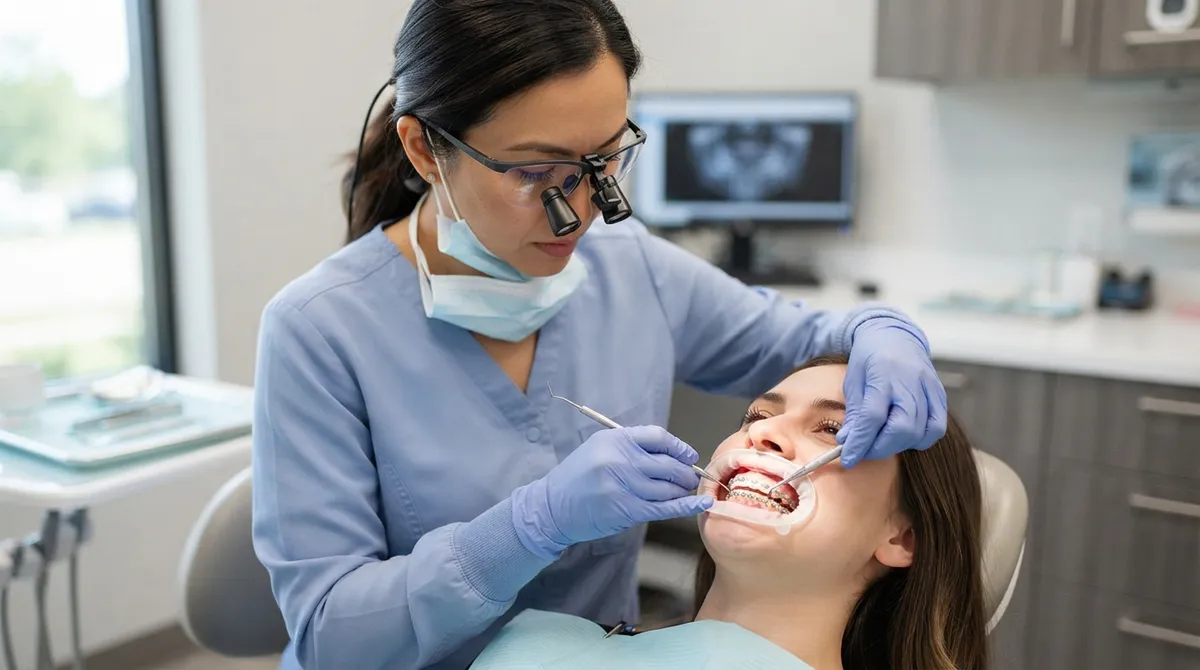
A board certified orthodontist is a specialist who has gone above and beyond basic licensing requirements. In the United States and Canada, the American Board of Orthodontics (ABO) is the group responsible for this certification. Think of it like an extra credential that shows an orthodontist chose to prove their skills through additional testing.
Here’s the part many people don’t realize: becoming board certified is completely voluntary. An orthodontist can legally practice, place braces, and offer clear aligners without ever going through ABO certification, as long as they meet standard licensing and specialty-training requirements. So certification isn’t about legality. It’s about an orthodontist choosing to prove their expertise through a rigorous, optional process.
Why This Distinction Matters for Your Family
For concerned parents especially, this distinction is important. It doesn’t mean a non-certified orthodontist is unqualified. But it does mean a board certified orthodontist has taken extra steps to demonstrate their clinical judgment. If you’re weighing your options for your child’s early orthodontic treatment or your teen’s braces, this credential can be one more piece of the puzzle.
How Does an Orthodontist Become Board Certified?
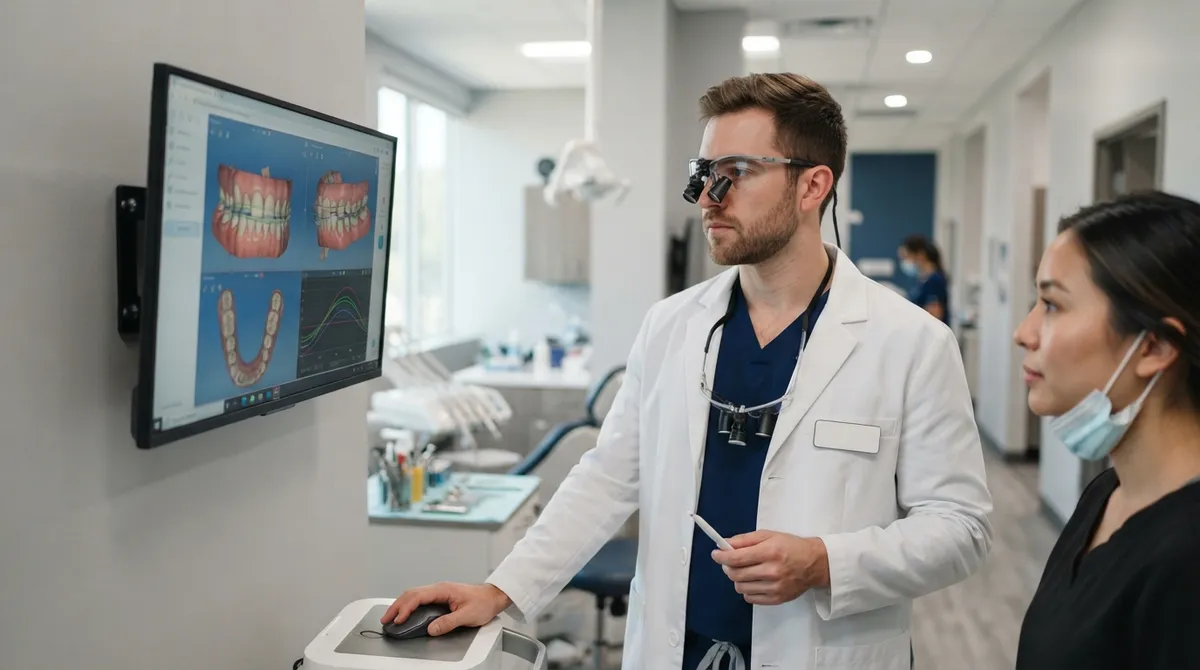
Getting board certified isn’t quick or easy. It takes years of extra work on top of dental school and orthodontic residency. Here’s how the process typically works, step by step:
- Graduate dental school: The orthodontist first becomes a licensed dentist.
- Complete an accredited orthodontic residency: They must graduate from, or currently be enrolled in, a program accredited by the Commission on Dental Accreditation (CODA) in the U.S. or Canada.
- Become eligible for the written exam: Residents can sit for the ABO written exam after completing at least 18 months of their residency program.
- Pass the written examination: This exam is administered at Pearson VUE testing centers and covers core orthodontic knowledge.
- Complete the clinical examination: This scenario-based exam tests real-world decision-making across four equally weighted areas.
- Receive certification: Once both exams are passed, the orthodontist earns their ABO certification.
- Renew every 10 years: Most certifications are time-limited and require renewal, though a few orthodontists hold lifetime certification.
The clinical exam alone is broken into four categories, each worth 25%: data gathering and diagnosis, treatment planning, treatment execution and management, and outcomes assessment. That’s a lot of scrutiny on how an orthodontist actually treats patients, not just what they know on paper.
Board Certified vs. Non-Certified Orthodontist: What’s the Real Difference?
This is probably the question on your mind right now. Let’s lay it out clearly with a simple comparison.
| Factor | Board Certified Orthodontist | Non-Certified Orthodontist |
|---|---|---|
| Dental License | Required | Required |
| Accredited Residency | Required | Required |
| ABO Written Exam | Passed | Not required |
| ABO Clinical Exam | Passed | Not required |
| Certification Renewal | Every 10 years (generally) | Not applicable |
| Legally Able to Practice | Yes | Yes |
Notice something important here: both types of orthodontists must complete the same dental school and residency training. Board certification is an added layer, not a replacement for basic qualifications. It’s a bit like a teacher earning a national teaching award after years of already being a certified, capable educator.
Why Board Certification Can Give You Peace of Mind
So why should you care about this credential when picking an orthodontist? Here are a few solid reasons:
- It shows the orthodontist voluntarily submitted their work for outside review
- It demonstrates strong clinical decision-making skills, tested through real case scenarios
- It requires ongoing renewal, meaning the orthodontist stays current with standards
- It reflects a level of commitment and pride in their craft
- It can be a helpful (though not the only) quality signal when comparing providers
According to the ABO, board-certified orthodontists made up 68.7% of American Association of Orthodontists members in a recent membership statistic. That’s a meaningful number, but remember, it reflects AAO members specifically, not every practicing orthodontist nationwide.
Dr. Flor Segovia at Segovia Orthodontics in Lakewood Ranch holds this certification and brings that extra layer of expertise to every patient, whether they’re starting teen orthodontic treatment or exploring adult orthodontics for the first time.
How to Verify If Your Orthodontist Is Board Certified
Don’t just take someone’s word for it. Verifying credentials takes only a couple of minutes and gives you real peace of mind. Follow these simple steps:
- Visit the official American Board of Orthodontics website
- Look for their public directory of certified orthodontists
- Search by the orthodontist’s name or practice location
- Check the certification status and renewal date shown
- Confirm the certification is current, not expired
This step matters because certification isn’t permanent for most orthodontists. It requires renewal roughly every 10 years, along with fees and ongoing requirements. An orthodontist who was certified a decade ago may or may not have kept it current, so always check the most recent status rather than relying on outdated information.
What Else Should You Consider Besides Certification?
Board certification is valuable, but it shouldn’t be the only factor in your decision. Here’s what else deserves your attention when choosing where your family gets treatment:
- Experience with your specific concern: Some orthodontists specialize in complex bite issues, while others focus heavily on cosmetic cases
- Technology used in the office: Practices offering advanced orthodontic technology often provide faster, more precise treatment
- Treatment options available: Look for a range of choices, from types of braces to clear aligners
- Communication style: Do they explain things clearly and answer your questions patiently?
- Cost and financing options: Flexible orthodontic financing can make treatment far more manageable
- Office atmosphere: A warm, welcoming environment matters, especially for kids and nervous patients
- Reviews from real patients: Checking honest feedback gives you a feel for day-to-day experience
You can get a sense of the patient experience by reading real feedback. Feel free to visit us on Google — Segovia Orthodontics to see what current patients in Lakewood Ranch have to say about their treatment journey.
Should You Choose a Board Certified Orthodontist for Braces or Clear Aligners?
Whether you’re considering traditional metal braces, fun WildSmiles braces for your child, digitally customized LightForce orthodontics, or discreet clear aligners, working with a board certified orthodontist can add confidence to your decision. This is especially true for more complex cases involving jaw alignment, severe crowding, or bite correction.
For life event planners rushing to fix their smile before a wedding or graduation, timeline matters just as much as expertise. A board certified orthodontist with access to modern technology can often plan treatment more efficiently, helping you hit that important deadline with a smile you’re proud of.
What About Adult Relapse Patients?
If you had braces years ago and your teeth have shifted back, you’re not alone. This is incredibly common. A board certified orthodontist can assess what changed and create a targeted plan to correct the relapse, often faster than your original treatment took. Many adults find this second round of treatment easier since they already know what to expect and are highly motivated to keep results this time.
Common Myths About Board Certification
Let’s clear up a few misunderstandings that tend to confuse patients:
- Myth: Non-certified orthodontists aren’t qualified. Truth: They still completed dental school and an accredited residency.
- Myth: Certification guarantees perfect results. Truth: It shows strong clinical skills, but no credential eliminates all risk or guarantees an exact outcome.
- Myth: Certification never expires. Truth: Most certifications require renewal every decade.
- Myth: All orthodontists are automatically board certified. Truth: It’s a voluntary process that not every orthodontist pursues.
Understanding these myths helps you make a more balanced, informed decision rather than relying on assumptions.
Questions to Ask Before Your First Visit
Walking into a consultation prepared makes a huge difference. Consider asking these questions:
- Are you currently board certified through the ABO?
- How long have you been practicing orthodontics?
- What treatment options do you recommend for my specific case?
- What technology does your office use for planning and treatment?
- What financing plans do you offer?
- How do you handle orthodontic emergencies?
If you ever run into an unexpected issue like a broken bracket or poking wire, it helps to know your provider has a clear plan for orthodontic emergency situations before you actually need it.
Why Families Trust Segovia Orthodontics in Lakewood Ranch
At Segovia Orthodontics, Dr. Flor Segovia combines board certification with genuine warmth and a family-first approach. Patients throughout Lakewood Ranch appreciate the bilingual care, flexible scheduling, and wide range of treatment options, from playful WildSmiles brackets for kids to precise LightForce technology for adults wanting fast, comfortable results. You can learn more about her background and approach by visiting why choose us or exploring answers to common questions on the FAQ orthodontic treatment page.
You can also follow along and see real patient smiles by checking out our Facebook page or browsing everyday moments from the practice on our Instagram page. These channels give you a real feel for the practice beyond just reviews and credentials.
Making Your Final Decision with Confidence
Choosing an orthodontist is a personal decision, and board certification is one strong piece of a bigger puzzle. Combine it with research into experience, technology, communication style, and cost. Trust your gut too. If a practice feels welcoming and answers your questions honestly, that matters just as much as any credential on a wall.
Whether you’re a parent scheduling your child’s first evaluation, a professional wanting discreet aligners before a big presentation season, or an adult ready to fix relapse from years ago, taking time to verify credentials protects your investment and your smile.
Ready to Start Your Smile Journey?
Now that you know exactly what to look for, it’s time to take the next step. Whether you have questions about braces, clear aligners, or financing options, our friendly team is here to help. Feel free to contact us with any questions, or go ahead and request an appointment to meet Dr. Segovia and see the office for yourself. You can also simply call us at 941-557-1333 to speak with our team directly. Your best smile is closer than you think, and we can’t wait to help you get there.
FAQs
Q: What is a board certified orthodontist?
A: A board certified orthodontist has voluntarily completed the American Board of Orthodontics certification process, which includes written and clinical exams beyond regular dental school and residency training. It’s an extra credential that shows a real commitment to excellence, though it’s not required to legally practice orthodontics.
Q: Is a board certified orthodontist better than one who isn’t certified?
A: Not necessarily better, but it does show extra dedication and proven clinical skills through rigorous testing. Many wonderful, skilled orthodontists choose not to pursue certification, so it’s just one factor to weigh alongside experience, technology, and how comfortable you feel with them.
Q: How can I verify if my orthodontist is ABO board certified?
A: The easiest way is to visit the American Board of Orthodontics website and search their public directory by name or location. It only takes a couple of minutes, and it’s the best way to confirm current, active certification rather than relying on outdated claims.
Q: Does board certification expire?
A: Yes, for most orthodontists! Certification is generally time-limited and needs renewal about every 10 years, though a small number of orthodontists hold lifetime certification. This renewal requirement helps ensure certified orthodontists stay current with evolving techniques.
Q: Should I choose a board certified orthodontist for clear aligners?
A: It’s a great idea, especially for more complex cases involving bite issues or significant crowding. Board certified orthodontists have demonstrated strong treatment planning skills, which can be reassuring whether you’re choosing traditional braces or modern clear aligner systems.
Our Service Area