Key Takeaways
-
Invisalign Teen success depends entirely on compliance—teens must wear aligners 20-22 hours daily for treatment to work, making responsibility the single biggest factor orthodontists consider when recommending aligners over fixed braces.
-
Invisalign Teen includes specialized features like blue wear indicators, eruption tabs for developing teeth, and replacement allowances that distinguish it from adult aligners and accommodate ongoing jaw growth.
-
Teens with mild-to-moderate crowding, spacing, or bite issues who play sports or instruments are ideal candidates, while those with complex jaw misalignment or a history of losing items may benefit more from traditional braces.
-
Treatment typically costs $5,000-$7,000 and takes 12-18 months, with many dental insurance plans offering partial coverage and financing options available to make treatment more manageable for families.
-
Invisalign Teen users show better oral hygiene and less plaque buildup than braced peers, and aligners eliminate food restrictions, bracket breakage, and awkward photos—major advantages for a teen's social life.
-
Early orthodontic evaluation by age 7 helps orthodontists spot developing issues and plan the right treatment path, ensuring teens receive personalized recommendations based on their complete dental development history.
Picture this: your teen just found out they need orthodontic treatment, and their first question is “Will everyone see my metal mouth in every photo for the next two years?” If you’re a parent nodding along right now, you’re not alone. So many families walk into our office wondering if clear aligners could be the answer for their teenager. The good news? Invisalign for teens has come a long way, and it might just be the perfect fit for your busy, image-conscious, sports-loving kid.
But here’s the thing: Invisalign Teen and traditional braces both have real strengths. Neither one is automatically “better” for every smile. The right choice depends on your teen’s specific dental needs, their lifestyle, and honestly, how responsible they are about following instructions. Let’s break down exactly how these two options compare, so you can make a confident decision with your orthodontist.
What Makes Invisalign for Teens Different from Adult Aligners?
Invisalign Teen isn’t just a smaller version of the adult product. It’s built specifically with growing mouths in mind. Teen aligners include a few clever features that adult versions don’t have.
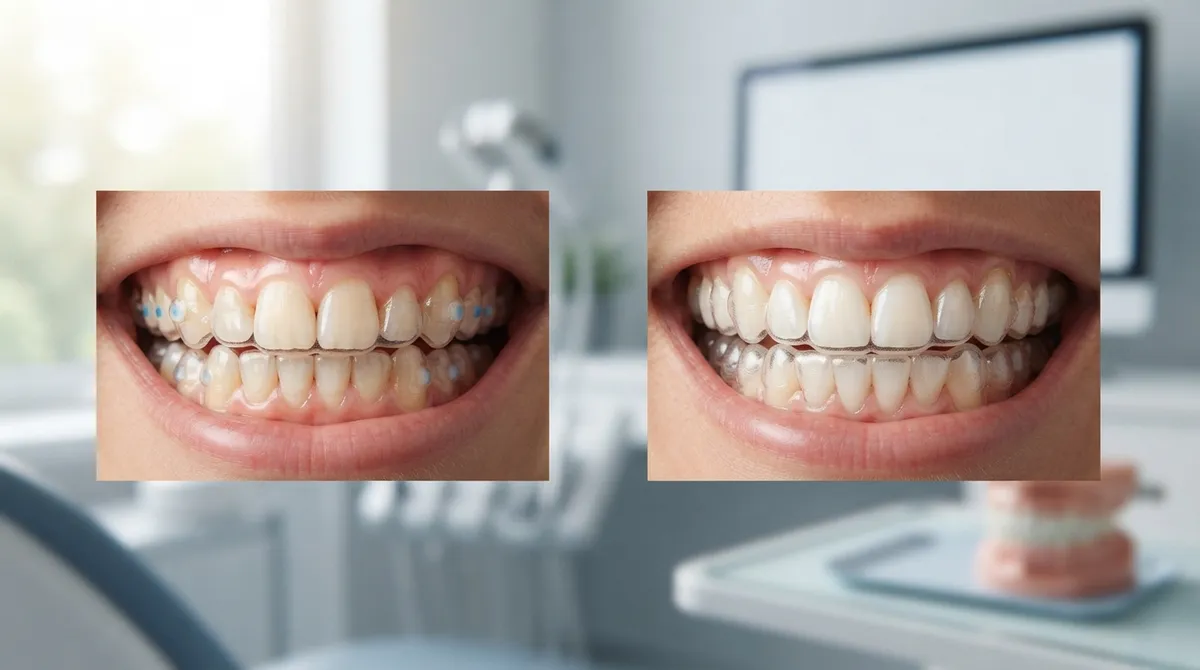
- Blue wear indicators that fade over time, giving parents and orthodontists a quick visual clue about compliance
- Eruption tabs that make room for teeth still coming in, like second molars
- Replacement aligner allowances for trays that get lost (because let’s be honest, teens lose things)
- Flexibility for growth changes since teen jaws and bites are still developing
These features matter because a teenager’s mouth is a moving target, literally. Permanent teeth are often still settling in, and orthodontists need a system that can adapt. Dr. Flor Segovia and our team evaluate each teen’s dental development before recommending any treatment path, whether that’s aligners, traditional braces, or something else entirely.
Invisalign Teen vs. Traditional Braces: The Real Comparison
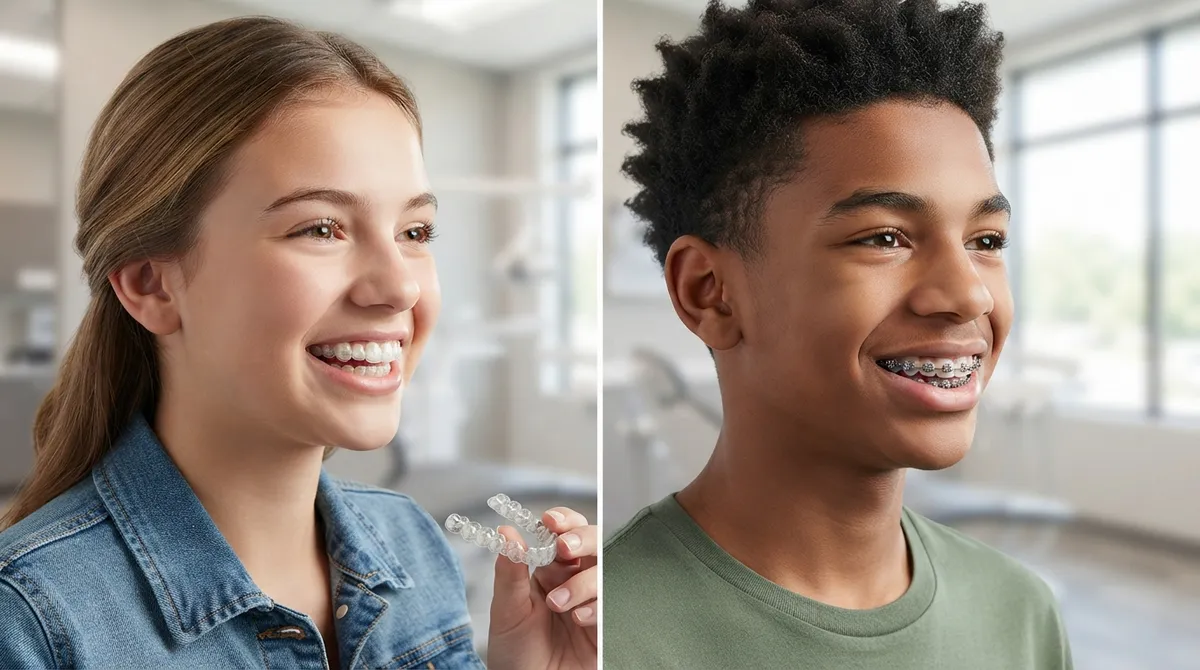
Let’s get into the nuts and bolts. Both options straighten teeth effectively, but they work very differently day to day.
| Feature | Invisalign Teen | Traditional Braces |
|---|---|---|
| Visibility | Nearly invisible | Visible metal or ceramic brackets |
| Removability | Removable for eating, brushing | Fixed, cannot be removed |
| Food restrictions | Minimal, aligners come off first | Many sticky or hard foods off-limits |
| Daily wear requirement | 20-22 hours per day | Worn 24/7 automatically |
| Sports and instruments | Easy to remove for games or practice | May require special mouthguards |
| Compliance dependent | Yes, success relies on wear time | No, works regardless of teen’s habits |
| Best for complex cases | Moderate cases, may need attachments | Handles severe crowding, bite issues |
Notice that compliance row? That’s the big difference. Braces do their job whether your teen remembers or not. Aligners only work if your teen actually wears them as directed. This is the single biggest factor orthodontists consider when recommending Invisalign Teen versus traditional metal braces.
Is Your Teen a Good Candidate for Clear Aligners?
Not every teen is a perfect fit for aligner treatment, and that’s okay. Here’s how to think through it honestly.
Signs Your Teen Might Do Well with Invisalign
- They’re responsible with removable items like retainers or mouthguards
- Their orthodontic issues are mild to moderate crowding, spacing, or minor bite problems
- They play sports or instruments where fixed brackets could get in the way
- They’re motivated by appearance and want a more discreet option
- They can commit to wearing aligners nearly all day, every day
Signs Traditional Braces Might Be the Better Choice
- Your teen has a history of losing things frequently, like water bottles or retainers
- The case involves significant jaw misalignment or complex tooth rotation
- They struggle with consistency or need a set-it-and-forget-it solution
- Multiple teeth need major movement that fixed brackets handle more predictably
Every case is unique, which is why a thorough evaluation matters so much. During a first orthodontic visit, our team reviews X-rays, photos, and a digital scan to map out exactly what your teen’s teeth and jaw need. This isn’t guesswork. It’s a data-driven decision made with your family.
How Invisalign Teen Actually Works, Step by Step
Understanding the process helps ease everyone’s nerves. Here’s what treatment typically looks like from start to finish.
- Initial consultation and digital scan to map your teen’s unique bite and alignment
- Custom treatment plan created showing the projected tooth movement over time
- A series of clear aligners is manufactured, each worn for about one to two weeks
- Your teen wears each tray 20-22 hours daily, removing only for meals and hygiene
- Regular check-ins with the orthodontist to monitor progress and swap trays
- Refinement aligners if needed to fine-tune results near the end of treatment
- Retainers fitted after treatment to lock in that brand-new smile
Treatment length varies, but many teen cases wrap up in about 12 to 18 months. That said, this is a general estimate, not a promise. Complexity, growth patterns, and how consistently your teen wears their aligners all play a role in the final timeline.
What About Cost and Insurance?
Let’s talk money, because we know it’s on your mind. Clear aligner treatment for teens commonly falls in the range of $5,000 to $7,000 in the United States. However, this is just a general estimate. Actual pricing depends on your region, the complexity of your teen’s case, and how many refinement trays are needed.
Many dental insurance plans offer partial orthodontic coverage for teens, and financing plans can help spread out the cost. Our team offers orthodontic financing options designed to make treatment manageable for busy Lakewood Ranch families. We believe cost shouldn’t be the reason your teen misses out on a confident smile.
Living with Invisalign Teen: Sports, School, and Social Life
One of the biggest perks parents love is how well aligners fit into a teen’s packed schedule. Whether your kid is a soccer star, a band member, or juggling both, removable aligners tend to fit right in.
- Aligners come out easily before games, matches, or instrument practice
- No brackets to catch on mouthguards or instrument mouthpieces
- Fewer emergency visits since there are no wires to poke or brackets to break
- Easier photos for yearbook, homecoming, or graduation season without metal glare
- Simple to remove for eating, so no awkward food-stuck-in-braces moments at lunch
Clinical research cited by the aligner manufacturer found that over a 12-month period, teens using clear aligners showed better oral hygiene habits and less plaque buildup compared to peers wearing fixed braces. That’s a meaningful benefit, especially for teens who already struggle with thorough brushing.
Common Challenges Parents Should Know About
We believe in being upfront. Invisalign Teen isn’t a magic fix, and it comes with its own set of responsibilities.
- Wear time compliance is everything. Skipping hours adds up and slows progress
- Some complex tooth movements require attachments, small tooth-colored bumps that help aligners grip
- Lost or broken aligners happen, though most plans include a set number of replacements
- Aligners must be cleaned regularly and never soaked in hot water, which warps the plastic
- Retainers are non-negotiable after treatment ends, since teeth can shift right back without one
One clinical study noted that 49 out of 62 adolescent Invisalign patients needed extra features called Power Ridges to help control tooth movement in the lower front teeth. This shows that even aligner treatment sometimes needs added tools to get the best results, which is exactly why orthodontist supervision matters so much.
Why Early Evaluation Matters, Even Before Treatment Starts
The American Association of Orthodontists recommends that kids get their first orthodontic check-up by age 7. This doesn’t mean treatment starts that early. It simply gives an orthodontist a chance to spot developing issues before they become bigger problems.
By the time your child reaches their teen years, we already have a good sense of their dental development history. This helps us recommend the right treatment, whether that means teen orthodontic treatment with aligners, fun options like WildSmiles braces with custom bracket shapes, or advanced LightForce orthodontics for faster, more precise results.
Other Clear Aligner Options Worth Knowing About
Invisalign isn’t the only clear aligner system available. Some families ask about Angel Aligners, which use a unique wear schedule combining a flexible tray for seven days followed by a firmer tray for three days. This approach can speed up tooth movement while reducing the number of office visits needed.
Angel Aligners also tend to cost less than premium aligner brands while still using comparable digital planning technology. During your teen’s consultation, we’ll walk through all the common orthodontic problems aligners can address and help you choose the system that fits your budget and your teen’s needs best.
Making the Final Decision: Questions to Ask Your Orthodontist
Before committing to any treatment plan, bring these questions to your consultation.
- Is my teen’s case mild, moderate, or complex, and how does that affect treatment options?
- How many hours per day will aligners realistically need to be worn?
- What happens if my teen loses or breaks an aligner mid-treatment?
- Will attachments or Power Ridges be needed for this specific case?
- What’s the expected treatment timeline, and what could extend it?
- How does the cost compare between aligners and traditional braces for this case?
- What retainer plan follows treatment to protect the results long term?
These conversations help set realistic expectations from day one. We always encourage families to ask as many questions as needed. You can browse our FAQ orthodontic treatment page for more common concerns before your visit.
Why Families in Lakewood Ranch Trust Our Approach
Dr. Flor Segovia is a board certified orthodontist who believes every teen deserves a treatment plan built around their real life, not a one-size-fits-all approach. We use advanced orthodontic technology to map out precise, personalized plans for every patient who walks through our doors.
Our Lakewood Ranch office understands that teens are busy, parents are busier, and everyone wants results without a ton of hassle. That’s why we offer flexible scheduling and take time to explain every option clearly, in English or Spanish. Curious what other families think? You can visit us on Google — Segovia Orthodontics to read real reviews from parents just like you.
We also love connecting with our community online. Check out our Facebook page for smile transformations and helpful tips, or follow our Instagram page for a behind-the-scenes look at our practice. For broader orthodontic standards and credentials, the American Board of Orthodontics is a great resource for understanding what board certification really means.
Your Teen’s Smile Journey Starts with One Conversation
Choosing between Invisalign Teen and traditional braces doesn’t have to feel overwhelming. Every smile is different, and every teenager has unique habits, goals, and dental needs. What matters most is getting expert guidance from someone who takes the time to understand your family.
Whether your teen dreams of a nearly invisible treatment or needs the reliable power of fixed braces, we’re here to help you figure out the best path forward. Ready to see what’s possible for your teen’s smile? Request an appointment today, or feel free to contact us with any questions. You can also call us at 941-557-1333 to speak with our friendly team and get your teen started on the road to a smile they’ll love showing off.
FAQs
Q: Is Invisalign Teen suitable for every teenager?
A: Not quite, but it works great for many! Mild to moderate cases tend to do best, while more complex bite issues might need traditional braces. Your orthodontist will check your teen’s specific needs before recommending a path.
Q: How many hours a day should a teen wear Invisalign aligners?
A: Aim for about 20-22 hours daily, removing them only for meals, brushing, and flossing. Consistency really is the secret sauce here since these aligners only work as well as your teen wears them.
Q: What happens if a teenager loses or breaks an aligner?
A: Don’t panic! Many treatment plans include a set number of replacement aligners for exactly this situation. Just give your orthodontist a call right away so treatment stays on track.
Q: Will a teenager need retainers after Invisalign treatment?
A: Yes, retainers are a must after any orthodontic treatment, including aligners. Teeth naturally want to shift back over time, so wearing a retainer as directed protects all that hard work.
Q: How does Invisalign Teen compare with metal or ceramic braces?
A: Aligners are removable and nearly invisible, while braces stay on and work regardless of daily habits. Braces often handle complex cases better, but aligners offer more freedom for sports, eating, and photos.
Our Service Area