Key Takeaways
-
Ceramic braces work like metal braces but use tooth-colored or clear brackets, making them less noticeable; they are fixed to your teeth and cannot be removed like clear aligners.
-
Ceramic brackets are more brittle than metal, so avoid very hard or sticky foods to reduce the risk of chipping or fracturing, and call your orthodontist promptly if a bracket breaks.
-
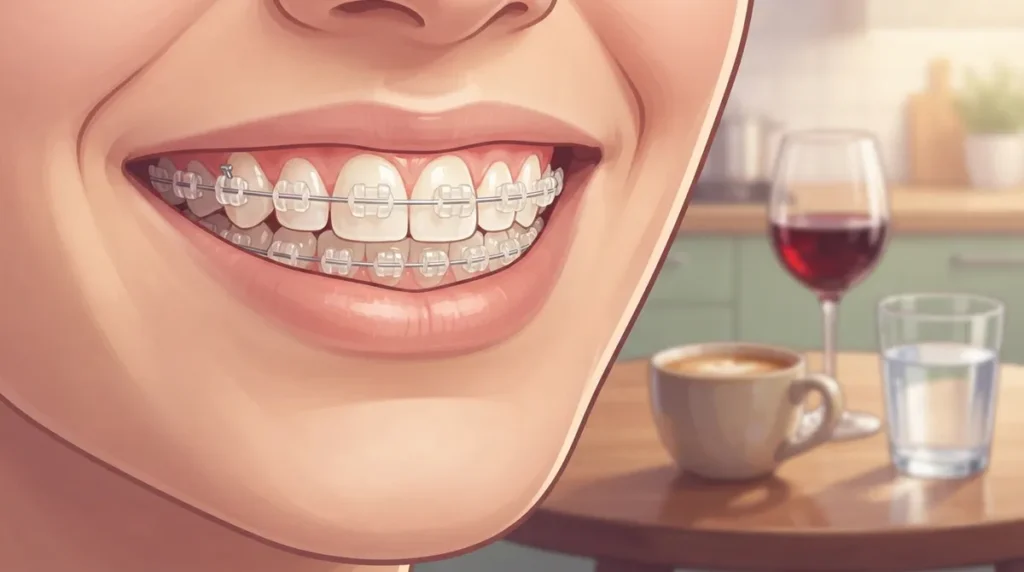
Ligatures (the small elastic bands holding the wire) can discolor from coffee, tea, and red wine even though ceramic brackets resist staining, so rinse with water after such drinks.
-
Ceramic braces often cost more than metal braces, and prices vary widely by location, case complexity, and provider, so request a personalized estimate after an exam rather than relying on online ranges.
-
Ceramic braces are not automatically slower; treatment length depends on your specific case and plan, not on bracket color, and your orthodontist can give a personalized timeline.
-
Suitability for ceramic braces is case-specific, so a board-certified orthodontist should examine your teeth, bite, and oral health before you choose between ceramic braces, metal, or clear aligners.
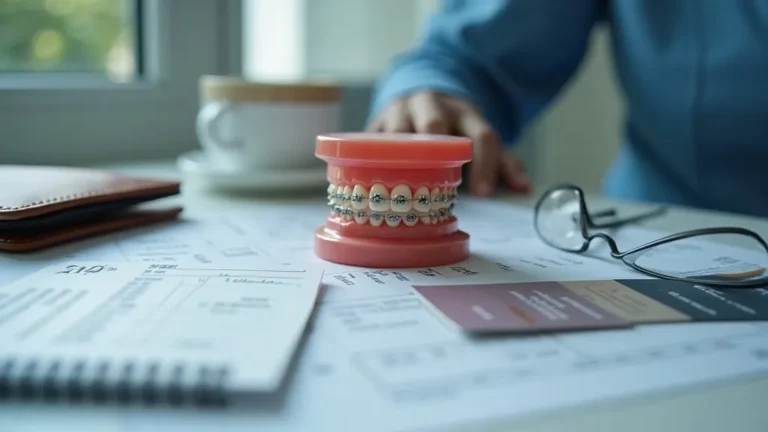
Picture this: you are heading into a big meeting, a wedding, or a school photo day, and you want a straighter smile without a mouthful of shiny metal. That is where ceramic ortho braces come in. They work like traditional braces, but the brackets are tooth-colored or clear, so they blend in more with your teeth.
If you have been wondering whether ceramic ortho braces are a good fit for you or your child, you are in the right place. In this friendly guide, we will walk through how they work, what they are made of, what they cost, and how to care for them. We will also be honest about the trade-offs, because the best choice is the one that fits your life.
Whether you are a busy parent, a working professional, or an adult returning to treatment after a relapse, you deserve clear answers. Let’s dive in and make this simple.
What Are Ceramic Ortho Braces and How Do They Work?
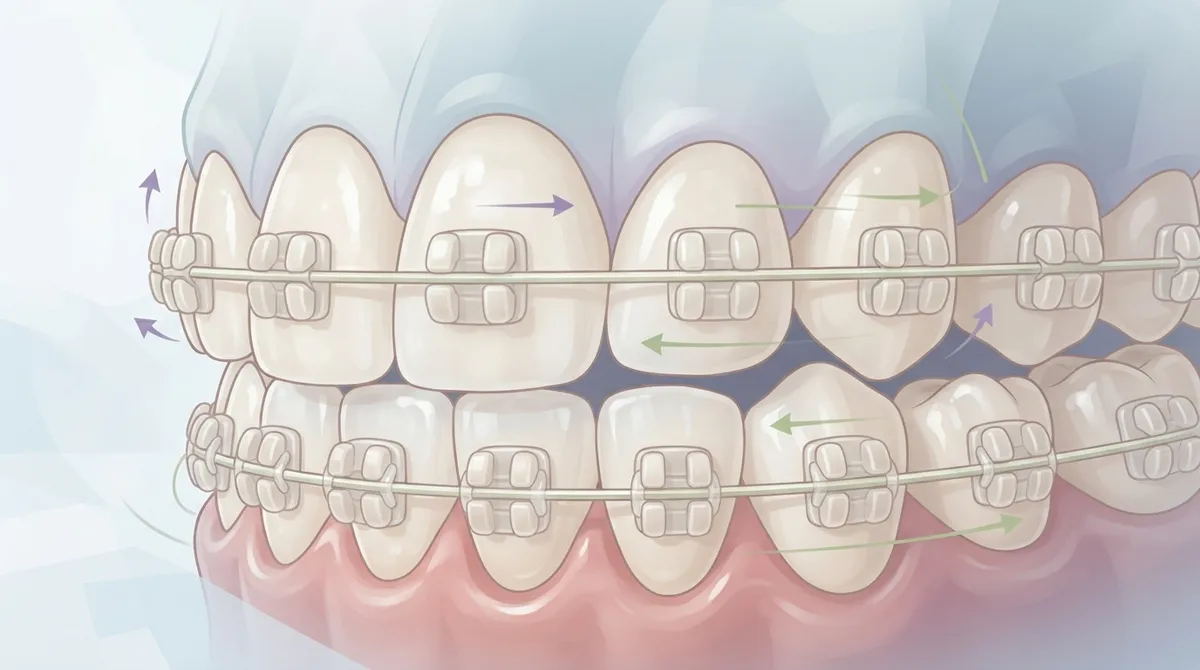
Ceramic ortho braces are fixed orthodontic appliances. Small tooth-colored or translucent brackets are bonded to your teeth. A thin archwire runs through them and gently guides your teeth into place over time.
They use the same basic mechanics as metal braces. The difference is mostly about looks. Ceramic brackets are commonly made from alumina ceramic, in either polycrystalline or monocrystalline forms.
Here is a point that trips people up. Ceramic braces are sometimes called clear braces, but they are still visible. They are also not the same as removable clear aligners. You cannot take ceramic braces out to eat or brush, because they stay on your teeth the whole time.
The Basic Parts of Ceramic Braces
- Brackets: Small ceramic pieces bonded to the front of each tooth.
- Archwire: A thin wire that connects the brackets and applies gentle pressure.
- Ligatures: Tiny elastic bands, or sometimes clips, that hold the wire in place.
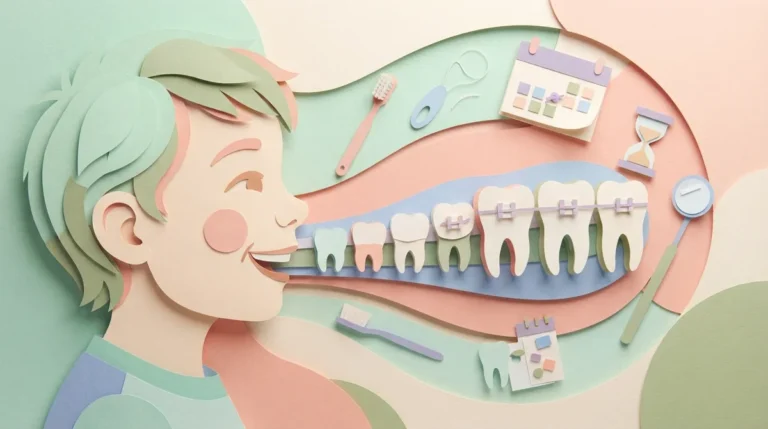
Your orthodontist adjusts the wire during regular visits. Over time, that steady pressure moves your teeth into a healthier, better-aligned position.

Why Do People Choose Ceramic Ortho Braces?
The main reason is appearance. Ceramic brackets are generally less noticeable than stainless-steel brackets. A 2023 review of orthodontic brackets points to aesthetics as the principal advantage of ceramic over stainless steel.
That matters to a lot of people. Let’s look at who tends to love them.
- Young adults and professionals: You want to straighten your smile without sending a loud message in every video call.
- Life event planners: You have a graduation, wedding, or big milestone coming up and want a more discreet look.
- Adult relapse patients: You had braces before, your teeth shifted, and you want a polished fix that does not feel like a step backward.
- Teens: Many teens feel more confident with brackets that blend in.
A quick note for busy people: ceramic braces do not run on a different timeline just because they look different. Treatment length depends on your case and your plan, not simply on the bracket color.
Ceramic vs. Metal vs. Clear Aligners: A Quick Comparison
Choosing between options can feel like a lot. This simple table shows how the three most common choices stack up. Remember, your orthodontist will tailor advice to your bite and your goals.
| Feature | Ceramic Braces | Metal Braces | Clear Aligners |
|---|---|---|---|
| Appearance | Tooth-colored, less noticeable | Most visible | Nearly invisible |
| Removable | No, fixed to teeth | No, fixed to teeth | Yes |
| Durability | Hard but more brittle | Very strong | Trays can crack or warp |
| Staining | Brackets resist stains; ligatures can discolor | Not a concern | Trays can stain if not cleaned |
| Typical cost | Often higher than metal | Often the most budget-friendly fixed option | Varies by case |
| Best for | Patients wanting a discreet fixed option | Patients wanting a time-tested workhorse | Patients wanting removable convenience |
Curious how braces and aligners compare in more detail? Our guide on braces vs. clear aligners breaks it down. You can also explore our overview of types of braces to see the full menu of options.
Are Ceramic Ortho Braces as Effective as Metal Braces?
For many patients, yes. Ceramic braces use the same basic approach as metal braces and can treat many alignment and bite problems. That includes crowding, gaps, and a variety of bite issues.
That said, they are not the right answer for everyone. Whether ceramic braces suit you depends on your teeth, your bite, your oral health, and the movements your case needs. Only an orthodontist can tell you for sure after a proper exam.
If you want to know what that first exam looks like, read about what to expect at your first orthodontic visit.
What Are the Downsides of Ceramic Braces?
Let’s keep it real. Every treatment has trade-offs, and ceramic braces are no different. Knowing them up front helps you decide with confidence.
They Can Be More Brittle
Ceramic is hard, but it is also more brittle than metal. That means brackets may be more prone to chipping or fracturing, especially if you bite into very hard foods. If a bracket does break, it is usually an easy fix, but it can mean an extra visit.
They Can Create More Friction
In some bracket and wire combinations, ceramic brackets can create more friction between the bracket and the wire. That may affect how the mechanics work. It does not automatically mean your treatment will take longer, though. Treatment time depends on your case and your plan.
Ligatures Can Discolor
Here is a fun surprise for many patients. The ceramic bracket material is generally stain-resistant, but the little elastic ligatures that hold the wire can pick up color. Coffee, tea, red wine, and other strongly colored foods and drinks can affect how some components look.
They May Cost More
Ceramic braces may cost more than conventional metal braces. We will talk about that next.
How Much Do Ceramic Ortho Braces Cost in 2026?
This is one of the most common questions we hear, and the honest answer is: it depends. Price varies by location, case complexity, treatment length, provider, and insurance or financing.
You may see online estimates, and they swing quite a bit. For example, published U.S. price estimates in 2025 ranged from about $3,500 to $6,500, while a 2026 example listed about $4,000 to $8,000. These are commercial estimates, not a national average, so please do not treat them as a quote.
The best way to know your real number is to ask for a personalized estimate after an exam. Many families find the cost much easier to manage with the right plan. Check out our page on orthodontic financing for options, or read 9 smart ways to make orthodontic financing work for you.
How to Take Care of Ceramic Ortho Braces
Good habits protect your braces and your smile. They also keep your brackets looking their best. Here is a simple routine to follow.
- Brush after meals. Angle your brush gently around each bracket and along the gumline.
- Clean between your teeth daily. Floss threaders, interdental brushes, or a water flosser can help you reach tricky spots.
- Skip the problem foods. Very hard or sticky foods can damage brackets or pull them loose.
- Watch strongly colored foods and drinks. Coffee, tea, and red wine can discolor ligatures, so rinse with water afterward.
- Keep every appointment. Regular visits let your orthodontist monitor progress and adjust the appliance.
Want a deeper list of what to skip? See our guide to 13 foods to avoid with braces. And for a full routine, our tips on how to care for your braces are a great place to start.
What If a Bracket Breaks?
Do not panic. It happens to plenty of patients. Avoid tugging on it, and call your orthodontist so they can tell you what to do next. Our page on orthodontic emergencies explains what counts as urgent and what can wait.
Who Are Ceramic Ortho Braces Best For?
Ceramic braces can be a great match for many different people. Here is how they tend to fit different readers.
For Concerned Moms
If your child is a teen who feels self-conscious about metal, ceramic braces may help them feel more at ease. They do need careful brushing and thoughtful food choices, so talk through those habits together. You can learn more about teen orthodontic treatment to see what to expect.
For Working Professionals
If you are in a client-facing role, a less noticeable look can feel like a relief. Just remember that ceramic braces are fixed, so there is no removing them for a presentation. If you want a removable option, ask about aligners too. Our page on adult orthodontics covers options built for busy lives.
For Adults Who Had Braces Before
Teeth can shift after treatment, especially if a retainer was skipped. If that sounds familiar, you are far from alone. The good news is that relapse is often very treatable. After any treatment, a good retainer routine is key, so see our guide to orthodontic retainers.
Other Bracket Options Worth Knowing About
Ceramic braces are not the only way to get a great result. Here at Segovia Orthodontics, we offer several options so you can find your best fit.
- LightForce braces use 3D-printed, custom-fitted brackets and a fully digital planning process, with clear or white bracket options for a subtle look.
- WildSmiles braces offer fun bracket shapes that kids and teens often love.
- Angel Aligners are clear, removable trays that gently straighten teeth with a discreet, comfortable feel.
Not sure which path is right? Our overview of 7 types of braces can help you compare. A conversation with a board-certified orthodontist makes the choice even easier.
Why Choose Segovia Orthodontics for Your Braces Journey?
Choosing an orthodontist matters just as much as choosing the braces. At Segovia Orthodontics at Lakewood Ranch, Dr. Flor Segovia leads a warm, family-friendly practice that welcomes patients of all ages. You can read more about Dr. Flor Segovia and her approach to care.
Dr. Segovia is a board-certified orthodontist, and you can learn more about board certification through the American Board of Orthodontics. She also offers bilingual care in English and Spanish, uses advanced orthodontic technology, and focuses on a comfortable, supportive visit every time.
Want to see what other patients say? You can visit our Segovia Orthodontics location on Google to read reviews from families in Lakewood Ranch. You can also follow along on our Facebook page and our Instagram page for smile stories and office updates.
What Should You Ask Before Choosing Ceramic Ortho Braces?
A great consultation is a two-way conversation. Bring your questions, and do not be shy. Here are a few worth asking.
- Are ceramic braces a good fit for my bite and the movements I need?
- How long do you expect my treatment to take?
- What will my total cost be, and what payment options are available?
- How will I care for the brackets, and what foods should I skip?
- Would another option, like clear aligners or LightForce, suit me better?
Want more ideas? Our guide on how to ask the right orthodontic questions will have you walking in prepared and confident.
Ready to Explore Ceramic Ortho Braces?
Ceramic ortho braces can be a wonderful way to straighten your smile with a more discreet look. They work much like metal braces, they come with a few trade-offs, and they can fit beautifully into the right treatment plan. The best next step is a personalized exam so you know exactly what to expect.
We would love to meet you and talk through your goals. Whether you are thinking about braces for yourself or for your child, we are here to help you feel comfortable and informed. Please request an appointment today, call us at 941-557-1333, or contact us to get started. Your best smile is closer than you think!
FAQs
Q: Do ceramic braces stain or turn yellow?
A: The ceramic brackets themselves are generally stain-resistant, which is great news! The little elastic ligatures that hold the wire can discolor, though, especially with coffee, tea, and red wine. Good brushing and following your orthodontist’s care tips help keep everything looking fresh.
Q: Are ceramic braces more likely to break than metal braces?
A: Ceramic is hard but more brittle than metal, so brackets can be more prone to chipping or fracturing. Avoiding very hard or sticky foods goes a long way. If a bracket does break, just call your orthodontist and they will guide you through the fix.
Q: Do ceramic braces take longer to straighten teeth?
A: Not necessarily! Treatment time depends on your specific case and treatment plan, not just the type of bracket. Your orthodontist can give you a personalized timeline after reviewing your teeth and bite.
Q: How much do ceramic braces cost, and does insurance cover them?
A: Ceramic braces may cost more than conventional metal braces, and the final price depends on your location, case complexity, treatment length, and provider. Many plans offer some orthodontic benefits, so it is best to ask for a personalized estimate and explore financing options at your visit.
Q: Are ceramic braces suitable for every orthodontic problem?
A: Ceramic braces can treat many alignment and bite issues, but suitability is case-specific. An orthodontist needs to look at your teeth, bite, and oral health to recommend the best option for you.
Our Service Area