Key Takeaways
-
Schedule the first pediatric dental visit when the first tooth erupts and no later than 12 months, then continue every six months to prevent cavities early, as CDC data shows 50% of children aged 6-9 have experienced decay.
-
Book an orthodontic evaluation by age 7 to assess bite and alignment development; this is an assessment only, not a guarantee of immediate treatment, as many children are simply monitored or wait for more permanent teeth.
-
Brush after meals and before bed around brackets, floss daily with threaders, and limit sugary foods during orthodontic treatment to prevent cavities, which braces make easier for food and plaque to hide.
-
Coordinate care between your pediatric dentist and orthodontist by sharing exam notes, X-rays, and communication about new habits or concerns to catch issues early and avoid treatment delays.
-
Watch for signs requiring earlier orthodontic assessment: early or late baby tooth loss, difficulty chewing, mouth breathing, prolonged thumb sucking, crowded teeth, or jaw clicking sounds.
-
Choose age-appropriate treatment options for each family member—interceptive treatment for children 7-12, full alignment for teens, and discreet solutions like clear aligners for adults and professionals.
If you have ever stared at your child’s smile and wondered, “Is that normal, or should someone look at it?” you are in good company. Between cleanings, cavities, loose teeth, and growth spurts, it can feel like a lot to track. The good news is that pediatric dentistry & family orthodontics work best as a team, and once you understand who does what, the whole process gets much easier.
Think of it like this: your pediatric dentist is your child’s everyday oral health coach. Your orthodontist is the alignment specialist who watches how teeth and jaws develop. Together, they help your family catch small issues early and avoid surprises later.
In this friendly guide, you will learn how the two specialties fit together, when to book each visit, and how to keep teeth healthy during braces or aligners. Whether you are a busy mom juggling school schedules, an adult thinking about your own smile, or a parent of a teen with a big event coming up, these steps will help you plan with confidence.
Understanding the Roles: Who Does What?
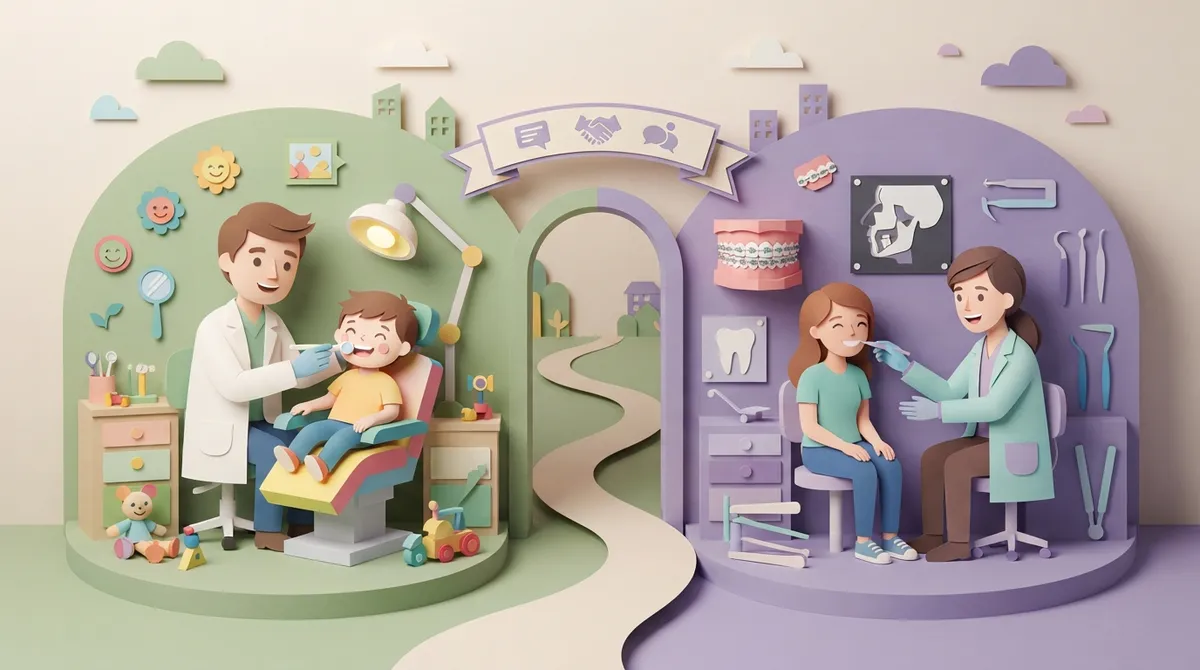
Before you can coordinate care, it helps to know what each provider focuses on. Pediatric dentistry centers on the prevention, diagnosis, and treatment of children’s oral health needs. Orthodontics focuses on evaluating and treating tooth and jaw alignment, also called malocclusion.
| Focus Area | Pediatric Dentist | Orthodontist |
|---|---|---|
| Main goal | Prevent and treat decay and gum problems | Guide and correct tooth and jaw alignment |
| Typical services | Exams, cleanings, sealants, fillings | Braces, clear aligners, retainers, bite correction |
| Visit frequency | Generally every six months or as risk indicates | Evaluation, then monitoring or treatment visits |
| Key question | Are the teeth and gums healthy? | Are the teeth and bite developing well? |
Neither role replaces the other. A child can have perfectly healthy teeth that are crowded, and a child with straight teeth can still be prone to cavities. That is why having both in your corner matters.
If you are curious about how these roles differ for adults too, our guide on orthodontist vs dentist: who should you see for your smile breaks it down clearly.

Step 1: Start Dental Visits Early
The American Academy of Pediatric Dentistry recommends a child’s first dental exam when the first tooth erupts, and no later than 12 months. After that, follow-up visits are generally every six months, or as your child’s cavity risk suggests.
Why so early? Because prevention is easier than repair. Early visits let your dentist spot habits like thumb sucking, check how teeth are coming in, and teach you how to brush and floss effectively.
Cavity prevention is not a small topic. According to the CDC’s 2024 Oral Health Surveillance Report, which used survey data from 2017 to March 2020, about 11% of children aged 2 to 5 had at least one primary tooth with untreated decay. Nearly 18% of children aged 6 to 8 had untreated decay in a primary tooth. Among children aged 6 to 9, about 50% had experienced decay. Those numbers are a gentle reminder that routine dental care matters for every family.
Step 2: Schedule an Orthodontic Check-Up by Age 7
Here is where many parents get nervous, so let us clear something up. The American Association of Orthodontists (AAO) recommends a first orthodontic check-up by age 7, or earlier if you or your dentist notice a concern. That is an evaluation, not a promise that your child needs braces.
At around age 7, most children have a mix of baby teeth and permanent teeth. That mix gives an orthodontist a helpful window into how the bite and alignment are developing. After the exam, the orthodontist may recommend one of three paths:
- Treat now if a developing problem could worsen or affect jaw growth.
- Monitor growth and tooth eruption with periodic check-ins.
- Wait until more permanent teeth have come in.
Many children simply get a thumbs-up and a follow-up plan. You can learn more about what this visit looks like in our first orthodontic visit overview, and you can read what happens during an orthodontic evaluation if you want to know what to expect in the chair.
Step 3: Know the Signs That May Call for an Earlier Look
You do not have to wait for a birthday if something seems off. Trust your instincts and mention it at your next dental visit. Some signs worth flagging include:
- Baby teeth that fall out very early or very late
- Difficulty chewing or biting
- Mouth breathing or frequent snoring
- Thumb or finger sucking that continues past toddler years
- Teeth that look crowded, stick out, or do not meet properly
- A jaw that shifts or makes sounds when opening and closing
For a deeper checklist, see our article on 6 signs your child should see an orthodontist now.
Step 4: Understand Early (Interceptive) Treatment
Early or interceptive orthodontic treatment is meant for selected problems, not every child. It may be considered to address an issue that could get worse, guide jaw growth, remove an obstacle to healthy development, or create room for incoming teeth. Even after early treatment, some children still need a second phase later.
The appropriate timing depends on your child’s growth, tooth eruption, bite, and specific diagnosis. Many orthodontic problems are simply treated after more permanent teeth have arrived.
To explore this topic, visit our page on early orthodontic treatment, or read about what two-phase treatment is and whether your child needs it.
Step 5: Choose the Right Treatment for Each Family Member
One of the nicest things about family orthodontics is that everyone gets a plan that fits their age and lifestyle. Here is a quick comparison of common options.
| Family Member | Common Goal | Options to Discuss |
|---|---|---|
| Child (7 to 12) | Guide growth, make space | Monitoring, interceptive treatment, braces |
| Teen (13 to 17) | Full alignment, bite correction | Metal or clear braces, clear aligners |
| Young adult or professional | Discreet, efficient results | Clear aligners, clear braces |
| Adult with relapse | Fix shifted teeth after past treatment | Aligners, braces, then retainers |
At Segovia Orthodontics at Lakewood Ranch, Dr. Flor Segovia offers WildSmiles braces that let kids pick fun bracket shapes, LightForce braces that are custom-designed using 3D printing, and Angel Aligners as a clear, removable option. You can read more about WildSmiles braces, LightForce orthodontics, and clear aligners on our site.
Teens and parents often wonder which path to choose. Our guide to braces vs. clear aligners can help you compare, and adults can explore adult orthodontics for discreet choices.
Step 6: Protect Teeth and Gums During Treatment
Braces and aligners straighten teeth, but they do not stop cavities. In fact, appliances can make it easier for food and plaque to hide, so daily habits matter even more. Keeping up routine preventive care and cleaning carefully around appliances helps lower the risk of decay and gum problems.
Here are simple habits that make a big difference:
- Brush after meals and before bed, angling the brush around brackets
- Floss daily, using floss threaders or water flossers if it helps
- Limit sugary drinks and sticky snacks
- Keep your regular dental cleanings on the calendar
- Ask about sealants and fluoride if your child is cavity-prone
Need a refresher on foods? Check out 13 foods to avoid with braces, and for daily routines see how to protect your dental health with orthodontics.
Step 7: Keep Records and Communication Flowing
Coordination is where families often feel the most friction. Your dentist and orthodontist may be in different offices, which means forms, X-rays, and notes need to travel between them. A little organization goes a long way.
- Ask each office to share exam notes and any X-rays with the other.
- Keep a simple folder or phone note with visit dates and recommendations.
- Tell both providers about new habits, injuries, or concerns.
- Schedule cleanings and orthodontic adjustments on a shared calendar.
A practice that offers both pediatric dentistry and orthodontics may make coordination more convenient, with shared records, referrals, and scheduling. That said, families should not assume that being under one roof automatically means lower costs, fewer X-rays, or better clinical results. The real value is in clear communication and a provider you trust.
Step 8: Plan for Cost, Scheduling, and Life Events
Life does not pause for orthodontics. Between sports, recitals, graduations, and work deadlines, scheduling matters. Ask about flexible appointment times, and look into payment options early so there are no surprises. Our page on orthodontic financing explains how plans can spread costs into manageable pieces.
If a big milestone is on the horizon, like a wedding or graduation, share the date with your orthodontist. Timelines vary by case, but a good plan starts with an honest conversation about your goals. Adults who had braces years ago and notice shifting can also explore retainers and options in our guide to orthodontic retainers.
Step 9: Choose a Provider You Feel Good About
Credentials, comfort, and communication all count. Dr. Flor Segovia is a board-certified orthodontist, and you can learn more about board certification through the American Board of Orthodontics. You can also get to know Dr. Flor Segovia and our bilingual team in English and Spanish.
Want to see what families are saying? Take a peek at our community on our Facebook page and our Instagram page, and visit our Segovia Orthodontics location on Google to read reviews from Lakewood Ranch neighbors.
Putting It All Together
Here is the big picture. Begin dental visits when the first tooth appears. Book an orthodontic check-up by age 7. Keep up six-month dental visits. Choose treatment when the timing is right for your child, not just because of age. Protect teeth during treatment, and keep both providers in the loop.
That is really all there is to it. With a little planning, pediatric dentistry & family orthodontics can feel less like a puzzle and more like a supportive routine that keeps every smile in your home healthy and confident.
Ready to take the next step? Request an appointment with Segovia Orthodontics at Lakewood Ranch, call us at 941-557-1333, or contact us with questions. We would love to meet your family and help you map out a plan that fits your schedule and your goals.
FAQs
Q: When should my child first see an orthodontist?
A: The American Association of Orthodontists recommends a first check-up by age 7, or sooner if you or your dentist spot a concern. Think of it as a friendly look at how things are developing, not a sign that braces are coming right away.
Q: Does an orthodontic check-up at age 7 mean my child needs braces?
A: Not at all! Many children are simply monitored, and some wait until more permanent teeth come in. The orthodontist will tell you whether to treat now, keep watching, or wait, based on your child’s own growth and bite.
Q: What is the difference between a pediatric dentist and an orthodontist?
A: A pediatric dentist focuses on preventing and treating cavities and gum issues in children, while an orthodontist specializes in tooth and jaw alignment. They work well together, so most families benefit from having both on their team.
Q: How often should children visit a pediatric dentist?
A: The American Academy of Pediatric Dentistry suggests a first visit when the first tooth erupts and no later than 12 months, with follow-ups generally every six months. Your dentist may adjust that schedule if your child has a higher cavity risk.
Q: How can we prevent cavities while my child wears braces?
A: Brush carefully around brackets, floss daily, limit sugary snacks and drinks, and keep up with regular dental cleanings. A little extra attention each day goes a long way toward protecting teeth and gums during treatment.
Our Service Area