Key Takeaways
-
Neither braces nor clear aligners are best for everyone; the right choice depends on your diagnosis, bite, and the tooth movements you need, so start with a proper orthodontic exam.
-
Aligners must be worn about 22 hours a day to work, so choose them only if you can stay consistent; braces work around the clock without relying on you.
-
Aligners can handle many mild-to-moderate crowding cases, but complex bite problems like severe overbites, underbites, or crossbites may need braces.
-
Clear aligners are nearly invisible and removable for easy eating and cleaning, while braces require avoiding hard, sticky, or chewy foods and extra care around brackets and wires.
-
A 2024 review found no significant difference in treatment time between aligners and braces for mild-to-moderate crowding, so ask for an estimate based on your own records.
-
Ask about total cost, insurance coverage, and your retainer plan before starting, since skipping retention is a main reason teeth drift back after treatment.
Standing at the crossroads between braces and clear aligners can feel a little like picking a phone plan. Everyone has an opinion, the options all sound great, and you just want someone to tell you which one is right. If you have ever asked yourself, “how do I choose between braces and clear aligners?” you are in good company. It is one of the most common questions we hear from parents, teens, and adults of every age.
Here is the friendly truth: there is no single best option for everyone. The right choice depends on your teeth, your bite, your daily routine, and how you like to get things done. A smart decision starts with a proper exam, not a hunch or a social media ad.
This guide walks you through 10 simple questions to ask yourself and your orthodontist. By the end, you will feel ready to have a confident, informed conversation about your smile. Let’s dive in!
1. What Does Your Orthodontist Say About Your Diagnosis?
This is the big one, and it comes first for a reason. The best treatment depends on the movements your teeth and bite need, not just looks or convenience. An orthodontic exam, often with photos and X-rays, shows what is really going on.
Some problems, like mild crowding or small gaps, may be a great fit for aligners. Others, like complex bite issues or major tooth rotations, may need the precise control that braces provide. A board-certified orthodontist can explain which options can predictably reach your goals and which cannot.
At Segovia Orthodontics, Dr. Flor Segovia reviews your records and walks you through your choices in plain language. If you want to know what to expect, our guide on what happens during an orthodontic evaluation is a good place to start.
2. Can Aligners Handle Your Specific Tooth Problem?
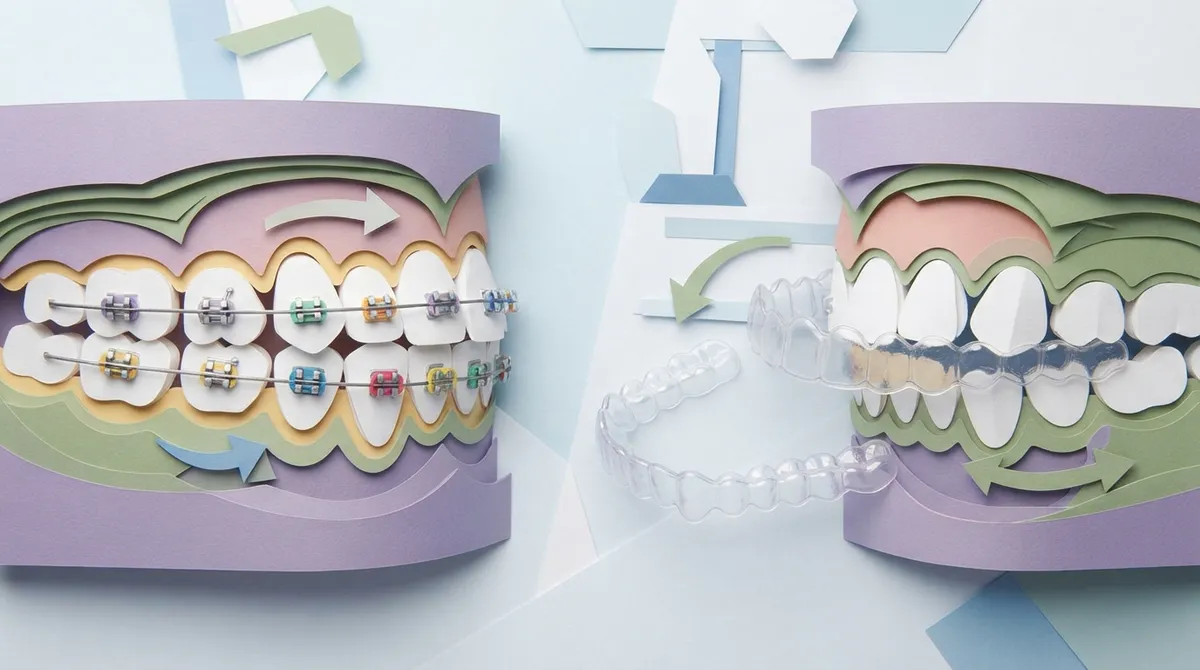
Clear aligners are popular, and they work well for many people. But they are not magic. Some bite problems, such as overbites, underbites, and crossbites, may need extra tools like attachments or elastics, or they may be better treated with braces.
Ask your orthodontist directly: “Can aligners get me the same result as braces in my case?” A good provider will give you an honest answer, even if it means recommending the other option.
Not sure what your issue is called? Our overview of common orthodontic problems can help you put a name to what you see in the mirror.
3. How Reliable Are You With Daily Habits?
Let’s be real for a moment. Aligners only work when you wear them. The American Association of Orthodontists (AAO) says aligners typically need to be worn at least 22 hours per day. You take them out to eat and clean, then pop them right back in.
Braces, on the other hand, stay put. They work around the clock without any reminders from you. If you tend to forget things or you have a child who might misplace a case (we have all been there!), braces can take that worry off the table.
If you are a planner who loves a routine, aligners may suit you perfectly. Neither answer is wrong. It just helps to be honest with yourself.
4. How Important Is a Discreet Look?
For many young professionals and adults, looks matter. Clear aligners are nearly invisible, which is a big draw if you are in meetings all day or preparing for a wedding, graduation, or big event.
The good news is that braces have come a long way too. Options like clear or white brackets blend in more than the braces you may remember. Our LightForce braces are custom-made with 3D printing and come in clear or white options, so you can get a subtle look with fixed braces.
If you want to explore the full menu, check out our post on 7 types of braces to see what fits your style.
5. What Does Your Lifestyle Look Like?
Think about your typical week. Do you love snacking on crunchy foods? Play a contact sport? Travel often for work? Your lifestyle can tip the scale one way or the other.
- Aligners: Removable, so you can eat what you like and brush and floss as usual.
- Braces: Fixed in place, so you will need to avoid hard, sticky, crunchy, or chewy foods that can damage them.
- Busy schedules: Both options can fit, but aligners may mean fewer worries about food rules.
If you decide on braces, our list of 13 foods to avoid with braces will save you some headaches (and a few emergency visits!).
6. Which Is Easier to Keep Clean?
Healthy teeth matter just as much as straight teeth. With aligners, you remove the trays, so brushing and flossing feel normal. Just make sure your teeth are clean before you put the trays back in.
With braces, you will need to clean carefully around brackets and wires. It takes a little more time, but it is totally doable with the right tools and habits. A small interdental brush and a water flosser can be real heroes here.
No matter which path you choose, good brushing and flossing are a must. Our tips on how to care for your braces make daily cleaning much easier.
7. How Long Will Treatment Take?
Many people assume one option is always faster. The research does not fully support that. A 2024 systematic review found low-certainty evidence and no significant difference in treatment time between aligners and fixed braces for mild-to-moderate crowding. The authors also noted that more studies are needed, especially for severe cases.
One adolescent study in a 2024 review reported average treatment times of about 24 months for aligners and 27 months for fixed appliances. That is just one study, though, and not a promise for every patient.
The takeaway? Treatment time depends on your case, not the brand of appliance. Ask your orthodontist for a realistic estimate based on your own records. For patients who want an efficient path, our digital LightForce system can often shorten treatment time through precise planning.
8. How Do the Options Compare Side by Side?
Sometimes a quick chart makes everything clearer. Here is a simple comparison to help you think it through. Remember, your orthodontist will tailor this to your case.
| Factor | Traditional or Custom Braces | Clear Aligners |
|---|---|---|
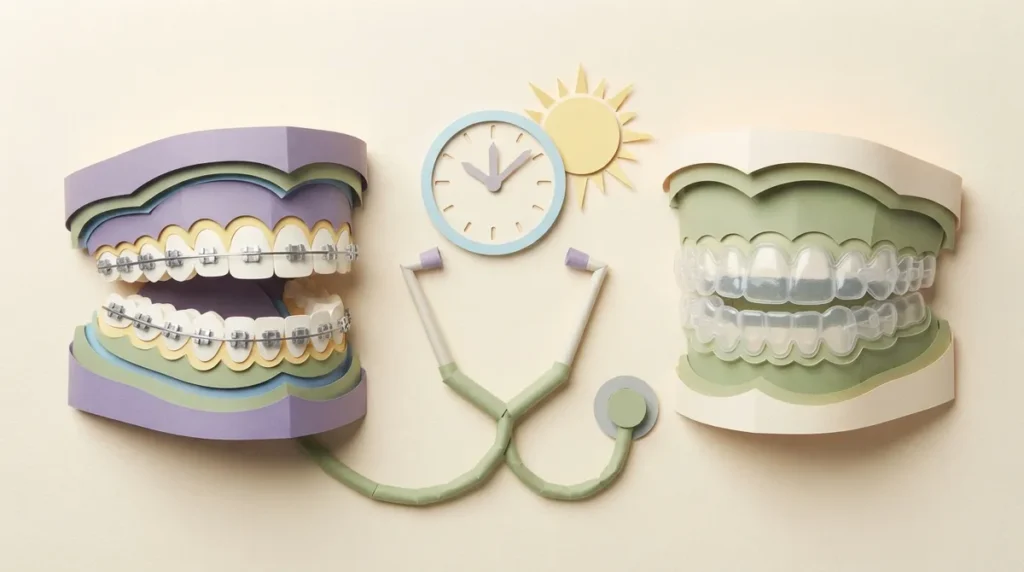
| How they work | Fixed to teeth, always working | Removable trays worn about 22 hours a day |
| Appearance | Visible, but clear and white options exist | Nearly invisible |
| Eating | Avoid hard, sticky, or chewy foods | Remove trays to eat, then clean teeth |
| Cleaning | Needs extra care around brackets and wires | Brush and floss as usual |
| Best for | Wide range of cases, including complex bite issues | Many mild-to-moderate cases, based on diagnosis |
| Compliance needed | Low, since they stay in place | High, since you must wear them consistently |
| Comfort | May irritate cheeks or lips at first | Pressure when switching to a new tray |
If you want a deeper dive, our article on braces vs. clear aligners breaks down the trade-offs even further.
9. What Will It Cost, and What Does Insurance Cover?
Cost is a real part of the decision, and it is smart to ask about it early. Total price depends on the type of appliance, how complex your case is, and how long treatment lasts. Insurance coverage varies, so it helps to check your plan before you start.
When you meet with an orthodontist, ask about:
- The total cost, including follow-up visits and retainers
- What your insurance may cover
- Payment plans or financing options
- What happens if your plan needs to change along the way
We believe cost should never keep a family from a healthy smile. Learn more about orthodontic financing and how flexible plans can fit your budget.
10. What Is the Plan After Treatment?
Here is something many people forget to ask: what happens once the braces or aligners come off? The answer is the same for both. You will generally need a retainer to help hold your new smile in place.
Skipping this step is the number one reason teeth drift back. Ask your orthodontist about your retention plan before you begin, so there are no surprises later. You can read more about orthodontic retainers to see what to expect.
This is especially important for adults who had braces years ago and noticed their teeth shifting. If that sounds like you, you are not alone, and our adult orthodontics options can help you get back on track.
Which Option Fits Your Situation?
Let’s bring it all together with some real-life scenarios. These are general examples, and your own exam will give you the final answer.
For Parents of Kids and Teens
If your child is active, forgetful, or still building daily habits, braces often take the guesswork out of treatment. They work 24/7, and fun options can make the experience exciting for kids. Our WildSmiles braces let kids pick shapes like stars and hearts, which can help them feel proud of their braces. Responsible teens may do well with aligners, too. Take a look at our guide on choosing the right braces for teens for more ideas.
For Busy Professionals and Event Planners
If you want a low-profile look and you are great with routines, clear aligners may be a perfect match. Our clear aligners and Angel Aligners offer a comfortable, frosted finish that is easy to wear to the office or a big event. If you need the most precise control or have a more complex case, discreet clear braces may still get you there.
For Adults Correcting Relapse
Adults who had braces before are often the most dedicated patients. Many relapse cases involve mild shifting, which can be a strong fit for aligners. Your orthodontist will confirm after reviewing your records.
Why Local Expertise Matters
Choosing between braces and aligners is easier when you have a trusted guide. Segovia Orthodontics at Lakewood Ranch offers both options for children, teens, and adults, so you hear honest advice instead of a one-size-fits-all pitch. Dr. Segovia is a board-certified orthodontist who uses advanced technology and offers bilingual care in English and Spanish.
You can learn more about her credentials through the American Board of Orthodontics. We would also love for you to see what our patients say. Visit us on Google — Segovia Orthodontics to read real reviews from Lakewood Ranch families. And if you want a peek at our daily smiles, follow our Instagram page or stop by our Facebook page.
Your Next Step Toward a Confident Smile
So, how do you choose between braces and clear aligners? Start with a diagnosis, be honest about your habits, think about your lifestyle and budget, and ask lots of questions. When you have the right information, the answer usually becomes clear.
You do not have to figure this out alone. Our friendly team is happy to look at your smile, explain your options, and help you feel good about your plan. Ready to take the first step? Request an appointment today, or call us at 941-557-1333 to chat with our team. Your best smile is closer than you think!
FAQs
Q: Are braces or clear aligners better for my teeth and bite?
A: Neither one is better for everyone. The best choice depends on your diagnosis, your bite, and the tooth movements you need. An orthodontist can examine your teeth, review your records, and explain which option can reach your goals most predictably.
Q: How many hours a day do I need to wear clear aligners?
A: The American Association of Orthodontists says aligners typically need to be worn at least 22 hours per day. You only take them out to eat and clean your teeth. Wearing them less can slow your progress, so consistency really matters.
Q: Are braces faster than clear aligners?
A: Not always. A 2024 systematic review found no significant difference in treatment time between aligners and fixed braces for mild-to-moderate crowding. Your timeline depends on your own case, so ask your orthodontist for an estimate based on your records.
Q: Will I need a retainer after braces or clear aligners?
A: Yes, in most cases you will. Retainers help hold your teeth in their new spots once active treatment ends. Ask your orthodontist about your retention plan before you start so you know what to expect.
Q: Can clear aligners fix an overbite, underbite, or crowded teeth?
A: Aligners can help with many cases of crowding and some bite concerns, sometimes with attachments or elastics. More complex bite problems may be better suited to braces. Your orthodontist will tell you honestly which option can deliver the result you want.
Our Service Area