Key Takeaways
-
Metal braces are generally stronger and cheaper, while clear ceramic braces are less visible but often cost more and can break more easily; neither is automatically better for every teen.
-
A 2024 clinical trial of 80 patients found ceramic brackets failed more often than metal over 12 months, especially on lower and back teeth, so careful food habits matter if choosing clear braces.
-
Choose based on both tooth movement needs and whether your teen will feel confident wearing them, not on looks alone, since clear brackets may not suit every bite problem.
-
Treatment length depends mostly on the individual case and how well your teen follows instructions, such as wearing elastics as directed and keeping appointments, rather than on bracket material.
-
Clear braces' elastic ties can stain from coffee, tea, soda, and dark sauces if brushing is poor, so daily brushing, flossing, and limiting sugary drinks are essential for any braces.
-
Involve your teen in the decision and ask for a full cost breakdown including repairs, retainers, and follow-up visits, since retainers are needed after braces come off to keep results.
If your teen needs braces, you have probably heard the same question from friends, family, and maybe even your teen: is clear braces or metal braces better for teens? It is a fair question, and the honest answer might surprise you. There is no single winner for every kid.
Both types of braces can straighten teeth well. The real difference is how they fit your teen’s bite, habits, budget, and personality. Many parents rush this choice based on looks alone or on a friend’s story. That is where mistakes sneak in.
Think of it like picking running shoes. The prettiest pair is not always the best fit for the runner. In 2026, teens have more options than ever, which makes the choice feel bigger, too. Do not worry. This friendly guide walks you through eight common mistakes, so you can feel calm and confident when you sit down with your orthodontist. At Segovia Orthodontics in Lakewood Ranch, we see these questions every week, and we love helping families sort them out.
Clear Braces vs. Metal Braces: The Quick Answer
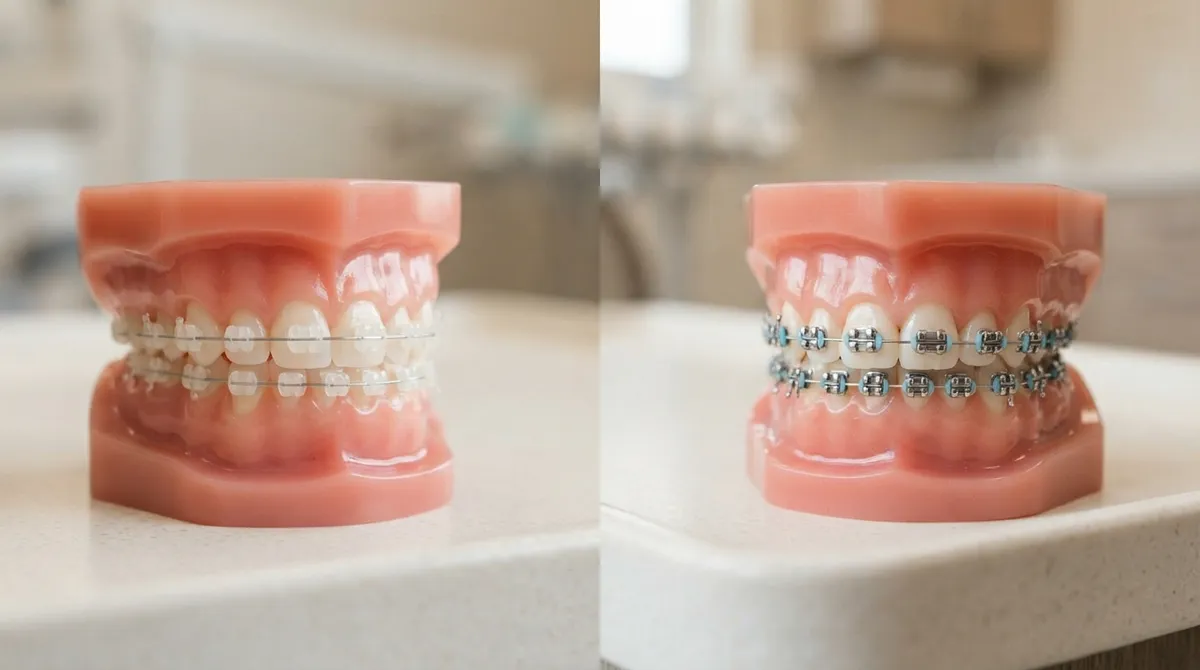
Here is the short version. Metal braces are strong, dependable, and usually cost less. Clear (ceramic) braces blend in with teeth, so they are less noticeable, but they often cost more and can break more easily.
Neither one is automatically better for a teenager. Your orthodontist should recommend the option based on your teen’s bite, tooth movement needs, brushing habits, and goals.
| Feature | Metal Braces | Clear (Ceramic) Braces |
|---|---|---|
| Visibility | More noticeable | Blend with tooth color |
| Durability | Very strong | Can be more prone to bracket breakage |
| Typical cost | Generally lower | Generally higher |
| Best for | Complex cases, active teens, tight budgets | Image-conscious teens who follow care rules |
| Staining risk | Low (no clear parts to stain) | Ties or bands may stain if care is poor |
Want a deeper look at all the choices? Our guide to types of braces explains each option in plain language.

Mistake 1: Choosing Based on Looks Alone
It is easy to fall for the idea of “invisible” braces. Many teens ask for clear braces because they feel less self-conscious. That is a valid feeling, and it matters.
But looks are only one piece of the puzzle. Ceramic brackets may not suit every tooth or every bite problem. Your orthodontist has to decide if clear brackets can do the job your teen’s smile needs.
A better approach is to ask two questions together:
- Will this option move my teen’s teeth the way they need to move?
- Will my teen feel comfortable and confident wearing it?
When both answers are yes, you have found a good fit.
Mistake 2: Ignoring Durability and Breakage
This one catches many families off guard. Clear braces look delicate, and in some ways they are. A 2024 clinical trial of 80 patients found that ceramic brackets failed more often than metal ones over 12 months. The difference showed up most in the lower teeth and the back teeth.
That is one study, not a promise about your teen. Still, it is worth knowing. Broken brackets mean extra repair visits and can sometimes stretch treatment time.
If your teen plays sports, loves crunchy snacks, or tends to be rough on things, metal braces may hold up better. Ceramic braces can still work well for careful teens who follow the food rules. If a bracket does break, check our tips on handling an orthodontic emergency.
Mistake 3: Skipping the Budget Conversation
Cost matters, and there is no shame in saying so. Metal braces are generally the more budget-friendly choice. Clear braces typically cost more because the materials are more specialized.
Exact prices vary by provider, case complexity, and treatment plan, so it is hard to give one number that fits everyone. The key is to ask for a full cost breakdown at your consult, including repairs, retainers, and follow-up visits.
Many families find that flexible payment options make either choice doable. Take a look at our orthodontic financing page to see how monthly plans can fit a real family budget.
Mistake 4: Assuming Clear Braces Work Faster
Some parents think clear braces mean a shorter treatment. Others assume metal braces are faster because they are “stronger.” Neither idea is quite right.
Treatment time depends mostly on the individual case and how well your teen follows instructions. One NHS patient resource gives an average of about 18 to 24 months for orthodontic treatment, with complex cases sometimes taking longer. The bracket material is only one small factor.
What really speeds things up?
- Wearing elastic bands exactly as directed.
- Brushing and flossing well, so appointments stay on track.
- Avoiding foods that break brackets.
- Showing up for scheduled visits.
If speed is a big priority, ask about technology-driven options too. Our LightForce orthodontics system uses custom 3D-printed brackets and can reduce treatment time for some patients.
Mistake 5: Underestimating Daily Care
Here is the truth every teen needs to hear: braces do not clean themselves. Both metal and clear braces trap plaque around the brackets. If plaque builds up, it can lead to gum problems, cavities, and permanent white or brown marks on the enamel.
Clear braces add one more twist. The elastic ties or bands used with some ceramic systems can pick up color from coffee, tea, soda, and dark sauces. Poor brushing makes that worse.
Good daily habits include:
- Brushing after meals and before bed.
- Flossing with a floss threader or water flosser.
- Using fluoride toothpaste or rinse if your orthodontist suggests it.
- Limiting sugary and acidic drinks.
For a simple routine, our post on how to care for your braces breaks it down step by step.
Mistake 6: Forgetting About Food Rules
Teens love snacks, and braces do not love all of them. Hard, sticky, and chewy foods can damage any fixed braces, no matter the material. Popcorn kernels, hard candy, caramel, ice, and whole apples are common troublemakers.
Because clear brackets may be more prone to breaking, careless eating can cost more in repair time. Metal braces are tougher, but they are not bulletproof.
Teach your teen to cut food into bite-size pieces and skip the worst offenders. We keep a handy list in 13 foods to avoid with braces. Pin it to the fridge!
Mistake 7: Leaving Your Teen Out of the Decision
This might be the most overlooked mistake. Your teen is the one wearing the braces for roughly a year or two. If they feel ignored, they may be less likely to take care of them.
Teens who help choose their treatment tend to feel more ownership. A teen who loves bold style might even enjoy colorful elastics on metal braces. Another may need the subtle look of clear brackets to feel okay smiling in photos.
Sit down together before the consult. Ask your teen:
- What worries you most about braces?
- How important is it that they are less noticeable?
- Are you willing to follow the care routine every day?
Their honest answers help your orthodontist guide the choice. For more parent-focused tips, read how to choose the right braces for teens.
Mistake 8: Skipping the Expert Consultation
Online articles can teach you a lot, but they cannot see your teen’s bite. Only an orthodontist can examine the teeth, jaw, and X-rays to say what will work best.
A good consultation should compare risks, cost, and fit for your teen’s case. You should leave knowing why one option is recommended, not just which one.
Dr. Flor Segovia is a board-certified orthodontist who takes time to walk families through every choice. Board certification is a high standard, and you can learn more about it through the American Board of Orthodontics. If you are not sure what to expect at the first appointment, our first orthodontic visit page explains it all.
When Metal Braces Are the Smarter Pick
Metal braces are still a top choice for many teens, and for good reasons. They shine in these situations:
- Your teen has a more complex bite or crowding.
- Your teen is active in sports or tends to be rough on gear.
- You want the most budget-friendly option.
- Your teen likes the idea of picking fun colored bands.
They have a long track record and handle tough cases well. Curious about why they remain popular? See 7 reasons traditional metal braces are still a top choice.
When Clear Braces May Be Worth Discussing
Clear braces can be a great fit when looks matter a lot to your teen and the case allows it. They may be worth a conversation if:
- Your teen feels very self-conscious about visible metal.
- They have an upcoming milestone, like a school photo day or big event.
- They are responsible about brushing and food rules.
- The orthodontist confirms ceramic brackets suit their tooth positions.
Some teens also look into removable options. If that interests you, explore clear aligners and our braces vs. clear aligners comparison. Aligners need a teen who wears them nearly all day, so honesty about habits is key.
Fun Options Teens Actually Enjoy
Braces do not have to feel like a chore. At our Lakewood Ranch office, we offer choices that make treatment more exciting for younger patients. WildSmiles braces come in fun bracket shapes like stars, hearts, and flowers. The unique shape even helps teens see whether they have brushed well.
Teens who want something more discreet can ask about LightForce braces with clear or white options. Having real choices helps teens feel like part of the team. Our teen orthodontic treatment page shows how we tailor care to busy teen lives.
A Simple Way to Decide
Feeling a bit overwhelmed? Use this quick checklist as a starting point before your consult:
- Write down your teen’s top concern (looks, comfort, cost, or speed).
- List their daily habits (sports, snacks, brushing consistency).
- Set a comfortable monthly budget.
- Bring all of it to your orthodontist and ask for a side-by-side comparison.
This keeps the decision calm and fact-based, instead of rushed or driven by pressure. You can also read what local families say by visiting our Segovia Orthodontics Google page, or stay in touch through our Facebook page and our Instagram page.
Don’t Forget About Retainers
No matter which braces your teen chooses, the story does not end when the braces come off. Retainers help keep teeth in their new spots. Skipping them is one of the fastest ways to lose your results.
Plan for retainers from day one, and talk through the different styles with your orthodontist. Learn more on our orthodontic retainers page so there are no surprises later.
Ready to Find the Right Fit for Your Teen?
So, is clear braces or metal braces better for teens? The best choice is the one that fits your teen’s teeth, lifestyle, and budget, and that your teen will happily care for. Avoid the eight mistakes above, and you will be well on your way.
The easiest next step is a conversation with an expert who can look at your teen’s smile in person. We would love to meet your family and answer every question. Simply request an appointment online, or call us at 941-557-1333 to chat with our friendly team. Your teen’s best smile is closer than you think!
FAQs
Q: Are clear braces as effective as metal braces for teenagers?
A: Both can straighten teeth well when they suit the teen’s bite and treatment plan. The orthodontist decides whether ceramic brackets are a good match for each case. For some complex bites, metal braces may be the safer choice.
Q: Are clear braces more likely to break than metal braces?
A: They can be. A 2024 clinical trial of 80 patients found higher failure rates for ceramic brackets over 12 months, especially on lower and back teeth. That is one study, so your teen’s own results may differ, but careful eating habits help a lot.
Q: Do clear braces take longer than metal braces?
A: Not necessarily. Treatment time depends mostly on the individual case and how well your teen follows instructions, not just the bracket material. Many orthodontic treatments run about 18 to 24 months, with complex cases sometimes taking longer.
Q: How long will my teen wear braces, and will they need a retainer?
A: Most teens wear braces for around 18 to 24 months, though every smile is different. After braces come off, retainers are generally needed to help keep teeth in their new positions. Your orthodontist will explain the best retainer plan for your teen.
Our Service Area