Key Takeaways
-
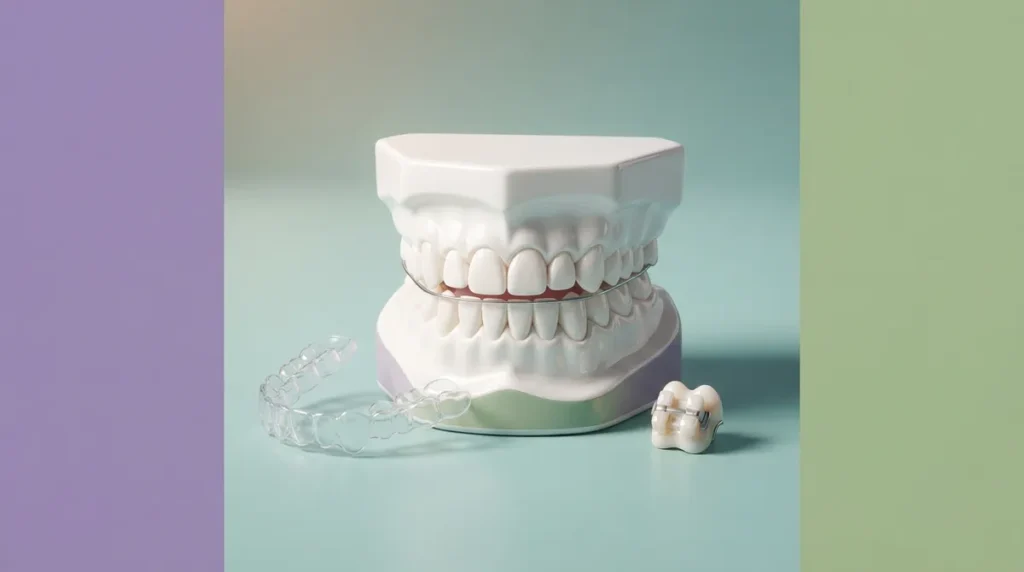
"Ceramic retainer" is not a standard orthodontic appliance; the term usually refers to tooth-colored ceramic braces (used during active treatment) or to clear retainers that look invisible.
-
Ceramic braces move teeth into position and are bonded on during treatment, while retainers hold teeth in their corrected spots after treatment ends. Don't confuse the two when talking to your orthodontist.
-
The three main retainer types orthodontists use are clear plastic (thermoplastic), Hawley (acrylic and wire), and fixed bonded wire retainers, so ask which one suits your bite and lifestyle.
-
Fixed retainers stay hidden behind teeth and need no daily compliance but require extra cleaning around the wire; removable retainers are easier to clean but can be lost and demand consistent wear.
-
Teeth can shift for years after treatment, so retention is generally long-term; follow your orthodontist's wear schedule and never force a tight retainer after missed days, call them instead.
-
Never clean a clear retainer with hot water, since heat can warp the plastic; if a retainer breaks, comes loose, or is lost, contact your orthodontist promptly to prevent teeth from drifting.
Have you ever typed “ceramic retainer” into a search bar and wondered if it’s a real thing? You’re not alone! It’s a question we hear a lot, and the honest answer might surprise you. In 2026, orthodontists don’t use “ceramic retainer” as a standard name for any common retainer type. The word “ceramic” usually points to something else entirely: tooth-colored braces.
So what are people really looking for? Most folks want a retainer that looks natural, feels comfortable, and keeps their smile straight. Others may be mixing up ceramic braces with the retainers they get after treatment. Either way, we’ve got you covered.
In this friendly guide, we’ll clear up the confusion. We’ll compare ceramic braces with clear retainers, walk through the retainer types orthodontists actually use, and share simple care tips. Whether you’re a parent helping a teen, a busy professional, or an adult whose teeth have shifted, you’ll leave knowing exactly what to ask for at your next visit.
What Does “Ceramic Retainer” Actually Mean?
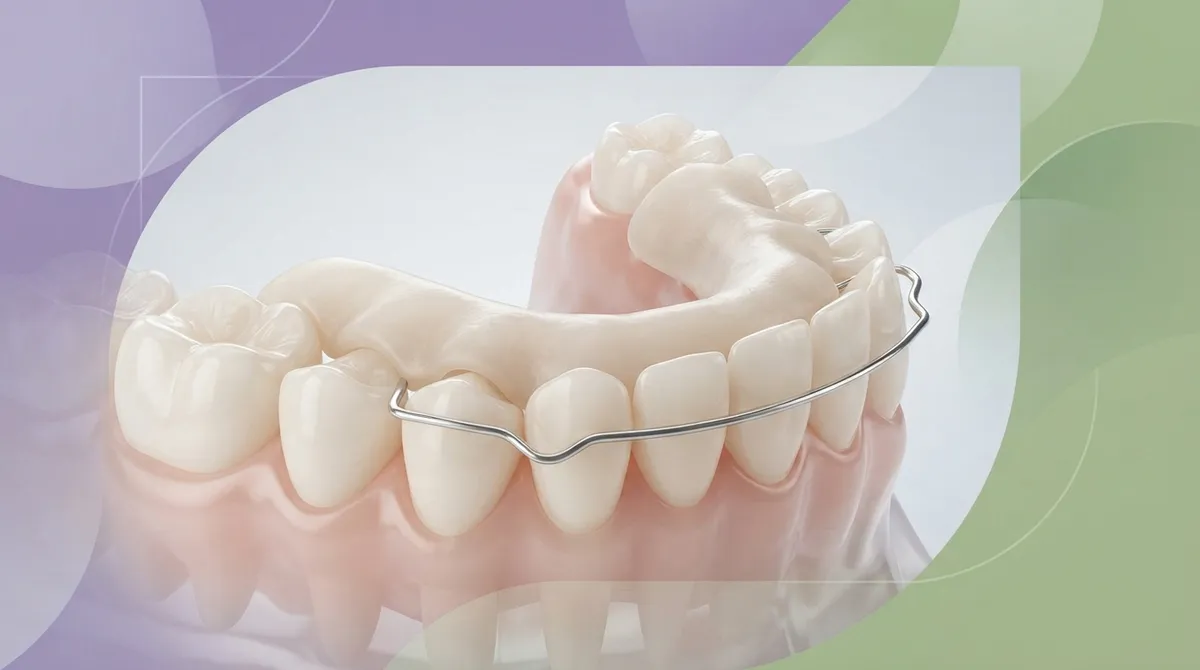
Here’s the short answer: a ceramic retainer is not a standard orthodontic appliance. Major professional guidance lists three common retainer categories: clear plastic (thermoplastic), Hawley (acrylic and wire), and fixed or bonded wire retainers. Ceramic isn’t on that list.
So why does the term pop up? There are two common reasons:
- Ceramic braces: These use tooth-colored brackets that blend in with your teeth. They are worn during active treatment, not after it.
- Clear retainers: These look “invisible,” so people sometimes call them ceramic or porcelain-like because of their natural appearance.
A ceramic bracket is glued to your tooth to move it. A retainer holds your teeth in place after they’ve moved. They do two very different jobs, and understanding that difference is the first step toward making a smart choice.
Ceramic Braces vs. Clear Retainers: A Side-by-Side Look
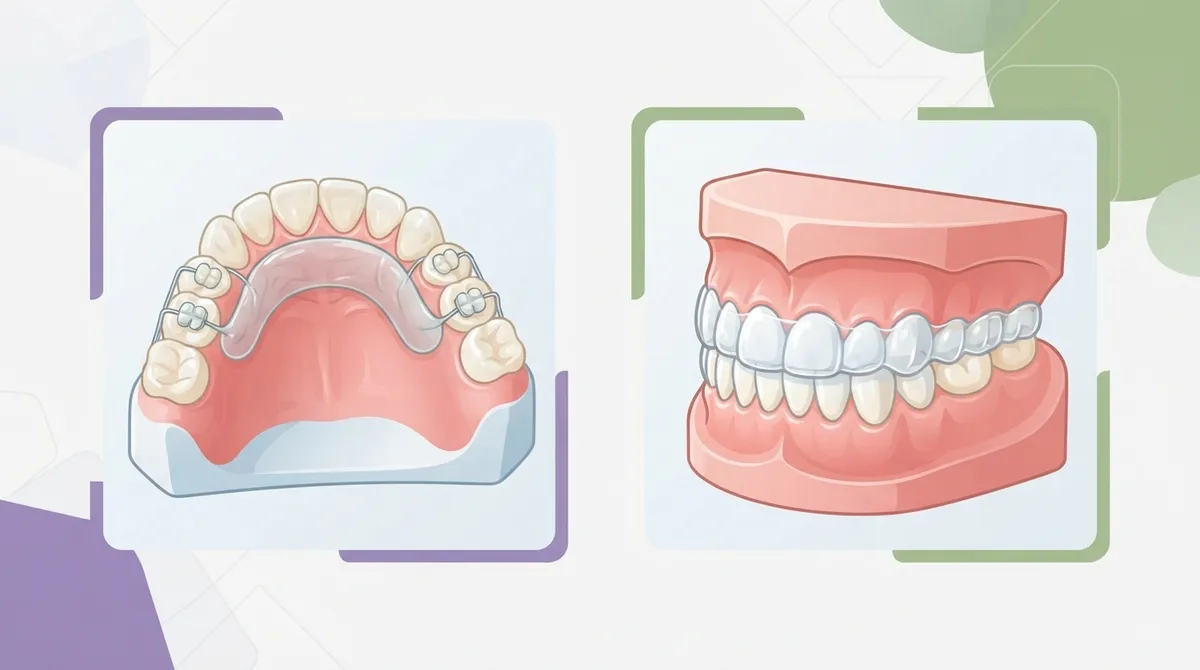
Let’s compare the two things people most often mean when they say “ceramic retainer.” This table breaks down the key differences in plain language.
| Feature | Ceramic Braces | Clear Retainer |
|---|---|---|
| Purpose | Moves teeth into new positions | Holds teeth in their corrected positions |
| When you wear it | During active treatment | After braces or aligners |
| Material | Tooth-colored ceramic brackets with wire | Custom-made clear plastic tray |
| Removable? | No, bonded to teeth | Yes, taken out for meals |
| Look | Subtle, blends with teeth | Nearly invisible |
| Who it’s for | Anyone needing teeth straightened | Anyone who finished treatment |
See the big picture? Ceramic braces are for getting your smile. Retainers are for keeping it. If you want to dive deeper into braces styles, our guide on types of braces is a great place to start.
The Retainer Types Orthodontists Actually Use
Now for the good stuff. If you’re after a retainer that’s discreet and effective, these are the real options. Each one has its own strengths, and your orthodontist will help you pick based on your bite, your treatment result, and your lifestyle.
Clear Plastic Retainers
A clear retainer is a custom-made, see-through tray that snaps over your teeth. It’s the closest thing to the “invisible ceramic look” most people imagine. Because it’s removable, you take it out to eat and brush. Curious about the details? Check out what a clear retainer is and why you need one.
Hawley Retainers
The Hawley is the classic. It uses a thin metal wire and an acrylic piece that sits against the roof or floor of your mouth. It’s sturdy and adjustable, and many patients love how long it lasts. You can read more in these 12 Hawley retainer facts.
Fixed (Bonded) Retainers
A fixed retainer is a slim wire bonded to the tongue-side of selected teeth. From the front, nobody can see it! It works around the clock without you doing a thing. The trade-off is that cleaning takes a bit more care. Learn more with these 14 fixed retainer facts.
Some patients are even prescribed both a fixed and a removable retainer for extra protection. It’s all about what works best for your smile.
Why Do You Need a Retainer at All?
Great question! After your braces come off or your aligners finish, your teeth aren’t fully “set” yet. The bone and gum tissues around them need time to adapt. Without a retainer, teeth can slowly drift back toward their old spots.
Teeth can shift over time, even years after treatment. That’s why retention is generally long-term, and your orthodontist sets a wear schedule just for you. Think of a retainer like a seatbelt for your smile: a small habit that protects a big investment.
This matters for everyone, but it’s especially meaningful for adult relapse patients. If you had braces as a teen and your teeth have moved since, you know how frustrating it feels. The good news? It’s fixable, and a solid retention plan helps prevent a repeat. Our post on why teeth shift back after braces come off explains it well.
How to Choose the Right Retainer for You
There’s no one-size-fits-all answer. Here’s a simple way to think it through, step by step.
- Check your treatment result. Teeth with a higher chance of shifting may need a fixed retainer.
- Think about your habits. If you’re great at remembering to wear a removable retainer, a clear tray may be perfect.
- Consider your hygiene routine. Fixed wires need extra cleaning attention.
- Weigh looks and comfort. Want something nearly invisible? Clear or fixed retainers are popular picks.
- Ask your orthodontist. They’ll look at your bite and recommend the best fit.
Busy professionals often love fixed retainers because there’s nothing to remember or lose. Parents of teens sometimes prefer removable ones since they’re easier to clean. And if you’re prepping for a wedding, graduation, or big event, a clear retainer keeps your smile looking sharp without any fuss.
Which Is Better: Fixed or Removable?
Let’s put the two head to head. Neither one is “best” for everybody, but this table can help you see what fits your life.
| Factor | Fixed Retainer | Removable Retainer |
|---|---|---|
| Visibility | Hidden behind teeth | Clear tray is nearly invisible |
| Compliance needed | Low, always in place | High, you must wear it as directed |
| Cleaning | Takes extra care around wire | Easy to remove and rinse |
| Eating | No restrictions on removal | Taken out for meals |
| Risk of loss | None | Can be lost or misplaced |
| Professional checks | Needed to check the bond | Needed to check fit and wear |
Want help comparing your options? This breakdown of fixed vs. removable retainers goes even deeper.
How to Clean and Care for Your Retainer
A clean retainer is a happy retainer! Good care helps it last longer and keeps your mouth healthy. Here are simple tips to follow.
Caring for a Clear or Removable Retainer
- Rinse it with cool water every time you take it out.
- Gently brush it with a soft toothbrush or use a retainer-cleaning product.
- Never use hot water, because heat can warp the plastic.
- Store it in its case when it’s not in your mouth.
- Keep it away from pets, who seem to find retainers irresistible!
Caring for a Fixed Retainer
- Brush carefully around the wire, especially near the gumline.
- Use floss threaders or interdental brushes to clean between teeth.
- Keep up with regular dental and orthodontic checkups.
- Avoid biting hard foods that could snap the bond.
Always follow your orthodontist’s product-specific instructions. For more helpful ideas, explore our guide on how to master retainer care, and avoid these common orthodontic retainer mistakes.
What If Your Retainer Feels Tight, Breaks, or Comes Loose?
It happens to the best of us! Here’s what to do if something feels off.
- Feels tight after time off: This is common if you skipped a few days. Don’t force it. Call your orthodontist for guidance.
- Cracked or broken: Stop wearing it and get in touch quickly so you can get a replacement.
- Fixed wire comes loose: A loose or broken bond should be checked promptly to protect your teeth.
- Lost it completely: Don’t wait. Teeth can start shifting fast, so call right away.
If you ever need urgent help, our page on orthodontic emergencies explains what to do. And for lost items, see this quick guide on lost retainer replacement.
Planning Ahead: Cost and Coverage
Retainers are a smart investment, and costs vary based on the type you choose and your insurance. Clear and Hawley styles often differ in price, and replacements can add up if a retainer gets lost. It helps to plan ahead so there are no surprises.
If you’re curious about numbers, take a look at how to understand removable retainer costs before you pay. We also offer flexible options, which you can explore on our orthodontic financing page.
A Trusted Team for Your Retention Plan
Choosing who guides your retention matters just as much as the retainer itself. At Segovia Orthodontics in Lakewood Ranch, Dr. Flor Segovia and her team create personalized plans for kids, teens, and adults. You can learn about her credentials through the American Board of Orthodontics, and see why families call us their favorite on our orthodontic retainers page.
Want a peek at our friendly community? Follow along on our Instagram page and our Facebook page, or visit us on Google — Segovia Orthodontics to see what our Lakewood Ranch patients say.
The Bottom Line on Ceramic Retainers
So, here’s the takeaway: a ceramic retainer isn’t a standard orthodontic term. If you want something discreet, a clear plastic retainer or a fixed bonded wire retainer will give you that natural, hidden look. If you’re curious about tooth-colored treatment, ceramic braces are the option to ask about during active care.
Whatever you choose, wearing your retainer as directed is what keeps your smile looking great for years. Your orthodontist will tailor the plan to your teeth, your habits, and your goals.
Ready to protect your smile? Take the first step and request an appointment today, or call us at 941-557-1333. We can’t wait to meet you and help your smile stay beautiful!
FAQs
Q: What is a ceramic retainer in orthodontics?
A: A ceramic retainer isn’t a standard orthodontic appliance. The word “ceramic” is usually tied to tooth-colored braces, while retainers come as clear plastic, Hawley, or fixed bonded wire types. If you want something discreet, a clear or fixed retainer is a lovely option!
Q: Can ceramic braces be used as retainers after treatment?
A: Nope, they do different jobs. Ceramic braces are bonded to your teeth to move them during active treatment, while a retainer holds your teeth in place afterward. Your orthodontist will give you a proper retainer once your braces come off.
Q: How long do I need to wear my retainer after braces?
A: Retention is generally long-term, because teeth can shift over time. Your orthodontist sets a wear schedule just for you, often full-time at first and then nights only. Following that plan is the best way to keep your smile straight.
Q: How do I clean a clear or fixed retainer?
A: For a clear retainer, rinse it in cool water and brush gently with a soft toothbrush, avoiding heat that can warp the plastic. For a fixed retainer, brush carefully around the wire and use floss threaders or interdental brushes. Always follow your orthodontist’s specific advice.
Q: What should I do if my retainer breaks or comes loose?
A: Stop wearing a broken removable retainer and call your orthodontist right away for a replacement. If a fixed retainer bond comes loose, have it checked promptly so your teeth don’t drift. Quick action helps protect all your hard work!
Our Service Area