Key Takeaways
-
Retainer choice depends on your teeth, bite, habits, and daily care ability; there is no single best type for everyone, so decide with your orthodontist.
-
Retention is generally a long-term commitment because teeth can drift back over time; many orthodontists advise ongoing nighttime wear on a schedule set for your case.
-
Clear retainers are the most discreet but only work if worn consistently, and they can crack from heat or grinding and are easy to lose.
-
Hawley retainers are durable and adjustable with a visible front wire, and may cause a slight lisp for the first few days.
-
Fixed (bonded) retainers work around the clock without daily effort, but need careful flossing and should never be bent or repaired at home if loose.
-
If a retainer feels tight, cracks, or gets lost, contact your orthodontist promptly, since teeth can shift quickly and cause relapse.
You just got your braces off. Your smile looks amazing, and you can finally bite into an apple without a second thought. Then your orthodontist hands you a retainer, and a big question pops up: what retainer do I need after braces, and does the type really matter?
It does matter, but not in the way most people think. There is no single “best” retainer for everyone. The right choice depends on your teeth, your bite, your habits, and how well you can care for the appliance every day.
Don’t worry, you’re not alone in feeling unsure. In this guide, we’ll compare the three main types: clear retainers, Hawley retainers, and fixed (bonded) retainers. You’ll learn how each one works, what the pros and cons are, and how to decide with your orthodontist. Think of this as a friendly chat before your next appointment.
Why You Need a Retainer After Braces
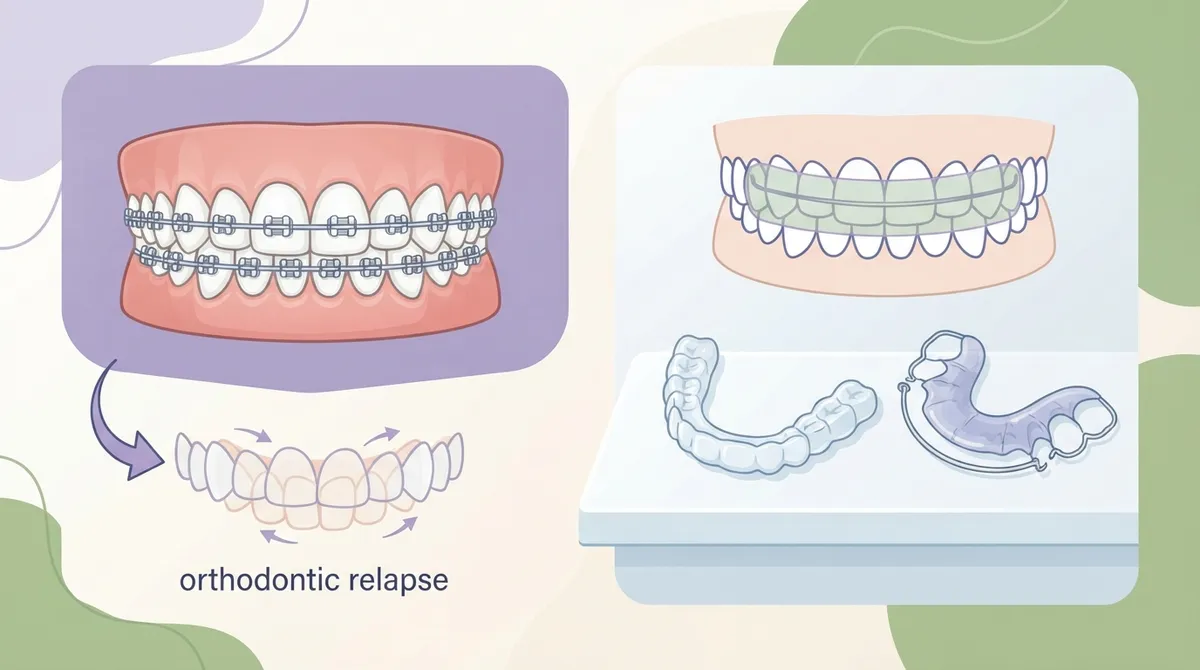
Braces move your teeth into a new position. But the bone and gum tissue around those teeth need time to settle in. Without support, teeth can slowly drift back toward where they started. Orthodontists call this relapse.
Even years later, teeth can shift as your mouth changes over time. That is why retention is generally considered a long-term commitment. Many orthodontists advise ongoing nighttime wear, with the exact schedule set for your own case.
The good news? A retainer is a small price to pay for protecting the smile you worked so hard for. If you want a deeper look at the basics, our guide on orthodontic retainers is a great place to start.
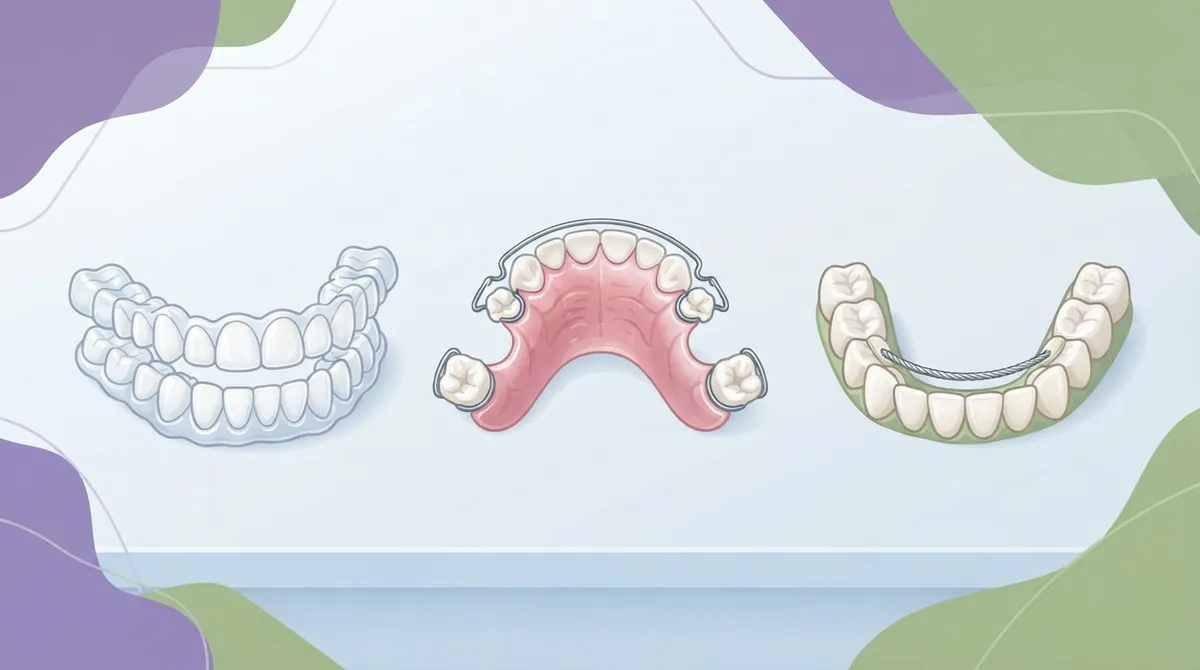
The Three Main Retainer Types at a Glance
Before we compare them one by one, here is a quick snapshot. Orthodontists commonly choose from these options, and sometimes they combine two of them.
| Feature | Clear Retainer | Hawley Retainer | Fixed (Bonded) Retainer |
|---|---|---|---|
| Material | Clear thermoplastic tray | Acrylic plate with metal wire | Thin wire bonded behind teeth |
| Removable? | Yes | Yes | No |
| Visibility | Very discreet | Wire is visible | Hidden behind teeth |
| Adjustable? | Generally no | Yes | Needs professional repair |
| Relies on daily wear? | Yes | Yes | No |
| Cleaning | Remove and clean | Remove and clean | Brush and floss around it |
Now let’s walk through each one in more detail.
Clear Retainers: The Discreet Favorite
Clear retainers are made from thin, see-through plastic. Many people call them Essix retainers. They fit snugly over your teeth like a custom-made tray.
What Patients Like
- Nearly invisible: Great for professionals, brides, grads, and anyone who wants a low-profile look.
- Comfortable fit: They cover the teeth smoothly with no wire poking your lips.
- Easy to remove: You can take them out to eat and clean them.
What to Watch For
- Wear depends on you: If you forget to put them in, they can’t do their job.
- They can crack or warp: Hot water, hot cars, and heavy grinding can damage them.
- They are easy to lose: Wrapped in a napkin at lunch? That is how many retainers end up in the trash.
If you like the look of clear aligners, a clear retainer will feel very familiar. Curious about the details? Read our post on what a clear retainer is and why you need one.
Hawley Retainers: The Classic Choice
The Hawley retainer has been around for a long time, and for good reason. It is made of a hard acrylic plate that sits against the roof or floor of your mouth, with a thin metal wire across the front teeth.
What Patients Like
- Adjustable: Your orthodontist can make small tweaks to the wire if needed.
- Durable: Hawley retainers are sturdy and can last a long time with good care.
- Custom style: Many come in colors and fun patterns, which teens often love.
What to Watch For
- Visible wire: The front wire can show when you smile.
- Speech changes: You may lisp a little for the first few days.
- Bulkier feel: The acrylic takes some getting used to.
Not sure how a Hawley stacks up against a clear tray? See our breakdown of the key differences between a Hawley and a clear retainer, or browse 12 Hawley retainer facts every patient should know.
Fixed Retainers: The Set-It-and-Forget-It Option
A fixed retainer is a thin wire bonded to the back of selected teeth, most often the lower front ones. Because it stays in place around the clock, it works continuously without you having to remember it.
What Patients Like
- No daily routine: You can’t forget to wear it or leave it at a restaurant.
- Invisible from the front: It sits behind your teeth.
- Constant support: It is a strong option for teeth that tend to shift.
What to Watch For
- Tougher cleaning: Food and plaque can collect around the wire, so careful brushing and flossing matter.
- It can come loose: A bonded wire can detach or break and needs a professional check.
- Gum and tooth care: Poor cleaning can affect gums and teeth, so regular checkups are important.
Never try to bend or fix a loose wire yourself. Learn more in our guide to 14 fixed retainer facts every orthodontic patient should know, or compare options in fixed vs. removable retainers after braces.
Can You Have More Than One Type?
Yes! Some patients get a combination. A common setup is a fixed retainer on the lower front teeth plus a removable retainer, often clear, for the full arch.
Why mix them? Lower front teeth often shift the most. A bonded wire gives them steady, always-on support, while the removable retainer protects the rest of your smile. Your orthodontist will decide based on how your teeth moved during treatment.
What Does the Research Say?
Here is something honest and helpful: science has not crowned one winner. A Cochrane review, which looks at many studies together, reports low to very low certainty evidence overall. That means no firm conclusion that one retention method beats all the others.
Some small studies offer a peek at the differences:
- In one trial, part-time lower clear retention was linked to about 0.92 mm more tooth irregularity than a multistrand fixed retainer (56 participants). The review noted this difference may not be clinically important.
- An earlier analysis found about 0.6 mm more lower-arch irregularity with removable clear retainers than fixed ones (84 participants), though evidence quality was limited.
So what does that mean for you? It means the best retainer is the one that fits your case and that you will actually use and care for. Your orthodontist weighs your tooth position, bite, hygiene habits, and lifestyle to make the call.
How to Choose: Questions to Ask Yourself
Use this simple checklist when you talk with your orthodontist.
- How reliable am I with a daily habit? If you worry you’ll forget, a fixed retainer may help.
- How do I feel about visibility? Clear and fixed options are the most discreet.
- How well do I clean around appliances? Removable retainers are easier to clean. Fixed ones need extra care.
- Do I grind my teeth? Grinding can damage clear plastic, so mention it.
- How far did my teeth move? Teeth with a high chance of relapse may need stronger, steadier support.
Whichever way you lean, your orthodontist makes the final recommendation based on your exact results. Our team at Segovia Orthodontics in Lakewood Ranch, led by Dr. Flor Segovia, takes time to explain each option so you feel confident.
Wear Schedules: Follow Your Own Plan
Wear schedules vary. Some orthodontists prescribe full-time wear at first, then reduce it. Others start with nightly wear right away. Services such as the NHS often describe nightly wear for the first year followed by reduced or ongoing wear, but this is an example, not a universal rule.
The key message: follow your orthodontist’s instructions, not a generic chart you found online. And never stop wearing your retainer without professional advice.
Everyday Retainer Care Tips
A little care goes a long way. Here are easy habits to build.
- Clean as directed: Rinse removable retainers and brush them gently each day.
- Skip the heat: Hot water, dishwashers, and hot cars can distort plastic.
- Use a case: Always store your retainer in a protective case when it is not in your mouth.
- Floss around fixed wires: Take your time and use floss threaders or interdental tools if needed.
- Keep it away from pets: Dogs love the smell of retainers. Trust us on this one.
For more helpful reminders, check out our list of orthodontic retainer mistakes to avoid and how to master retainer care.
What If Something Goes Wrong?
Retainers are small, and life is busy. Here is what to do if trouble pops up.
- It feels tight: Don’t force it. Your teeth may have shifted. Call your orthodontist.
- It cracked or broke: Stop wearing a damaged retainer and book a visit.
- You lost it: Contact your orthodontist right away so you can get a replacement before teeth drift. See our tips on what to do right away with a lost retainer.
- A fixed wire feels loose or broken: Don’t bend it yourself. Call for a prompt repair. Our page on orthodontic emergencies can help you decide what to do.
Who Benefits Most From Each Type?
Here is a friendly way to picture it. These are general ideas, and your orthodontist will tailor the plan.
- Parents of kids and teens: Kids who are likely to misplace things may do well with a fixed lower retainer, sometimes paired with a removable one. Teens who like personality may love a colorful Hawley.
- Young professionals and career-focused adults: A clear retainer is discreet and easy to wear at night.
- Anyone planning a big event: If a wedding or graduation is coming up, clear or fixed options keep things subtle.
- Adults who had braces years ago: If your teeth have shifted, ask about your options. Our adult orthodontics care can help you decide on next steps.
Your Smile Is Worth Protecting
So, what retainer do you need after braces? The honest answer is that it depends on you. Clear retainers offer discretion, Hawley retainers offer durability and adjustability, and fixed retainers offer steady, always-on support. Many people do best with a thoughtful combination.
The most important step is to talk with your orthodontist, wear your retainer as prescribed, and keep up with checkups. Retention is a lifelong friend to your smile.
Ready to chat about the best fit for you? Request an appointment or call us at 941-557-1333, and our friendly team will walk you through every option. You can also see what patients say when you visit Segovia Orthodontics on Google, or follow along with smile tips on our Instagram page. To learn more about what board certification means for your care, explore the American Board of Orthodontics, and meet us on our Facebook page.
FAQs
Q: What type of retainer is best after braces: clear, Hawley, or fixed?
A: There is no single best type for everyone. Your orthodontist picks based on your tooth movement, bite, hygiene habits, and how reliably you can wear and care for an appliance. Research so far hasn’t shown one option that wins for every patient, so a personalized plan is the way to go.
Q: Do I have to wear my retainer for life?
A: Retention is generally considered long-term, and many orthodontists advise ongoing nighttime wear. Teeth can shift slowly over the years, so your retainer keeps your smile steady. Your orthodontist will set the exact schedule for your case, so please don’t stop without checking in first.
Q: How do I clean my retainer?
A: For removable retainers, rinse and gently brush them as your orthodontist instructs, and store them in a protective case when not in use. Avoid hot water or heat, since it can warp plastic. For a fixed retainer, brush and floss carefully around the wire every day.
Q: What should I do if my retainer feels tight, breaks, or gets lost?
A: Don’t force a retainer that won’t seat, because your teeth may have shifted or the retainer may be damaged. Call your orthodontist or dentist promptly. The same goes for a fixed wire that feels loose or broken, so please don’t try to bend or repair it yourself.
Q: Can my teeth shift if I stop wearing my retainer?
A: Yes, they can. After braces, teeth have a natural tendency to drift as the surrounding tissues adapt. Wearing your retainer as prescribed is the best way to protect your results and keep your smile looking great.
Our Service Area