Key Takeaways
-
Phase 1 braces are early, targeted treatment for children with a mix of baby and adult teeth, and they do not always involve traditional braces; options include palatal expanders and removable appliances.
-
The American Association of Orthodontists recommends a check-up by age 7, but that visit is an evaluation to gather information, not a signal that every child needs treatment right away.
-
Watching and waiting is a valid outcome; many children are monitored over time and never start active treatment at that stage.
-
Early care is a head start rather than a guarantee; some children still need phase 2 with full braces or aligners once most adult teeth arrive.
-
Phase 1 has its own cost and timeline, so request a written, case-specific estimate and ask what the fee covers, including visits, adjustments, and retainers.
-
Prepare for the first visit by noting observed concerns like crowding or thumb sucking, bringing dental records or X-rays, and listing questions about timing, cost, and next steps.
If your child is still losing baby teeth, you may be wondering if it is too soon to think about braces. Many Bradenton parents ask the same thing. They hear about phase 1 braces from a friend, a dentist, or a school pickup chat, and suddenly they are not sure what to believe.
Here is the good news: you do not need to figure it all out alone. Phase 1 care is early, targeted treatment for kids who still have a mix of baby and permanent teeth. It is not routine cosmetic work, and it is not right for every child. Knowing the common missteps can save you time, stress, and money.
In this guide, we walk through five mistakes families often make when researching phase 1 braces in Bradenton. We also explain what early treatment is, which problems it may help, and how to prepare for a first visit. By the end, you will feel calmer and ready to ask great questions.
What Are Phase 1 Braces, Really?
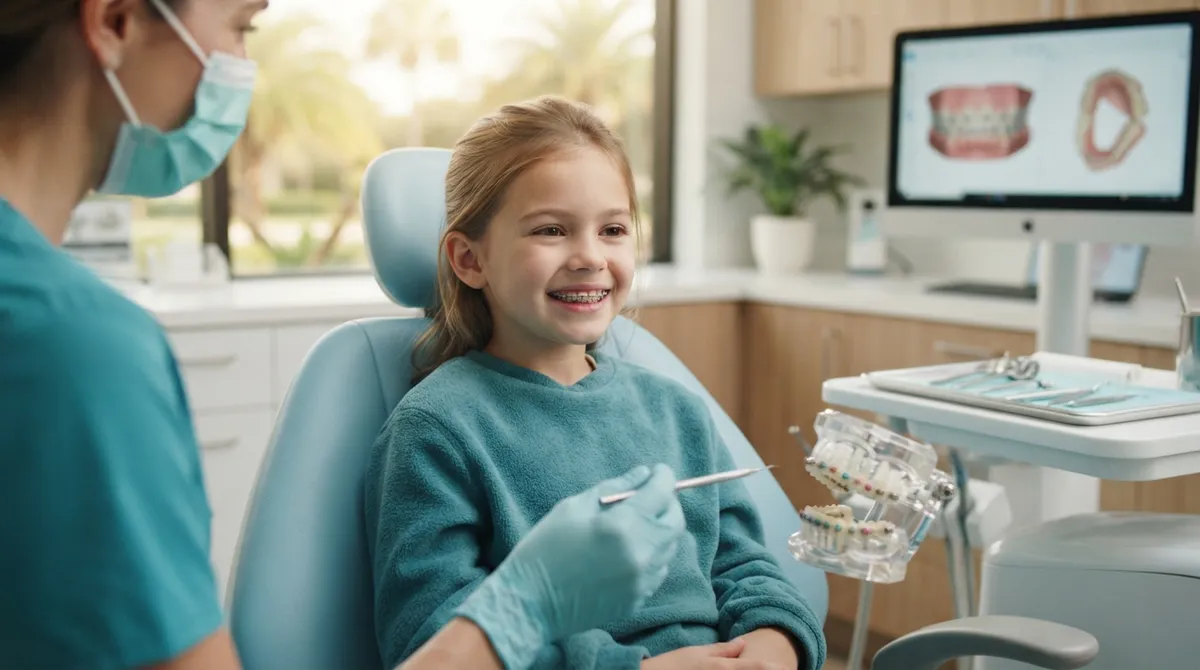
Phase 1 braces, also called Phase I or interceptive orthodontic treatment, are early care for a child with both baby and adult teeth. The goal is to address selected tooth, bite, or jaw problems while a child is still growing. It is not meant to give a full, finished smile in one step.
Here is something that surprises many parents: phase 1 does not always mean braces. Your orthodontist might use limited braces, a palatal expander, a fixed or removable appliance, or another custom approach. Some children need no treatment at that stage at all.
Think of it like a garden. Early care can help guide growth and make room for what is coming. It does not guarantee that you will never need more treatment later. You can learn more about this approach on our early orthodontic treatment page.
Mistake 1: Waiting Until All the Adult Teeth Come In
Many parents think braces should wait until every baby tooth is gone. That is true for some kids, but not for all. Waiting can mean missing the best window to guide jaw growth or fix certain bite problems.
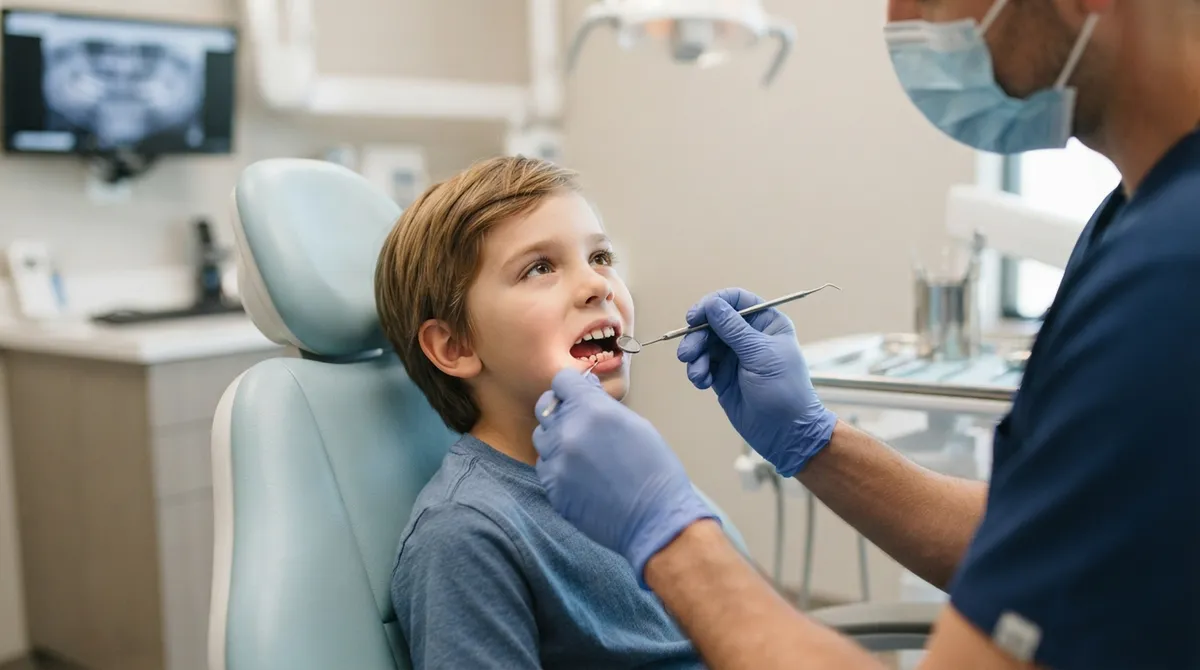
The American Association of Orthodontists recommends a check-up by age 7. This is an evaluation milestone, not a signal that every child should start braces right away. At that visit, the orthodontist may suggest one of three paths:
- Start treatment now because a problem is developing
- Monitor your child and re-check as teeth come in
- Plan for later treatment when more adult teeth are in place
In many cases, the answer is simply to watch and wait. That is a perfectly good outcome. A short visit can give you peace of mind and a clear plan. Read more about why early orthodontics matters for your child’s future.
Mistake 2: Assuming Every Child at Age 7 Needs Braces
The flip side is just as common. Some parents hear “age 7 check-up” and picture a mouth full of metal by second grade. That is not what the recommendation means.
An early visit is about information. Many children are simply monitored for years. The orthodontist may track how teeth erupt, how the jaws grow, and whether any habits are affecting development. If nothing needs fixing yet, you walk away with knowledge and no treatment.
It helps to know what to expect, so you feel relaxed on the day. Our guide to the first orthodontic visit explains the process step by step. You can also review six signs your child should see an orthodontist now if you want a quick checklist.
Mistake 3: Ignoring the Signs That Early Care May Help
On the other hand, some problems are easier to address early. If you notice any of the issues below, it is wise to book an evaluation instead of waiting. Early intervention may be considered for concerns like:
- Crossbite: upper teeth bite inside the lower teeth
- Significant crowding: not enough room for adult teeth to come in
- Certain jaw or bite problems: such as an underbite or a very pronounced overbite
- Harmful oral habits: like long-term thumb sucking that affects the teeth or jaw
Whether early care is right depends on your child’s development and diagnosis, not on age alone. Each child grows at their own pace. Two kids who are both eight can have very different needs.
To understand these concerns better, explore our overview of common orthodontic problems. We also have helpful posts on how crossbite treatment is done and how to fix crowded teeth.
Phase 1 vs. Phase 2: What Is the Difference?
It helps to see the two phases side by side. Phase 1 is early and focused. Phase 2 is usually the full, finishing stage once most adult teeth have arrived.
| Feature | Phase 1 (Early Treatment) | Phase 2 (Comprehensive Treatment) |
|---|---|---|
| Typical timing | Mix of baby and adult teeth | Most or all adult teeth in |
| Main goal | Guide growth, create space, address a bite problem | Align all teeth and perfect the bite |
| Tools used | Limited braces, expanders, or other appliances | Full braces or clear aligners |
| Typical length | Often about 9 to 12 months, varies by child | Varies by case |
| Always needed? | No, only for selected cases | Some children need it, others do not |
The Children’s Hospital of Philadelphia describes phase 1 as typically lasting about 9 to 12 months, though your child’s plan may differ. After active treatment, the orthodontist usually monitors your child as permanent teeth come in. Some kids later need phase 2 with full braces or aligners. Others do not, depending on how their teeth and bite develop. To dive deeper, read what two-phase treatment is and whether your child needs it.
Mistake 4: Assuming Phase 1 Means a Perfect Smile Forever
This one catches many families off guard. Early treatment can do wonderful things, but it does not promise that later treatment will be unnecessary. Teeth keep moving and growing through the teen years.
It helps to think of phase 1 as a smart head start. It may make room for permanent teeth, guide how the jaws grow, or correct a bite while your child is still developing. Then your orthodontist keeps watching. If a second phase is needed, you will already be ahead because the foundation is in place.
Setting that expectation early keeps everyone happy. Your child will not feel let down, and you will not feel surprised later. Families in Bradenton often tell us that a clear plan makes the whole journey feel lighter. For a parent-friendly overview, see our guide to getting kids braces in Bradenton the right way.
Mistake 5: Not Asking About Cost and Timeline for Phase 1 Specifically
Money questions are normal, and you deserve straight answers. Here is the tricky part: a general braces price or timeline does not automatically apply to phase 1. Early care is its own plan with its own fee.
You may see a broad range online, such as $1,500 to $3,500 for phase 1. That number came from a general search result, not a Bradenton quote, so treat it as a rough idea only. Likewise, one local practice reports that orthodontic treatment overall averages 18 to 24 months. That is not a phase 1 statistic.
The best move is to ask for a case-specific written estimate. Here are questions worth bringing to your visit:
- What exact appliance or treatment do you recommend, and why?
- How long do you expect active phase 1 treatment to last?
- What does the fee include, such as visits, adjustments, and retainers?
- Will my child likely need phase 2, and what would that add?
- What payment plans or financing options are available?
Many families find that flexible payment makes early care easier to plan. Explore orthodontic financing and our tips on how orthodontics payment plans actually work to get comfortable with the numbers.
What Appliances Might Be Used in Phase 1?
Since phase 1 braces in Bradenton do not always mean traditional braces, it helps to know the options. Your orthodontist picks the tool that fits your child’s diagnosis. Common choices include:
- Limited braces: brackets on just a few teeth to fix a specific issue
- Palatal expander: gently widens the upper jaw to create space or correct a crossbite
- Fixed appliances: cemented in place to guide teeth or jaw growth
- Removable appliances: worn as directed to support development
For kids who do end up in braces, a playful look can make treatment more fun. Our WildSmiles braces come in fun shapes like stars, hearts, and flowers, which many children love. When kids feel excited, they tend to brush and floss better, and that supports a healthier smile.
How to Prepare for Your Child’s Evaluation
A little prep goes a long way. A calm, informed visit helps your child feel safe and helps you get the answers you need. Here are simple steps to follow:
- Write down what you have noticed, such as crowding, a thumb habit, or a bite that looks off
- Bring any recent dental records or X-rays your dentist has shared
- Share your child’s health history and any concerns about comfort or anxiety
- Prepare your questions about timing, cost, and next steps
- Remind your child that this visit is just a look and a chat
You can also see what happens during an exam in our post on what happens during an orthodontic evaluation. Knowing the flow takes away a lot of the mystery.
Choosing the Right Orthodontist in Bradenton
Not every practice approaches early care the same way, so it pays to choose with care. Look for a specialist who explains options clearly, listens to your concerns, and does not rush you into treatment. A good orthodontist will be just as comfortable saying “let’s monitor” as “let’s start.”
It also helps to confirm training and credentials. You can learn what board certification means through the American Board of Orthodontics. At Segovia Orthodontics, Dr. Flor Segovia is a board certified orthodontist who offers bilingual care in English and Spanish and focuses on a warm, family-friendly setting for children, teens, and adults.
For more ideas on finding the right fit, browse how to find the best orthodontist in Bradenton. You can also see how real families feel by following us on our Facebook page and our Instagram page, or read what neighbors say when you visit our Segovia Orthodontics location on Google.
A Note for Parents Who Are Also Thinking About Their Own Smiles
Sometimes a child’s visit sparks a thought: “Maybe I should look into this too.” You are not alone. Many parents in our community decide to straighten their own teeth after watching their kids start treatment.
If you are curious, we offer discreet options for grown-ups, including clear aligners and advanced LightForce braces. Our adult orthodontics page explains choices that fit a busy schedule and a professional look. Whether it is for a wedding, a big event, or simply confidence, it is never too late to start.
Final Thoughts: Early Care Is About Information, Not Pressure
Phase 1 braces in Bradenton are not a race, and they are not a sales pitch. They are one tool among many that may help a growing child when the timing and diagnosis line up. The biggest mistakes happen when families wait too long, assume too much, or skip the right questions.
Start with a simple evaluation by age 7. Ask for a clear diagnosis, a written estimate, and an honest opinion about whether to treat now or monitor. Then you can make a calm, confident choice that fits your child and your family.
Ready to take the first step? Request an appointment with Dr. Segovia’s team, or call us at 941-557-1333 to talk through your questions. We would love to meet your family and help your child grow into a smile they are proud of.
FAQs
Q: What are phase 1 braces, and how are they different from full braces?
A: Phase 1 braces are early, targeted treatment for kids who still have a mix of baby and adult teeth. They focus on specific tooth, bite, or jaw concerns instead of aligning every tooth. Full braces usually come later, once most permanent teeth are in.
Q: At what age should my child have an orthodontic evaluation in Bradenton?
A: The American Association of Orthodontists recommends a check-up by age 7. This visit is about gathering information, not starting treatment right away. Your orthodontist will tell you whether to treat now, monitor, or wait.
Q: Will my child need phase 2 braces after phase 1 treatment?
A: It depends on how your child’s teeth and bite develop. Some children need phase 2 with full braces or aligners, while others do not. Phase 1 gives a helpful head start, but it does not guarantee that later treatment will be unnecessary.
Q: How much do phase 1 braces cost in Bradenton, and what does the fee include?
A: Cost varies based on the diagnosis, the appliance, and the provider, so there is no single Bradenton price. The best step is to request a written, case-specific estimate and ask exactly what the fee covers, such as visits, adjustments, and retainers.
Q: What appliances besides braces might be used for early orthodontic treatment?
A: Your orthodontist may use a palatal expander, a fixed appliance, or a removable appliance, depending on your child’s needs. Some children use limited braces on just a few teeth. The plan is always tailored to the individual child.
Our Service Area