Key Takeaways
-
Braces actively move teeth and correct bite or jaw problems, while retainers mainly hold teeth in place after treatment, so a retainer alone usually cannot fix significant crowding or bite issues.
-
The American Association of Orthodontists recommends a first orthodontic check-up by age 7, though this visit is a screening and many children are simply monitored until treatment is needed.
-
Watch for crowded or overlapping teeth, large gaps, protruding front teeth, crossbite, overbite or underbite, impacted teeth, or trouble chewing or cleaning; two or more signs warrant an evaluation.
-
Never force a retainer that no longer fits, since a tight retainer usually means teeth have shifted; call your orthodontist to have it checked instead.
-
An early orthodontic visit does not mean early braces; some children only need regular monitoring until their permanent teeth arrive, while others benefit from early interceptive care.
-
Retainer wear is essential because teeth tend to drift back after treatment, and following the orthodontist's schedule for how long to wear it protects the results.
It is a question almost every parent asks at some point. You glance at your child’s smile and wonder, does my child need braces or just a retainer? Maybe a front tooth is turning sideways. Maybe a friend mentioned that their child only needed a “little retainer.” Or maybe you just want to know what is normal and what is not.
Here is the good news: you do not have to figure this out alone. Braces and retainers do different jobs, and an orthodontist can tell you which one fits your child’s needs. This guide walks you through the differences, the signs to watch for, and the simple steps to get a clear answer.
We will keep it friendly and practical, so you can feel confident about your next move. Let’s get started.
Braces and Retainers Do Different Jobs
The first step is understanding what each one actually does. They sound similar, but they are not interchangeable.
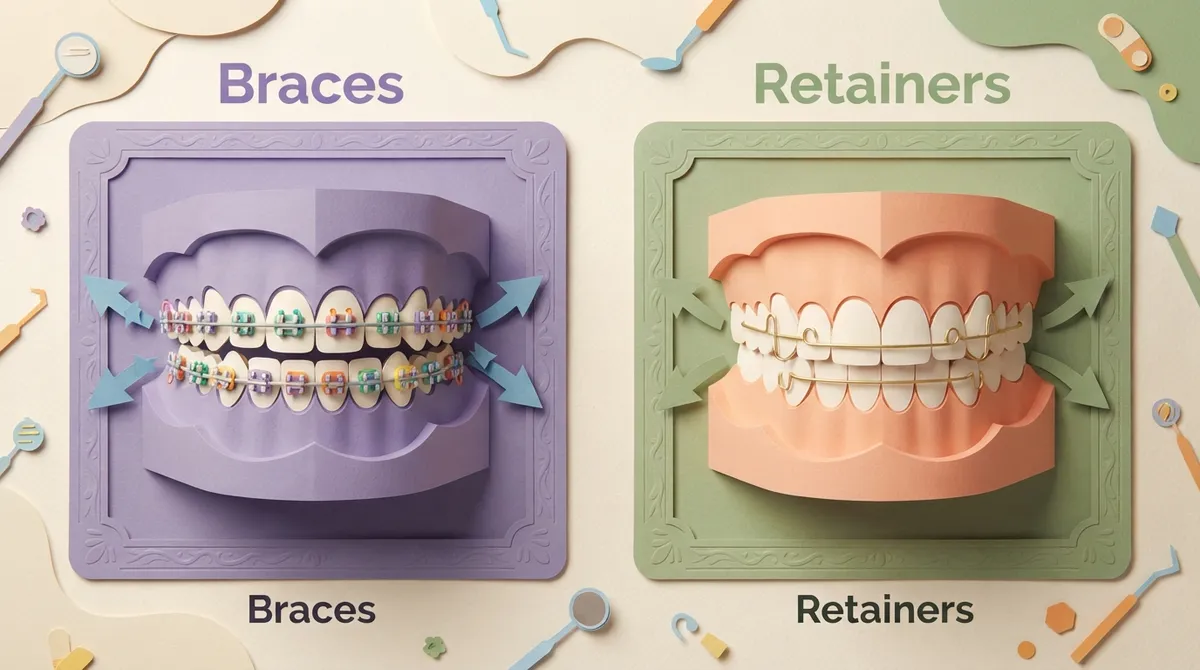
Braces and other active appliances move teeth. They gently guide teeth into better positions and can help correct bite and jaw problems. Think of them as the “fix it” tools.
Retainers mostly hold teeth in place. They protect the results after active treatment is done. Think of them as the “keep it” tool. You can learn more about orthodontic retainers and how they protect a smile.
Because of this, a retainer alone generally cannot replace braces when a lot of tooth movement or bite correction is needed. Teeth do not move far enough with a simple holding device.
| Feature | Braces or Active Appliances | Retainers |
|---|---|---|
| Main purpose | Move teeth and correct the bite | Hold teeth in their current position |
| When used | During active treatment | Usually after braces or aligners |
| Fixes crowding or bite issues | Yes | Generally no |
| Typical wear time | Often 1 to 2 years for fixed braces | As directed, often long term |
The NHS notes that fixed braces are commonly worn for 1 to 2 years, though every child is different.
What Your Child’s Age Really Tells You
Many parents worry that their child is either too young or too old. Age matters, but it does not decide everything.
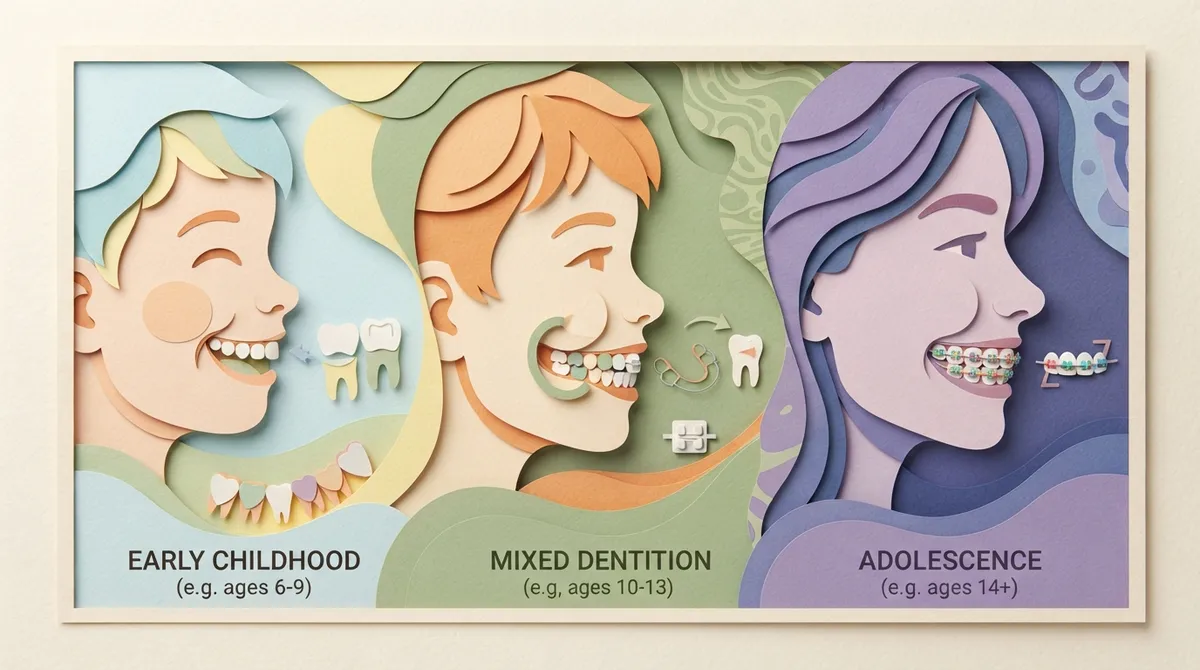
The American Association of Orthodontists recommends a first check-up by age 7, or sooner if you notice a concern. This is a screening, not a promise that braces will start at 7. At that age, many children are simply watched while their teeth come in.
Many kids begin full orthodontic treatment between ages 9 and 14. The British Orthodontic Society says many start around 12 or 13, after most permanent teeth have erupted. Some problems need earlier attention, and others can wait.
So the real answer to “is it time?” is this: it depends on your child’s teeth, jaws, and growth. If you want to explore this more, read about early orthodontic treatment and what it can do.
Signs Your Child May Need Braces
Some signs point toward active treatment rather than a retainer. Keep an eye out for these:
- Crowded teeth that overlap or twist
- Gaps or spacing that look larger than expected
- Protruding front teeth that stick out
- Crossbite, where upper teeth bite inside the lower teeth
- Overbite or underbite, where the jaws do not line up
- Impacted teeth that are stuck under the gums
- Trouble chewing or cleaning because of how teeth sit
You can read more about these in our guide to common orthodontic problems. If you notice two or more of these, it is a good idea to schedule an evaluation. Our post on the signs your child should see an orthodontist goes even deeper.
When a Retainer Is the Right Choice
A retainer makes sense in a few specific situations.
- After braces or aligners. This is the most common reason. Teeth tend to drift after treatment, so a retainer keeps the new smile in place.
- In selected limited cases. Sometimes an orthodontist decides a retainer is suitable for a very small adjustment.
- When teeth have shifted slightly. The orthodontist checks whether a retainer can manage the change or whether more active correction is needed.
One important tip: never force a retainer that no longer fits. A tight or poorly fitting retainer can be uncomfortable and may not help. If your child’s retainer feels different, call the office and have it checked. Our guide on what a clear retainer is explains the basics.
How to Find Out Which One Your Child Needs
Ready for a clear answer? Follow these simple steps.
- Look at your child’s smile. Note any crowding, gaps, bite issues, or teeth that look out of place.
- Check the timeline. If your child is around age 7 or older and has not seen an orthodontist, it is a good time to book.
- Write down your questions. Jot down concerns about chewing, speech, cleaning, or how the smile looks.
- Schedule an orthodontic evaluation. Only an exam can tell you whether braces, another appliance, a retainer, or simple monitoring is the right path.
- Ask about the plan. Find out if treatment should start now, later, or not at all.
Not sure how to prepare? Our article on how to ask the right orthodontic questions can help.
What Happens at the First Visit
Many parents feel nervous about the first appointment. The truth is, it is usually calm and easy.
An orthodontist looks at your child’s teeth, jaws, and bite. They check how crowded or spaced the teeth are and how the permanent teeth are coming in. Depending on what they see, they may take photos, X-rays, or scans.
Then they talk with you. The result may be one of three things: start treatment now, watch and wait, or plan treatment for later. Any of these is a perfectly normal outcome.
At Segovia Orthodontics in Lakewood Ranch, Dr. Flor Segovia leads a friendly, comfortable team that explains everything in plain language. Want to know what to expect? Read about your first orthodontic visit.
Why Early Evaluation Does Not Always Mean Early Braces
This is worth repeating, because it surprises many parents. An early visit does not mean your child will get braces early.
Some developing problems benefit from early, or “interceptive,” care. For example, a narrow upper jaw or a crossbite may be easier to guide while a child is still growing. Other children simply need regular check-ups until their permanent teeth arrive.
The benefit of an early look is peace of mind. You learn what is happening and when to act. Our post on early orthodontic treatment benefits shares more.
Does Your Child Still Have Baby Teeth?
Great question. Yes, children can benefit from an evaluation even with baby teeth. The orthodontist can spot jaw growth patterns and crowding early.
That said, most children with baby teeth do not need braces right away. Braces are usually used once enough permanent teeth have come in. If your child has a specific problem, such as a crossbite or teeth that will not erupt, an earlier appliance might help.
Treatment Options for Kids and Teens
If your child does need active treatment, there are several choices. The best one depends on the problem, age, and lifestyle.
- Traditional metal braces. Strong, reliable, and effective for many cases. See types of braces for more.
- WildSmiles braces. Fun bracket shapes help kids feel excited about treatment. They are also designed to support better brushing. Learn about WildSmiles braces.
- LightForce braces. Custom 3D printed brackets that can shorten treatment time. Explore LightForce orthodontics.
- Clear aligners. Removable trays that are discreet and comfortable for suitable cases. See clear aligners.
For older kids, our page on teen orthodontic treatment explains how treatment can fit a busy school and sports schedule.
Why the Retainer Phase Matters So Much
Even after braces come off, the job is not finished. Teeth like to drift back toward their old spots. That is why retention is such an important phase.
The orthodontist decides which retainer your child needs and how long to wear it. Some kids wear one full time at first, then only at night. Others need long-term or ongoing wear to keep their alignment steady.
Helping your child stick to the plan is one of the best things you can do. A simple routine, like putting the retainer in right after brushing at night, makes it easier. Avoid common slip-ups by reading our tips on orthodontic retainer mistakes to avoid.
What If a Retainer No Longer Fits?
This happens more often than you might think. A retainer that feels too tight usually means teeth have shifted. A cracked or lost retainer is also common.
Here is what to do:
- Stop forcing the retainer into place.
- Keep the retainer safe and bring it to your orthodontist.
- Let the orthodontist check the teeth to see if a new retainer will do or if active correction is needed.
If it is urgent, our page on orthodontic emergencies can guide you.
Making Treatment Fit Your Family’s Budget and Schedule
Busy parents often ask about cost and timing. Both are valid concerns.
Many practices offer flexible options so care feels manageable. At Segovia Orthodontics, you can explore orthodontic financing to spread out payments. It also helps to choose a team that offers convenient appointment times, so school and work stay on track. You can learn why families choose us for care in Lakewood Ranch.
You can also read what other families say. Visit Segovia Orthodontics on Google to see reviews from our Lakewood Ranch community, and follow our Instagram page for real smile stories.
Choosing a Qualified Orthodontist
The right guidance makes a big difference. An orthodontist is a dental specialist with extra training in tooth and jaw alignment. Many choose to earn board certification, which you can learn about through the American Board of Orthodontics.
Dr. Flor Segovia is a board certified orthodontist who offers bilingual care in English and Spanish. The practice also uses advanced orthodontic technology to plan treatment with care and accuracy.
Quick Checklist: Braces or Retainer?
Use this simple guide to sort out your thoughts before your visit:
- Has your child already finished braces or aligners? A retainer is likely part of the plan.
- Does your child have crowding, bite problems, or protruding teeth? Braces or another active appliance may be needed.
- Is your child around age 7 or older and never evaluated? Book a check-up.
- Did the retainer stop fitting? Have it checked, do not force it.
- Still unsure? An orthodontic exam gives the real answer.
The Bottom Line
So, does my child need braces or just a retainer? The honest answer is that it depends on the teeth, the bite, and the stage of growth. Braces correct problems. Retainers protect results. Only an evaluation can tell you which one your child needs, and that visit is usually quick, gentle, and full of helpful information.
Do not wait and worry. A short exam can bring clarity and help you plan with confidence. If you are ready for answers, request an appointment with our Lakewood Ranch team today. You can also call us at 941-557-1333 or contact us with any questions. We would love to help your child smile with confidence.
FAQs
Q: How can I tell whether my child needs braces or just a retainer?
A: Braces move teeth and fix bite problems, while retainers mostly hold teeth in place after treatment. The best way to know for sure is an orthodontic exam, since crowding, bite issues, and growth stage all play a part.
Q: At what age should my child see an orthodontist for the first time?
A: The American Association of Orthodontists recommends a first check-up by age 7, or sooner if you notice a concern. This visit is a screening, and many children are simply monitored until treatment is needed.
Q: Can a retainer straighten my child’s teeth without braces?
A: Generally no. A retainer is designed to hold teeth steady, not to make large changes. If your child needs real tooth movement or bite correction, an active appliance like braces is usually needed.
Q: What should I do if my child’s retainer no longer fits?
A: Please do not force it. A tight retainer often means teeth have shifted, so bring it to your orthodontist for a quick check. They can tell you if a new retainer will work or if more active treatment is needed.
Q: How long will my child need to wear a retainer after braces?
A: Your orthodontist sets the type and schedule, and it can vary from child to child. Many patients need long-term or ongoing wear to keep their smile aligned, so following the plan really pays off.
Our Service Area